









































































No, the Reform Process is not Meaningless, and We Need to See it Through
It is unfortunate that most civil society organizations have failed to recognize that these reforms could open new pathways for them -- creating fresh opportunities to empower citizens and strengthen the accountability of state institutions, ultimately shaping their own future governance agenda.

Since August 5, three different narratives have emerged regarding the change in political structure.
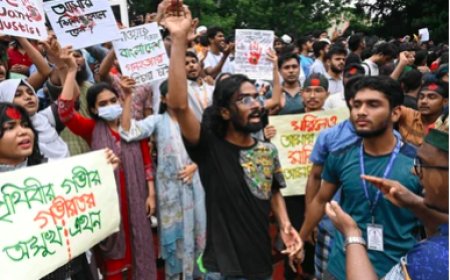
One of them has remained quite constant and continues to argue that we need fundamental changes in our political structure to consolidate democracy. This has been identified as the core aspiration behind the July Uprising, and the argument has been made that without such changes, we will not be able to prevent the potential re-emergence of authoritarian rule. This narrative still persists and continues to drive the current reform effort.
The second narrative took shape after the uprising. Its proponents argued that people came together with the singular goal of bringing an end to the past regime, and since that has been achieved, the next step should be moving toward elections.
For them, elections were identified as the primary vehicle of change, and the argument followed that the more we focus on reform, the more we delay elections, and consequently, the democratic transition will be hampered. This line of reasoning produced the “election versus reform” debate, which eventually lost momentum once an election timeline was announced.
The third narrative emerged as the Consensus Commission was completing its work and gained popularity over the last couple of months.
It argues that the reforms proposed and advanced by the IG and the CC are meaningless, as these political, institutional, or structural changes will not address the real concerns of the masses.
Therefore, they are portrayed as a waste of time. In essence, this is a refined version of the earlier election-versus-reform argument -- but more powerful, more appealing, and strategically more potent.
If this argument is about ignoring citizens’ voices in the reform process, I completely agree. If it is about the risks of embracing an elite-driven pathway, I also endorse that concern. But the problem is that this argument goes beyond critiquing the process -- it seeks to dismiss the outcome and to reject the entire reform package.
What makes this particularly problematic is that it is being advanced by the same political parties and civil society actors who never meaningfully engaged with citizens during the reform process, never explained to them what the reforms aimed to achieve, and are now trying to delegitimize the broader transformation we can accomplish by restructuring power relations.
I reject the claim that these changes are meaningless or that they will fail to serve the people. Let me offer one example. In rural areas, one of the greatest challenges faced by the poorest of the poor is gaining access to social safety net programs. Suppose an eligible person faces such a problem. What can she do? She can go to the Union Office, to the office of the UNO, or even try to use the Grievance Redress System. But in practice, the process usually ends there. If she can somehow persuade the elected or appointed officials, she might succeed; otherwise, she is denied access to a service that is her right.
Now imagine a system where we have an independent Local Government Commission, an Anti-Corruption Commission, or a Human Rights Commission, each with offices at least at the upazila level.
A citizen could lodge a complaint with these bodies, which would then investigate and take measures to hold the administration accountable. The key question then becomes: how can we guarantee that these bodies will actually work? The answer lies in ensuring their independence -- they must be free from executive control and accountable to Parliament, not the ruling party.
To secure such independence, the appointment of their heads and members must be insulated from partisan influence. This requires that appointments be made through a bipartisan committee, ensuring proper vetting and consensus. And to ensure accountability of these independent institutions, we need a bipartisan standing committee of Parliament to regularly review their performance and effectiveness.
An Upper Chamber of Parliament would be the ideal institution to perform this function, provided that its members are elected through proportional representation, which would guarantee adequate representation of opposition voices.
The linkages are clear -- we only need to connect the dots. I am the first to admit that constitutional reform alone will not solve all our problems. But it will create a new incentive structure, a political space that is currently absent. These institutions, once established, can serve as platforms through which both civil society and political parties work to build the connections -- the “hooks and links” -- that bind accountability, participation, and governance together.
It is crucial that we recognize this and continue to build upon what has already been achieved. Dismissing the progress made or the reforms that are within reach is neither wise nor strategic.
It is unfortunate that most civil society organizations have either remained indifferent to these proposals or opposed them without grasping their far-reaching implications.
They have failed to recognize that these reforms could open new pathways for them -- creating fresh opportunities to empower citizens and strengthen the accountability of state institutions, ultimately shaping their own future governance agenda.
It is time they wake up to this reality.
Asif M Shahan is a PhD Associate Professor in the Department of Development Studies at University of Dhaka.

Asif Shahan
Asif M Shahan, PhD Associate Professor, Department of Development Studies, University of Dhaka