






























































Bangladesh First and the Geo-politics of Diversification
Tarique Rahman’s expected Malaysia-China sequence is a necessary correction to an India-centric past. Malaysia gives the visit diplomatic balance and China gives it strategic weight. But the correction will only succeed if it produces a wider foreign-policy basket without chipping away at Bangladesh’s sovereign decision-making space.


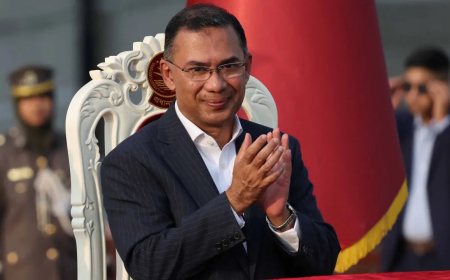
Prime Minister Tarique Rahman’s expected first foreign tour, likely beginning in Malaysia before moving to China, will be an early test of the BNP government’s attempt to turn “Bangladesh First” into a working foreign policy.
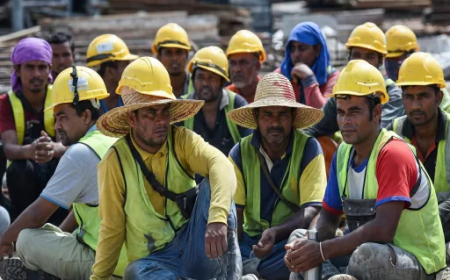
The Malaysia visit would be pragmatic as it creates necessary diplomatic cushioning. Kuala Lumpur has relevance for labour migration, Muslim-world diplomacy, ASEAN connectivity and investment.
It does not trigger the same strategic anxieties in New Delhi or Washington. By going to Malaysia first and China next, Dhaka can soften the optics of a Beijing-first foreign policy while still moving ahead with the more consequential China visit.
However, Beijing coming before New Delhi, despite Prime Minister Narendra Modi’s invitation, signals that Dhaka is no longer willing to organize its foreign policy around India as the default center of gravity, and is significant.
For Dhaka, and particularly for the BNP, it is a time to set the foreign policy tone for the next few years. Bangladesh, having just witnessed a student-led uprising, an interim government, and finally an election that gave the BNP a two-thirds majority in parliament, has a lot to prove. It seeks a diversified and pluralistic foreign policy that moves beyond India.
The BNP does not want to be seen through the same lens as the Awami League, whose dependence on New Delhi catalyzed its political collapse. Under the AL, India enjoyed significant advantages on several fronts, including water-sharing, connectivity, trade, border management and security. Perceptions of Indian exploitation of Bangladeshis have mounted over the years to create explosive public grievances.
Whether every part of this perception is fair matters less than the fact that it now shapes domestic politics.
The current political climate makes it difficult for any Bangladeshi government to appear too close to India, especially with continuous anti-Bangladesh rhetoric coming out of West Bengal. BNP is particularly at risk, as its political opponents can use any overt closeness to fan the flames of pro-India allegations.
Therefore, Tarique Rahman’s China visit gives the government a way to show that Dhaka will engage India, but without allowing India to remain the primary center in Bangladesh’s external relations, as has been the case in the past.
However, the China visit is more than just diplomatic symbolism, especially if it takes place before any visit to India. Bangladesh needs financing, infrastructure capacity, and economic breathing space. At a time of imported energy pressure and financial-sector stress, Chinese financing has practical value for Dhaka.
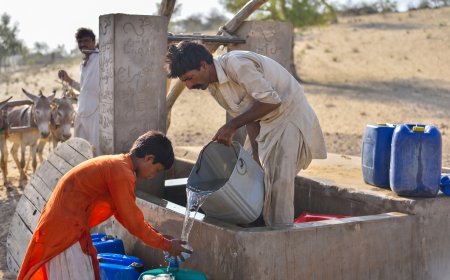
China also gives Dhaka room for manoeuvre with India when it comes to negotiating power. Teesta has become a symbol of Indian non-delivery, especially in northern Bangladesh, where water scarcity, river management failures, and livelihood insecurity have kept the issue politically prickly. Bangladesh also needs leverage before the Ganges Water Treaty expires in 2026.
Chinese involvement in the Teesta River Comprehensive Management and Restoration Project gives Dhaka bargaining space and signals to New Delhi that Bangladesh has other options if India continues to delay progress.
This is also where the strategy is delicate. India will read a China-backed Teesta through its own security anxieties and see it through the lens of India-China rivalry, even as Dhaka frames Chinese involvement as river management and development. Northern Bangladesh sits close to the Siliguri Corridor and India’s northeastern states. New Delhi is unlikely to sit by as China becomes more involved.
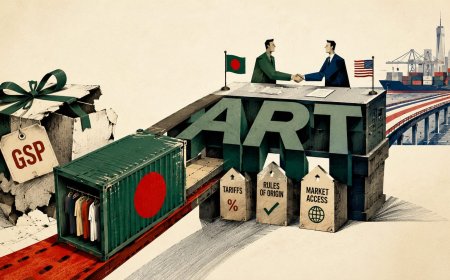
The United States is another significant player that complicates Bangladesh’s diversification strategy. The controversial US-Bangladesh trade agreement includes a nuclear energy clause that restricts Bangladesh from purchasing nuclear reactors, fuel rods, or enriched uranium from countries deemed harmful to essential US interests.
For Bangladesh, it narrows future energy choices, especially with Russia and China, at a time when the country needs affordable baseload power and greater energy security. The same anxiety appears in the debate over Bangladesh signing the General Security of Military Information Agreement (GSOMIA) and the Acquisition and Cross-Servicing Agreement (ACSA) with the US, which would deepen intelligence-sharing, logistical coordination, and military interoperability with Washington.
At the same time, signing these agreements potentially poses a risk to Bangladesh’s sovereignty in the Bay of Bengal and makes Dhaka vulnerable to signing further military agreements it cannot control.
On top of this, the recent US-Bangladesh energy cooperation MoU adds another layer by tying Dhaka more closely to US energy infrastructure, supply chains, and imports of LNG, LPG, and petroleum products. Taken together, these moves suggest that Bangladesh’s search for diversification may be creating new constraints in trade, energy, and security.
For China, this will raise concerns that Dhaka’s outreach to Beijing is happening alongside a quiet tightening of Bangladesh’s policy space under US pressure, making Beijing more eager to court Dhaka away from the US orbit, yet cautious about how far it can trust Dhaka’s balancing strategy.
Simultaneously, Pakistan’s role in Bangladesh’s diversification strategy has become more concrete through the potential JF-17 procurement. The JF-17 Thunder Block III is a China-Pakistan co-developed combat aircraft. For Dhaka, the attraction is practical as the Bangladesh Air Force still relies heavily on aging F-7s and a small number of MiG-29s, so the JF-17 offers a relatively affordable route to modernize its fleet.
The strategic meaning is more sensitive than the military capability. Even if the JF-17 would not overturn India’s overwhelming air superiority, it could narrow the capability gap and complicate Indian security planning near the Siliguri Corridor and India’s northeastern connectivity routes. For the BNP government, a JF-17 would show that Bangladesh’s defense partnerships are no longer India-monopolized and that “Bangladesh First” includes security diversification, not only diplomatic or economic diversification.
For New Delhi, however, a China-Pakistan platform entering the Bangladesh Air Force would be read through the combined lens of India-China rivalry, India-Pakistan hostility, and Bangladesh’s shifting post-AL foreign policy. Read along these lines, the JF-17 is useful as strategic signaling for Dhaka, but risky if it convinces India that Bangladesh’s search for autonomy is turning into a security alignment with India’s two principal adversaries. The BNP government will need to manage the optics carefully.
If Malaysia is indeed the PM’s maiden voyage, it allows Dhaka to engage a Muslim-majority partner, open a stronger ASEAN-facing track, and show that diversification is not simply about balancing India with China or courting great powers. Most importantly, it gives Bangladesh the leverage to double down on its non-aligned foreign policy.
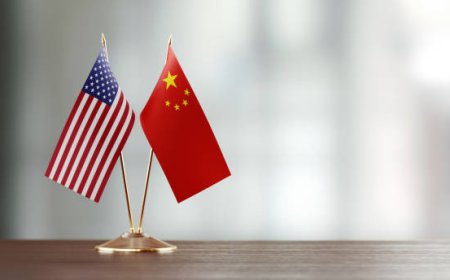
Ultimately, Dhaka’s diversification strategy is pulling in various directions. China offers financing and negotiation space, the US offers strategic weight but also pulls Bangladesh toward tighter commitments, Pakistan offers security diversification, and India remains a sensitive neighbor that Bangladesh needs to manage carefully.
If Bangladesh can balance these engagements, explain them as part of a coherent “Bangladesh First” foreign policy, and avoid appearing captured by either the US-India or China-Pakistan camps, it may finally gain room for manoeuvre. But if the government relies too heavily on one camp, diversification could begin to look less like strategic autonomy and more like a tightrope Dhaka struggles to walk.
Taken in context, Tarique Rahman’s expected Malaysia-China sequence is a necessary correction to an India-centric past. Malaysia gives the visit diplomatic balance and China gives it strategic weight. But the correction will only succeed if it produces a wider foreign-policy basket without chipping away at Bangladesh’s sovereign decision-making space.
Afia Ibnat is a geo-political analyst at a Tokyo-based think tank.
What's Your Reaction?