



















































Bangladeshi Chicken Farmers are About to get Slaughtered
The ART agreement is against the interest of tens of thousands of families in Bangladesh whose livelihood depends on chicken farming. For their sake, the ART should be re-negotiated. It is shocking that the interim government signed this agreement without consulting representatives of the poultry industry.

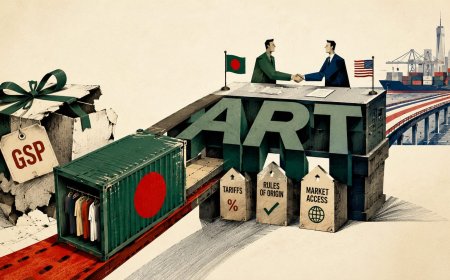
The recent Agreement on Reciprocal Tariffs (ART) between Bangladesh and the US gives many American goods, including frozen chicken meat, duty-free access to the Bangladesh market.
The market for chicken in the US is very different from the market in Bangladesh. In the US, chicken parts are sold separately after processing. US consumers have a strong preference for chicken breast. Chicken breast retails for about $3.50 per pound in the US, while chicken legs retail for about $1.50 per pound. Chicken processing plants in the US make profit selling chicken breast, but sell chicken legs at a loss (below production cost).
A US exporter has offered halal-certified frozen “chicken leg quarters” at a price of $1,490 per ton ($1.49 per kg), which includes sea freight and marine insurance to Chittagong port. That translates to about Tk 183 per kg. As the production cost of processed chicken in the US is probably about $1 per pound (about $2.20 per kg), these chicken legs are in fact being offered well below production cost.
How does this compare to processed chicken in Bangladesh? More than 90% of the chicken grown in Bangladesh is sold live at wet markets. However, restaurants and superstores do buy processed chicken. At present, the average farmer in Bangladesh produces live broiler chicken at a cost of about Tk 135 per kg.
Transporting live chicken to a slaughterhouse increases its cost to about Tk 139 per kg. During processing, the intestines, blood, feathers, etc. are removed, increasing the cost of the remaining (edible) weight. Processing plant costs (labour and refrigeration) are added, increasing the cost of 1kg of processed chicken to about Tk 219 per kg.
In short, imported frozen chicken legs from America will be considerably cheaper than local chicken, due to the fact that the American chicken is sold below production cost.
As American chicken legs will be significantly cheaper than local processed chicken, it is obvious that Bangladeshi consumers and restaurants will prefer to buy American.
Under previous trade rules (GATT and WTO), importing countries had the right to impose “countervailing tariffs” to stop any product from being “dumped” (exported below production cost). As chicken legs are exported from the US at a price which is below production cost, the government of Bangladesh should have the right to impose countervailing tariffs on imported chicken legs.
However, a clause of the ART agreement (which Bangladesh signed in February) will prevent us from imposing countervailing tariffs on imports from the US.
The present taxes on imported frozen chicken are over 62% at present (25% customs duty, 10% supplementary duty, 15% VAT, 5% advance income tax, 7.5% advance tax). Bangladesh has maintained high taxes on the import of frozen chicken precisely because chicken legs are sold below production cost in countries like the United States and Brazil.
The taxes on American frozen chicken legs will fall to zero once the ART agreement is in force. Bangladeshi farmers then will suffer from unfair competition.
The ART agreement is against the interest of tens of thousands of families in Bangladesh whose livelihood depends on chicken farming. For their sake, the ART should be re-negotiated. It is shocking that the interim government signed this agreement without consulting representatives of the poultry industry.
Kazi Zahin Hasan is a director of Kazi Farms Limited. He has a BA in Economics from Oberlin College, and a master’s degree from Columbia University.
What's Your Reaction?