












































![A Ledger of the Soul: Navigating the Allah-Bhagavant Nexus in a 19th-Century Puruṣākāra Jñāna Caupara [Gyan Chauper]](https://counterpointbd.com/uploads/images/202608/image_430x256_6a93baa3b09a7.jpg)





















Why Is Osman Hadi’s Image Triggering Negative Reactions?
It feels unjust to see a human life reduced to a symbol of negativity, especially when that reduction is driven by forces beyond the individual’s control. Yet the reaction itself cannot be dismissed as irrational. It is the product of a pattern that has become too consistent to ignore.

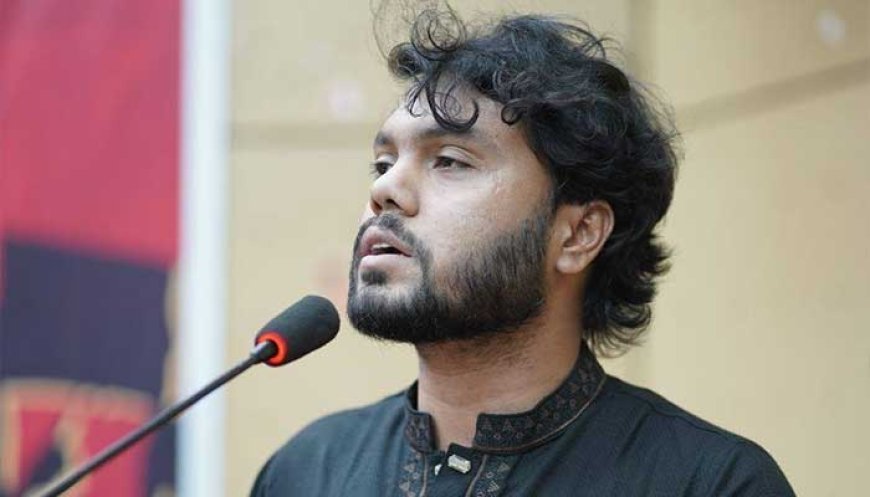
There was a time when Sharif Osman Bin Hadi existed in Bangladesh’s political landscape as a figure both visible and ignorable, depending on where one chose to stand. For many, he was a voice of defiance, a young activist who spoke with urgency, anger, and a vocabulary that resonated with a restless generation. For others, he was neither admirable nor detestable, merely present in the background noise of a turbulent political culture.
Not everyone engages with politics through the same sensory channels. Some listen to arguments, others to tone, and a few withdraw entirely when the language itself feels abrasive. For this latter group, Hadi was not an object of emotional investment. He remained distant, almost abstract. That distance once allowed a rare neutrality in an increasingly polarized society. It meant that one could observe without reacting, acknowledge without endorsing, and disagree without animosity.
Yet, in the aftermath of his death, something subtle but significant has shifted. The neutrality has eroded. The image of Hadi, once just another face among many, now evokes a sense of unease, even irritation. This reaction is not rooted in a reassessment of his political ideas or activism. Rather, it emerges from a transformation that has little to do with the individual himself and everything to do with how his image is being used.
In the digital public sphere, especially on platforms like Facebook, individuals rarely remain individuals for long. They are converted into symbols, and symbols are notoriously difficult to control. The French philosopher Roland Barthes once argued that the author is ultimately displaced by the reader, that meaning is not fixed by origin but continuously reshaped by interpretation.
In the age of social media, this displacement is not merely intellectual but behavioural. A face becomes a shorthand, a meme, a badge worn by countless anonymous users who bring their own intentions into its meaning.
Hadi’s image appears to have undergone precisely this metamorphosis. A recurring pattern is now difficult to ignore. Profiles carrying his photograph frequently engage in behavior that is disruptive at best and deeply disturbing at worst. One encounters inappropriate reactions on posts of grief, a barrage of hostility in comment sections, and a descent into vulgarity that includes harassment, body shaming, and threats directed at women.
These are not isolated incidents but part of a repetitive pattern that gradually shapes perception. Over time, repetition acquires the force of association.
Symbolic politics has long demonstrated how individuals are transformed into carriers of broader meanings. Figures such as Che Guevara or Bhagat Singh became icons not merely because of their actions but because their images were repeatedly mobilized within certain ideological frameworks.
Yet there is a crucial difference. Those historical symbols were curated, often with deliberate care, to represent ideals of resistance, sacrifice, or justice. What we are witnessing in the case of Hadi is a far less disciplined process, one driven by the anarchic dynamics of digital culture rather than organized political movements.
The result is a fusion between identity and behaviour that is both accidental and consequential. A human being, with all his contradictions and complexities, is flattened into a single, repetitive association.
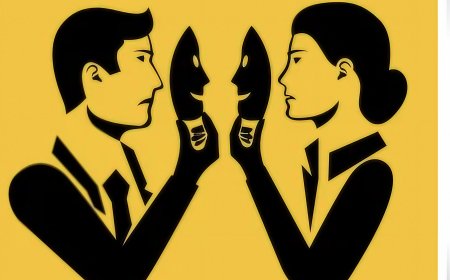
The sociologist Erving Goffman wrote about the presentation of self in everyday life, emphasizing how individuals perform identities in social settings. In digital spaces, however, this performance is fragmented and multiplied across countless users. When many of those performances share a common visual marker, such as a profile picture, they collectively redefine what that marker signifies.
This is where the discomfort begins to take shape. It is not a moral judgment passed on Hadi as a person, but a reaction conditioned by repeated exposure to a certain pattern. The human mind is predisposed to form associations.
Aristotle, in his theory of memory, spoke of how repetition strengthens connections between ideas. Modern cognitive psychology has only refined this insight. When a particular image is consistently linked with negative experiences, the image itself begins to trigger those responses. What was once neutral becomes charged.
The tragedy lies in the unfairness of this transformation. It would be intellectually dishonest to hold an individual accountable for the behaviour of those who appropriate his image. Yet it would be equally disingenuous to deny the psychological reality of the association that has formed.
This tension between fairness and perception reveals something deeper about the condition of our digital public sphere. We are no longer dealing with individuals in the classical sense but with representations that are constantly being rewritten by collective behaviour.
During the French Revolution, symbols such as the Phrygian cap or the guillotine carried meanings that evolved rapidly, often diverging from their original intent. In more recent times, political figures across the world have found their images co-opted by groups whose actions complicate their legacy. The difference today is the speed and scale at which such transformations occur.
Social media compresses time, amplifies repetition, and dissolves the boundaries between individual and collective expression.
There is also a darker dimension to this phenomenon. The anonymity afforded by digital platforms often lowers the threshold for unacceptable behaviour. When that behaviour is conducted under a shared symbol, it acquires a form of collective legitimacy, however illusory. It creates the impression of a community bound not by ideas but by conduct. In such a context, the symbol becomes less a representation of thought and more a banner under which certain behaviours are normalized.
This raises an uncomfortable question about responsibility. Can a symbol be reclaimed once it has been widely associated with negativity? Can meaning be redirected in a space where control is diffuse and authority is absent?
Antonio Gramsci’s concept of cultural hegemony suggests that meaning is always contested, shaped by competing forces within society. Yet in the fragmented ecosystem of social media, these forces are often disorganized, lacking the coherence necessary to redefine a symbol in any sustained way.
The discomfort that now accompanies Hadi’s image is therefore not merely a personal reaction but a reflection of a broader crisis. It signals the erosion of boundaries between individual identity and collective behaviour. It exposes the vulnerability of symbols in a digital age where meaning is endlessly negotiated but rarely stabilized. Most importantly, it forces us to confront the ways in which our perceptions are shaped, not by deliberate reasoning, but by the cumulative weight of repeated encounters.
One may regret the harshness of this conclusion. It feels unjust to see a human life reduced to a symbol of negativity, especially when that reduction is driven by forces beyond the individual’s control. Yet the reaction itself cannot be dismissed as irrational. It is the product of a pattern that has become too consistent to ignore. In this sense, the discomfort is both troubling and revealing.
It reminds us that in the digital age, legacy is no longer determined solely by what one does or says. It is equally shaped by how one is used, replicated, and performed by others. The philosopher Michel Foucault spoke of how power operates through diffuse networks rather than centralized authority. In a similar way, meaning today is produced through decentralized interactions that no single individual can fully command.
Hadi’s transformation from a person into a symbol, and from a symbol into an uneasy association, is therefore not an isolated incident but part of a larger pattern. It reflects the instability of identity in a world where images travel faster than ideas and where repetition often triumphs over nuance. The irritation one feels is not directed at the man himself but at the collective behaviour that has come to define his image.
That distinction matters, even if it offers little comfort.
H. M. Nazmul Alam is an Academic, Journalist, and Political Analyst based in Dhaka, Bangladesh. Currently he teaches at IUBAT. He can be reached at [email protected]