



























































The World Heard “Rape Me” 30 Years Ago. Why Are We Still Here?
We need more than purple sarees; we need greater representation of women in Parliament to steer the budget toward safety and a localized commitment to the UN Security Council’s Women, Peace and Security agenda.

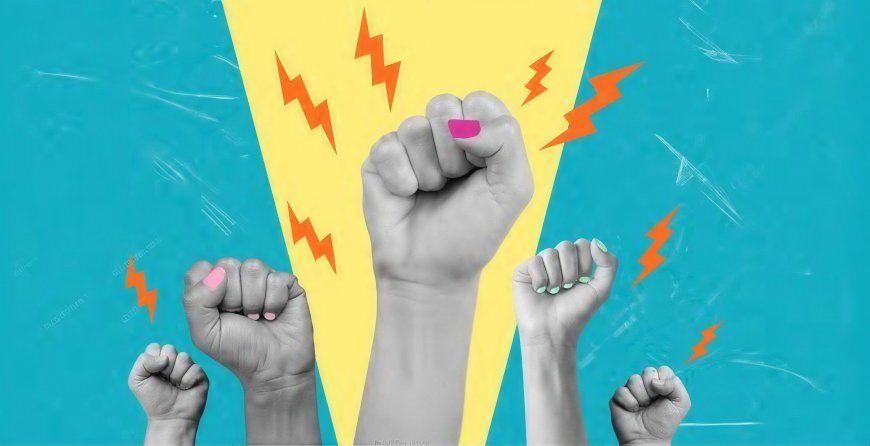
In 1993, Nirvana, (an American rock band from the 90s that sold over 75 million records) released "Rape Me." It wasn't just a song designed for the charts; it was a strong anti-rape statement meant to shake the world about the ugliness of sexual violence.
Kurt Cobain, the vocalist, used provocation to mock the predator and shame the silent spectator. 32 years later, that song hasn't aged a day because the global world order seems to have replaced justice with a lucrative performance of just ‘Awareness’.
The Awareness Sedative
As we approach International Women’s Day, the ‘Awareness Agenda’ has warmed up! We see the purple sarees, the velvet-draped stages and the high-level panels discussing' gender-sensitive frameworks.’
Adding to festivities, we see ‘smart’ entrepreneurs selling buy one get one free products for Women’s day and Eid. But while elites toast to ‘Empowerment’ in Dhaka hotels, the reality on the poor is written in blood.
Globally, the Epstein files, still ongoing on news channels and Netflix in 2026 -- remain a chilling testament to how wealth and influence create spaces for abuse even within advanced democracies. If a billionaire can facilitate the systematic violation of minors for decades, what hope does a Bangladeshi domestic worker have in a Saudi household?
For three decades, the UN and various NGOs have prioritized ‘Changing mindsets’. We’ve been told that if we hold enough workshops, the predators will eventually see the light. This is a lethal delusion. You do not sensitize a man who thinks he owns a domestic worker’s body.
According to data compiled by Bangladesh Mahila Parishad, 786 women and girls were raped or gang raped in 2025, compared with 516 cases the previous year, representing a 52% year-on-year increase. The 2026 reality in Bangladesh proves that awareness without enforcement is a death sentence.
The Migration Abuse Trap
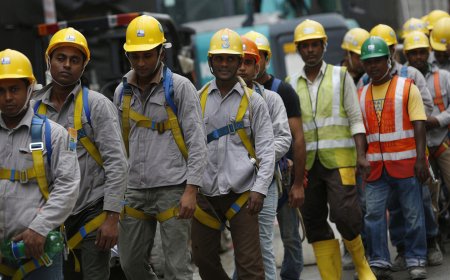
Our economic stability is built on the backs of migrant workers, yet we treat their safety as an afterthought. Amnesty International’s 2025 reports on Saudi Arabia confirm what we already knew: The "Kafala" system is a legal wall that shields rapists. Bangladeshi women are returning in coffins or carrying the children of their attackers, victims of a migration system that too often leaves women vulnerable to abuse.
Why do they leave? Because we have failed to create a local shield. We don't need more ‘reintegration’ brochures and plans. We need a government that treats the abuse of a worker abroad as a violation of national sovereignty.
If a host country cannot guarantee the physical safety of our citizens, the labour flow must be cut off. As long as we keep our ‘Dignity’ for sale; these crimes will linger on.
The Vietnam Model: Certainty Over Severity
We are often told to look at Scandinavia, but Iceland’s high-trust, low-population model is a fantasy for a nation of 170 million. Instead, we should look at Vietnam. Vietnam didn't wait for a ‘Cultural shift.’ They integrated protection into the bone of their local administration through the Vietnam Women’s Union, which operates in every commune.
Localized Vigilance: They have "Trusted Addresses" in every village -- safe houses that bypass the "honor" delays of family mediation.
Economic Shielding: Vietnam has one of the highest female labor force participation rates (approx. 70%). Economic independence is a real armor against domestic abuse.
The Rule of Certainty: Their 2022/2023 legal updates prioritized the speed of intervention. When a crime is reported, the commune-level police are mandated to act immediately. The predator in Vietnam doesn't just fear the law; he fears the speed of the law.
The Home Front: The End of ‘Private Matters’
The horror of abuse and rape of a child is not a private matter. The leaders of the community need to bring this agenda forward, and trickle down within households in their communities. The home is often outside the control of the State, and this needs to change in the wake of so many children being raped and abused. Patterns of verbal abuse and intimidation should also not be tolerated to escalate because we treat the domestic sphere as a lawless zone.
To stop the rot at home, we must reclaim the Rule of Law:
1. Fast trials and verdicts: We must move away from trials that last a decade. A trial that exceeds six months is a victory for the rapist. We need verdicts delivered while the community still remembers the crime. The Magura case is a great example, and these cases can be showcased for awareness, to show what happens to rape perpetrators.
2. Mandatory Rights Education: Girls must be taught their legal rights and how to trigger them in primary schools. Families should be aware of close ones being the abuse and rape perpetrators, and not to be silent when the child complains. Most importantly, boys must be taught that consent is not a suggestion, but a legal requirement.
3. Visible Punishment: Prevention only works if it is witnessed. When people see that wealth or ‘Neighborhood influence’ cannot buy a backdoor out of a jail cell, the predator will change their behavior.
Structural Reform: Beyond the Symbolism
The Bangladesh Mahila Parishad (BMP) has been clear. We are at a breaking point. Their recent reports urge the government to acknowledge (albeit total disregard during interim Government) the reforms proposed by the National Women’s Reform Commission.
We need more than purple sarees; we need greater representation of women in Parliament to steer the budget toward safety and a localized commitment to the UN Security Council’s Women, Peace and Security agenda.
Furthermore, Bangladesh must fully uphold its commitments under international conventions like CEDAW and the ICCPR. This includes protecting the constitutional rights of religious and ethnic minorities, who are often the most invisible victims of sexualized violence.
The Verdict
30 years ago, Nirvana told us to look at the horror. We looked, we ‘Became Aware,’ and then we went back to choosing the right shade of purple for our sarees.
To the corporates, to NGOs, to civil society leaders and everyone who is making the ‘Awareness’ an agenda -- this is a request to shift the awareness agenda into an Action agenda -- so the sooner we see verdicts- the better it will be to establish rule of law against these crimes.
Tasmiah T. Rahman is a PhD student at SOAS-Brac University joint PhD programme, her focus is on women’s LFP. She is an Advisor at Innovision Consulting, the opinion expressed here are her own.