






























































Education in Bangladesh: Force or Farce?
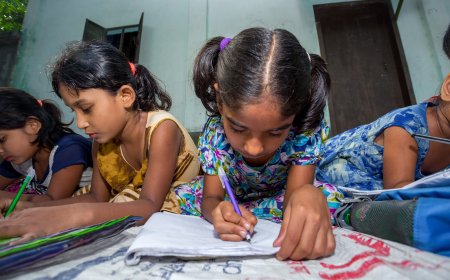
Too many young people complete the school years without the skills they need, families are financially squeezed, and the system still treats education more like fee collection than nation-building.

When my wife told me we were expecting our third child, my first thought was not about diapers or sleepless nights. It was: “Can we afford to educate a third child?”
Any parent who has tried to parcel out 20 years of school fees, coaching bills, exam registration and university costs will know the feeling -- one look at the calculator and hope seems to evaporate. That private dread points to a public crisis. Bangladesh has expanded access to schooling, but access alone is no longer enough.
We are spending money, time and social capital -- but the learning outcomes and systemic priorities tell a different story. Too many young people complete the school years without the skills they need, families are financially squeezed, and the system still treats education more like fee collection than nation-building.
The Facts are Stark -- and Getting Worse
This year’s Higher Secondary Certificate (HSC) results shocked many: the national pass rate for HSC and equivalent exams fell to 58.83% -- a sharp drop from the year before and the lowest in two decades. Earlier signs of learning failure are equally alarming.
A World Bank analysis of learning-adjusted years of schooling shows that although many Bangladeshi students spend 11-12 years in school, the learning-adjusted years -- the effective years of education once quality is considered -- are only about 6 years for many learners.
In other words, twelve years of schooling is delivering the learning equivalent of roughly a Grade 6 or Grade 7 education in global terms. Even then there is a failure rate of 41.17%.
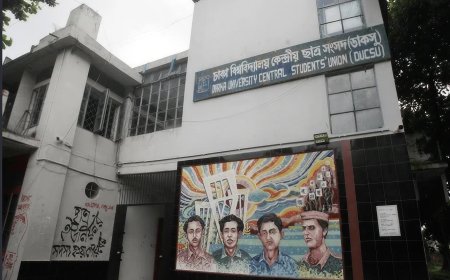
At the university level, selective admission tests expose the gap between credentials and capability. For example, only about 6% of candidates passed Dhaka University’s highly competitive Science Unit admission test in 2024-25 -- meaning more than 90% of well-credentialed applicants could not clear basic admission requirements.
Meanwhile, public investment does not match the scale of the problem. The education sector’s share of GDP -- a simple indicator of public priority -- is around 1.69% in the latest budget figures, far below international recommendations and what our neighbors invest. That low allocation constrains teacher training, curriculum reform, school infrastructure and classroom sizes -- things that actually improve learning.
Put simply: lots of children sit in school; too many leave without core skills. That is a policy failure, and it has economic, social and moral costs.
The Financial Burden on Families is Crushing
At the same time, private education has become a costly industry. Many English medium and private schools charge steep tuition; parents routinely pay for additional coaching, private tuition, lab classes and mock examinations. Middle-class families are particularly vulnerable: choosing between a pricey private school and a lower-fee alternative often feels like choosing between a social badge and practical learning.
Coaching centers and exam costs add yet another layer. Parents report paying thousands of takas per subject for coaching (e.g. sizeable fees for physics and chemistry lab courses), and international exam registrations are expensive: Cambridge and Pearson subject fees alone run into tens of thousands of taka per subject, meaning O-Level/A-Level registration and test costs can run into the hundreds of thousands. These added costs create pressure to treat education as a series of paid services rather than a public good (fees and exam data: local exam fee schedules and recent reporting).
This market logic has consequences: families cut back on essentials, parents postpone their own plans, and the poorest are excluded entirely. Paradoxically, many who spend the most obtain little extra learning -- because spending on brand, coaching or exam practice often substitutes for meaningful instruction and long-term skill building.
Why Money Alone Doesn’t Fix the Problem
Spending more on private education or coaching does not guarantee learning. The system has become exam-centric and rote. Children memorize to pass tests; they rarely learn to reason, to write clearly, or to apply knowledge to new problems. Teachers are often undertrained and overstretched; curricula emphasize facts, not thinking; assessments reward recall, not application.
This is why a child can collect top GPAs in SSC/HSC and still fail university entrance tests or struggle in real jobs. The Dhaka University Science Unit results and the World Bank learning adjustments are blunt confirmations that schooling without learning is worthless.
What Parents Can Do
Not all parents can afford boutique schools or international tuition. But effective parenting costs far less than elite fees. Some simple, research-backed practices have outsized impacts:
Read with your children: Regular reading at home improves language and comprehension. Libraries, second-hand books, or story-time are inexpensive but transformative.
Focus on skills, not only grades: Encourage explanation over rote recall: ask children to explain how they solved a problem, or why a story’s character acted a certain way.
Make thinking visible: Use everyday moments -- cooking, shopping, travel -- to teach estimation, measurement, and critical questioning. Board games teach math and strategy; simple home experiments teach scientific thinking.
Don’t outsource parenting: Coaching and tutors can help, but parental engagement (helping with homework, discussing school content, encouraging curiosity) predicts emotional and academic success far more than the name of the school.
Demand accountability: Ask schools for sample lesson plans and evidence that teachers are teaching concepts, not just exam tricks. Parents who band together to request transparency in fee use and teaching quality can push change.
What Communities and Coaching Markets Should Change
Coaching centres fill a demand -- often created by an exam-oriented culture. But the sector needs transparency and standards:
Transparent fees and itemised services: Mock test fees, venue costs or evaluation charges must be explained and justified. National boards and local education authorities should publish guidelines for private coaching fees and operations.
Quality accreditation: Local NGOs, parent groups and municipalities can help create quality markers for coaching centres -- who trains the teachers, how are results measured, and what pedagogy is used?
Shared resources: Community learning hubs, shared libraries, low-cost group tutoring and volunteer mentoring can reduce costs and widen access.
What the State and Education Leaders Must Do
Incremental fixes won’t do. We need structural reform and political will.
Shift focus from enrollment figures to learning outcomes: National policy must prioritise measurable gains in literacy, numeracy and problem-solving skills. Regular, independent learning assessments should be published and acted upon. (World Bank and independent national assessments already point the way.)
Raise education financing and spending quality: Moving the education allocation substantially above the current 1.69% of GDP is essential to hire and train teachers, rebuild classrooms, and invest in instructional materials.
Reform teacher training and support: Effective classroom practice must be taught, coached and supervised. Pay and career progression for teachers should reward pedagogical competence, not just attendance.
Redesign curricula and assessments: Move from memorization toward competency-based curricula that reward critical thinking, writing, collaboration and creativity. University admissions and national exams should align with these priorities.
Regulate and monitor the private coaching industry: Transparency and consumer protection rules can prevent exploitative pricing. Public investment in remedial programmes for disadvantaged students can reduce dependence on paid coaching.
Strengthen tertiary education quality and research: Universities must be centers of practice, not mere credentialing mills. Employers need graduates who can communicate, innovate and adapt.
A Final Note to Parents, Educators and Policymakers
Education today in Bangladesh is an expensive ritual for many and a hollow credential for too many. That failure is not inevitable. It is the product of policy choices, market incentives and social habits -- but these can be changed.
If you are a parent: you are more important than the fee-slip. Read to your children, ask hard questions, and teach them how to think. If you are an educator: insist on methods that build understanding. If you are a policymaker: remember that a nation that fails to teach its children is mortgaging its future.
The recent HSC results, the World Bank’s learning-adjusted measures, the DU admission outcomes and the crushing household costs should not be occasions for despair. They are a call to action. We can choose to treat education as a priority—financially, morally and politically -- so the next generation inherits opportunity, not only debt and diplomas.
Education must open doors, not slam them shut because only a few can afford the price. Let’s make learning the priority -- at home, in communities, and at every level of government. The country that invests in real learning invests in its future.
Asifur Rahman Khan is the Deputy Director and Head of Communications, ULAB.