



































![A Ledger of the Soul: Navigating the Allah-Bhagavant Nexus in a 19th-Century Puruṣākāra Jñāna Caupara [Gyan Chauper]](https://counterpointbd.com/uploads/images/202608/image_430x256_6a93baa3b09a7.jpg)


















Looking to the Future, Not the Past
Too much of Bangladesh’s politics still focuses on history while its citizens repeatedly indicate that they are more interested in what will happen to the country in the coming years

As Bangladesh’s February 2026 election campaign kicks off this December, appeals to history are very much front and centre.
In some ways, this is unavoidable, as December (and March) are always times for reflection in Bangladesh, with memories of the 1971 Liberation War understandably taking on greater resonance.
While much of Bangladesh’s history is subject to interpretation, some facts are fairly well established.
Sheikh Mujibur Rahman and the Awami League enjoyed the support of the vast majority of the people of East Pakistan and led the effort to win Bangladesh’s freedom.
Brave Bangladeshi students, citizens and soldiers took up arms to fight against Pakistani forces and enjoyed support from neighboring India, which ultimately led to the introduction of Indian ground forces and open warfare with Pakistan in December 1971.
Major Zia Rahman and other former members of the erstwhile Pakistani Army and auxiliary forces were instrumental in leading the fight for independence and then building an Army for an Independent Bangladesh.
The Bangladesh Jamaat Islami opposed the effort to establish an independent Bangladesh and some of its members actively collaborated with the Pakistani security forces.
The United States government initially opposed the creation of Bangladesh and sided with the Pakistani state.
The decades that followed Bangladesh’s independence witnessed continued violence and instability that included the assassination of political leaders, military coups, and violence involving those who were on different sides in 1971.
Over time, other political parties emerged and electoral alliances were formed and dissolved based on shifting political calculus.
More than half a century later, some more recent facts are also well established.
Led by Sheikh Mujib’s daughter, the Awami League government adopted increasingly authoritarian and brutal tactics in an effort to cling to power after its election victory in 2008, until the point where it was overthrown after a mass popular uprising led by students in the summer of 2024.
During the Awami League’s tenure in office, members of opposition parties, notably the Bangladesh Nationalist Party and Bangladesh Jamaat-e-Islami suffered greatly, facing extra-judicial killings, mass imprisonment, restrictions on basic freedoms, and economic repression.
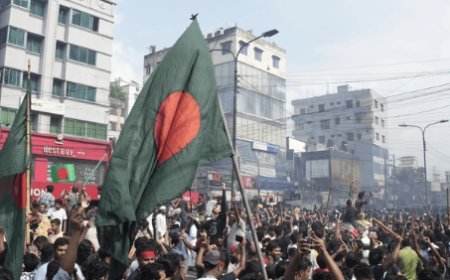
Thousands of protesters lost their lives or suffered serious physical or psychological injuries during the chaotic and violent weeks of protest in July and August 2024.
An interim government, led by Nobel Laureate Professor Muhammad Yunus, assumed responsibility for restoring stability after Hasina’s fall and focused on ensuring accountability for the crimes that were committed during the AL rule, fostering long overdue economic and political reforms, and preparing for elections to return the country to democracy.
Most impartial observers would agree that the interim government has only achieved partial success implementing this ambitious agenda as its tenure nears its end.
While historians and citizens can debate many of the details of what happened in 1971 or 2024, the broad outlines noted above are only disputed by the most virulent partisans.
I mention this because too much of Bangladesh’s politics still focuses on the past while at the same time that its citizens repeatedly indicate that they are more interested in what will happen to the country in the future.
This is particularly true for Bangladesh’s newest voters, many of whom have not ever had a chance to cast a ballot in a free and fair election.
I realize that negative campaigning and appeals to the past are not unique to Bangladesh’s politics.
We certainly see plenty of this in the United States. To a greater or lesser extent, every democratic country sees its politicians appeal to voter sentiments grounded in a real or imagined past.
I also believe in the importance of accountability, and Bangladesh’s politicians are by no means immune from the obligation to account for their past actions.
At the same time, as an observer and well-wisher, I continue to hope that those competing in Bangladesh’s February 2026 election will focus more on presenting their plans and visions for their nation’s future rather than dwelling on questions of history -- particularly those that are more than a half century in the past.
My sense is that this is what Bangladesh’s voters also want, and I believe that the parties and candidates who present the most compelling vision for the future will be rewarded at the ballot box.