
































































Who is a Razakar? What is a Razakar? Why Razakar?
“Razakar” is a word that keeps reappearing in Bangladesh’s political history, carrying shifting meanings and renewed political weight over time.


In Bangladesh’s political history, the word Razakar has repeatedly returned with different shades of meaning. Those who, in 1971, betrayed the nation and joined hands with the Pakistani military are known as Razakars.
The word is a combination of two Arabic-Persian terms: the Arabic riḍā (consent, satisfaction) and the Persian kār (work/doer). Together they form Riḍākār → Razakar, literally meaning one who works willingly or volunteer.
The term is not unique to Bangladesh. It also existed in Hyderabad, India. There, too, it carried almost the same meaning, though the historical context was slightly different.
When India became independent in 1947, several princely states still remained autonomous. Hyderabad was one of them. In 1948, India annexed it through military action (Operation Polo). To defend the independent Hyderabad state, a political organization called Majlis-e-Ittehadul Muslimeen, led by Qasim Rizvi, formed a paramilitary force. They were called Razakars.
They were branded enemies of India for alleged atrocities against the Hindu minority. The spread and controversy of the word Razakar did not remain confined to 1947 or 1971.
In Bangladesh’s history and culture, it has repeatedly created shockwaves. Historically:
37,000 Razakars (including Al-Badr, Al-Shams and other war criminals) were initially arrested
The Collaborators Act was passed in 1972, but trials dragged on
A general amnesty was declared in 1973 (excluding those involved in murder, rape, arson, looting, torture)
After 1975, almost all trials effectively stopped
Between 1975 and 1986, the ban on their politics was lifted; many became active in Jamaat-e-Islami politics, built businesses, and even joined governments
Just as history was dramatic, so was its reflection in literature and drama.
Novels, plays, poetry, and films turned Razakar into an extremely poisonous term. Zahir Raihan’s Arek Falgun (novel 1969, film 1975), Selina Hossain’s Hangor Nodi Grenade (1976), Jahanara Imam’s Ekattorer Dinguli (1986), and countless poems by Al Mahmud, Nirmalendu Goon, Shamsur Rahman and others laid the rock-solid foundation of collective hatred toward Razakars.
But in my view, the most devastating popular impact came from Humayun Ahmed’s iconic 1988 TV serial Bohubrihi, when the parrot character screamed “Tui Razakar!” (“You are a Razakar!”). Nothing else in Bengali literature has matched that visceral blow.
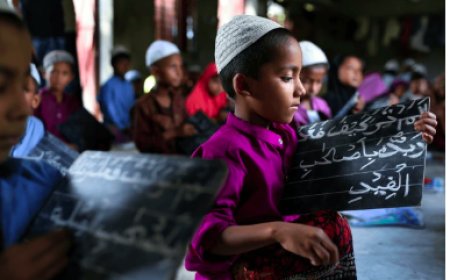
The word became so toxic that even in primary school we heard innocent kids mocking bearded, cap-wearing Islamiyat teachers from behind with “Tui Razakar!”
The word was revived in the 2013 Shahbag movement.
Most recently, on July 18, 2024, then-Prime Minister Sheikh Hasina called students protesting the freedom-fighter quota “Razakarer baccha” (“Children of Razakars”), asking: “If the grandchildren of freedom fighters don’t get the quota, will the children of Razakars get it?”
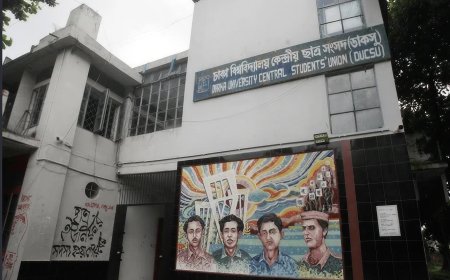
The students and the public erupted like a volcano. That very night, from a Dhaka University procession rose the fiery (and controversial) slogan:
“Who are you? Who am I? Razakar, Razakar!”
(Later, to deflect criticism, it was amended to include: “Who said it? Who said it? The autocrat, the autocrat!”)
From all these examples it is clear that in the Bangladeshi collective psyche, Razakar has become the ultimate symbol of hatred for over half a century. Even groups that opposed the Liberation War do not want to carry this label. Why not? The answer is simple, and it shines like stars across our history and literature.
We can roughly answer “who is a Razakar?” with reference to history. But it is crucial to objectively examine why, even fifty years after independence, we still call someone a Razakar or a “neo-Razakar.”
Before 1971, parties like the Muslim League, Nezam-e-Islami, and Jamaat-e-Islami supported an undivided Pakistan. Was supporting an undivided Pakistan a crime? For the Bengali nationalist parties building the narrative for an independent Bangladesh, portraying support for Pakistan as a crime was not only convenient -- it was necessary in the fragile political context of the time. We understand that.
But if we look at it objectively, not just as a narrative, can it really be declared a crime? In 1947, the people of this land had also poured blood and emotion into building a new state. In novels by Syed Waliullah, Shahidullah Kaiser, Zahir Raihan, Abu Ishaque, Shawkat Osman and others depicting the 1947 Partition and Pakistan era, there are characters who clung to Muslim League politics with dreams and passion.
They did not do it because they hated the people of this land (as Razakars are portrayed). They loved the land and genuinely believed, in their time and context, that Pakistan was the best path to liberation. Behind them lay the horrors of British colonialism, exploitation by Hindu zamindars, Hindu-Muslim riots, and the pain of living as a minority. They too sacrificed blood and took oaths under a new flag (the crescent and star) to build a nation. They sang Pakistan’s national anthem with the same emotion with which we sing Amar Sonar Bangla.
Was their passionate patriotism in their time false? Wrong? Of course not.
Naturally, just as we today do not want our homeland broken, they did not want theirs broken either. That desire is not a crime.
On the other hand, for those who developed Bengali nationalist consciousness and wanted independence, there was no alternative but to criminalize and even demonize the carriers of the opposing politics. Not everyone took this position at the same time. Some parties boarded this boat early, others late.
Even Sheikh Mujibur Rahman’s Unfinished Memoirs clearly shows how emotionally pro-Pakistan he himself was in the beginning. It is impossible to pinpoint the exact date when that illusion was shattered.
So, loving Pakistan was not the problem. The problem was failing to move on from that love at the right time. The issue is not the phenomenon itself, but timing. Some parties fatally mistimed it -- the parties we now broadly label Razakar parties. Because the other fellow-travellers dissolved, all the hatred for Razakar has fallen squarely on Jamaat-e-Islami.
So when exactly was the red line, after which remaining pro-Pakistan was no longer justifiable?
In my view, that red line was the night of March 25, 1971.
After Operation Searchlight unleashed indiscriminate genocide against one’s own people, there could be no further excuse to side with Pakistan. That is the misreading the Razakars made -- and Jamaat-e-Islami is known today as their representative party.
Their love for Pakistan, their fear of India -- these are side issues. The real issue is that even after witnessing genocide against their own people, they valued their party ideology more than human lives -- just as fascist parties do.
There is no room left for “ifs” and “buts” to refute the charge of failing to stand against the aggressor during genocide.The current generation of Jamaat was not directly involved in that genocide -- this excuse is unacceptable. Whether someone was personally involved is not even the main point.
The main point is: do they still consider their party’s stance during and after the genocide justified? This is a question of legitimacy.
If they believe it was justified, how can this nation ever trust them? How can we be sure that in some future crisis they will not again place their political beliefs above the lives of the people of this country?
Why did they do it? The answer to that question also clarifies the point of similarity between Jamaat-e-Islami and the Awami League -- and whether we can legitimately call the Awami League “neo-Razakars.”
In 2024, the Awami League too revelled in mass murder of its own people. After that, has anyone seen remorse among them? No -- and there is no reason to expect it. For exactly the same reason that Jamaat-e-Islami shows no remorse for its actions in 1971. Neither asks for forgiveness -- because any apology would be tactical, not sincere.
I see no future for either the Awami League or Jamaat-e-Islami in Bangladeshi politics -- for exactly the same reason.What is that reason? What lies behind siding with genocide or refusing to repent after committing it?
Both camps -- Awami-style parties and Jamaat-style parties -- have spread a thick blanket of ambiguity. The Awami camp delegitimized the Jamaat camp before the Liberation War to serve their Bengali nationalist narrative (which was necessary to build the dream of an independent state). But after independence, was there any further need to continue that delegitimization campaign?
Yet they kept insisting that the two-nation theory was wrong, that any positive sentiment toward Pakistan was wrong, that loyalty to Pakistan’s integrity or even a soft corner for its flag, anthem, or innocent citizens was a sin.
Recall Humayun Azad’s infamous line: “If Pakistanis bring flowers, I still smell blood in those flowers.” Such ethnic hatred -- coming from a leading intellectual. In any civilized country he would have lost his job, if not faced punishment.
Why did the Awami camp keep this hatred alive after independence? Whose interest did it serve? Follow the escape routes of Awami leaders after the 2024 uprising -- you will find the answer.
Meanwhile, the Jamaat camp has also kept us hoodwinked. They claim they opposed independence because they feared Bangladesh would become an Indian vassal state. But they never explain why they raised no voice against the killing of thousands of innocent people.
They stayed silent because they wanted Pakistan to win the war so they could fill the vacuum left by the pro-independence parties. Power lust triumphed over the blood of the people. They too were bound by a cult culture. Loyalty to their cult outweighed independent moral judgment.
The suffering of millions did not move them. They enrolled themselves, through merciless loyalty, in the global list of fascist parties -- parties that value their own fabricated ideology and blind obedience more than human life. They have hidden their Islamo-fascist face behind layers of sophistry.
Therefore, Jamaat is not Razakar simply for supporting Pakistan. They are Razakar because they remained unmoved while watching their own people die at the hands of Pakistani oppressors. They are Razakar because they betrayed their own people for party interest.
By the same logic, the Awami League is neo-Razakar. They became Razakar in 2024 by unleashing carnage on their own people. Those who, even after the regime indiscriminately fired on innocent students, did not withdraw their loyalty from the Awami League -- they too are personally neo-Razakars. Their loyalty to the party was so absolute that even mass murder could not crack it.
They are not neo-Razakars because they stole votes, committed corruption, or laundered money. They are neo-Razakars because they disappeared and murdered their own people -- or because they refused to withdraw loyalty from a party that did so.
Understanding the true nature of Razakar is essential for Bangladesh’s future politics. We drove out the neo-Razakars not to rehabilitate the old ones.
Supporters of the old Razakar party often point to Awami League corruption and say: “Jamaat is a party of honest, pious people.”
But the people did not overthrow the Awami League only because it was corrupt -- corruption is nothing new in Bangladesh. The fundamental, unique reason was indiscriminate killing of citizens, and the attempt by its supporters to justify that slaughter.
Now apply the same yardstick to 1971. Whether the Razakars were corrupt or pious is irrelevant.
The core issue is that they took part in or remained silent during indiscriminate killing, and their supporters tried -- and still try -- to justify that genocide.
For Bangladesh’s future democratic journey, we must free ourselves from the influence of both types of Razakars. In the Bangladesh of tomorrow, there is no place for any Razakar -- old or new.