


































































Mamdani and How He Reveals Our Broken Politics
The sooner our politics and our voters align with this demand for structural change, the sooner Bangladesh's power structure reforms will begin their sustainable journey. Mamdani's victory kindles our hope that in the near future people-oriented politics will also shine in our land.


New york Mayor Zohran Mamdani has shown us that it is possible to get elected even by challenging those in power. Mamdani's politics is liberal-democratic. His party is also liberal-democratic on paper but in reality they are puppets in the hands of the oligarchs.
In most countries around the world, politics revolves around bipolarity of power-centric versus liberal-democratic camps. Broadly speaking, power-centric groups are right-wing and conservative, while liberal-democrats lean left as welfarists. Especially in countries with first-past-the-post electoral systems, two-party politics is the norm.
Even in Third World countries, personality cult politics is gradually becoming stale, and parties are forced to define themselves on the right-left continuum and seek votes based on their projected position.
But in our country, right-left distinctions are absent in electoral politics. Ruling-party politics is only about perpetuating their rule, while opposition politics is about street agitation and seizing power.
In our country, there is no election-oriented political party or, for that matter no politics on the side of the oppressed. Analyzing our politics reveals that it remains trapped in medieval palace politics.
The main difference is that while palace politics revolved around swords and courtiers, today's politics operates through an electoral game every five years. Occasionally though, swords might still emerge as main characters.
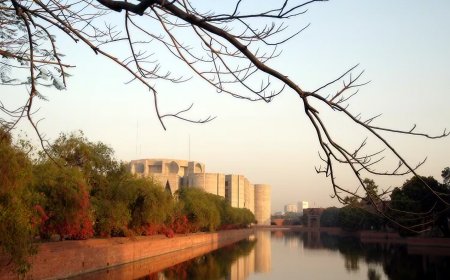
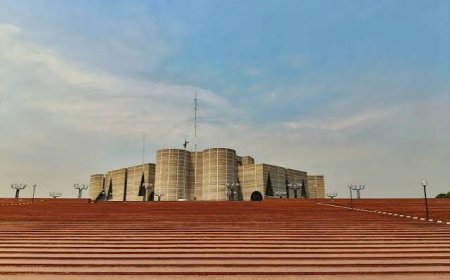
Since our politics has been palace-centric, no real consideration of accountability or balance of power has yet found a place in our country's political agenda.
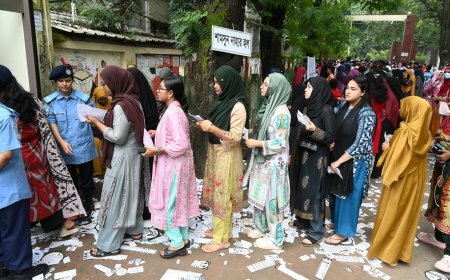
In the 2026 elections, every party is now all dressed up to join the festival of palace election. Even those whose birth was accompanied with the hymns of reform are now jostling for space in the electoral game for a place among the courtiers.
Those who wish to pursue politics on the side of the oppressed must realize that since citizens have accepted the electoral game, they too must play it -- but they must also tell citizens they are joining the game to dismantle the structure and change the way the state exercises power.
The way things are moving now even if the reform proposals from the July Charter are incorporated into the Constitution, the probability of the reforms being actually implemented is very low because palace-oriented parties have no incentive to dilute their power. Implementing reform requires firm resolve and competence -- qualities palace loyalists severely lack.
The essential contradiction is that structurally, the July Charter aims to divest power from the center, while palace-oriented forces are sentinels of power. Thus, the chances of them implementing these reforms are naturally low.
In our country, politics has long been stuck in personality-based politics, allowing it without clear right-left positioning. But as the social media opens up the globe for personal consumption, the appeal of personality, ideology, or belief-based politics is gradually loosing ground.
As the dissipation of ideals-based politics accelerates, the appeal for politics centered around structural reform will gain ground.
The sooner our politics and our voters align with this demand for structural change, the sooner Bangladesh's power structure reforms will begin their sustainable journey.
Mamdani's victory kindles our hope that in the near future people-oriented politics will also shine in our land.