





































































Why the New Governor Won't Work
When it comes to the central bank governor, optics are everything. If he is perceived to be the government's man, then no one will have the necessary faith in him, and he will fail before he even starts.

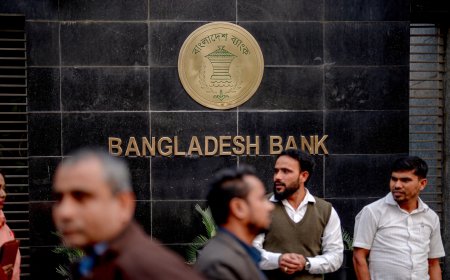
The only reason you consider a piece of paper worth 10 poisha as worth 1,000 taka is trust. You believe that Bangladesh Bank has set this value and will maintain it.
This trust is built on two things:
First, is the question of who is running the bank and how strong are they in resisting government pressure and adhering to economic principles to preserve the currency's value.
Those principles include: not printing more new money than the year's new production (output), keeping interest rates at a level that prevents excessive money supply growth, and maintaining the international value of the taka (i.e. the exchange rate with the dollar) in line with inflation and supply-demand dynamics.
The second factor is the signals these individuals are sending.
After Sheikh Hasina's fall, average annual remittances jumped from around $24 billion to $33 billion. Why? Because the central bank governor Dr. Ahsan Mansur clearly signaled that he would not lower interest rates and had shifted the taka to a relatively transparent rolling peg -- meaning he would no longer artificially prop up the taka's value.
As a result, when he stopped artificially supporting the taka and used high interest rates to contract money supply, everyone received the signal that the taka’s value would not fall further from 124.
Previously, during Hasina’s era, people assumed the governor was forcibly holding the value; if that stopped, it could drop to 200 or more.
Due to Ahsan Mansur’s policies, those who had been holding back their earnings abroad -- hoping for more taka per dollar in the future -- started sending remittances as soon as they earned.
As a result, in just 1.5 years, reserves rose from $18 billion to $30 billion.
However, this personal trust -- in policy continuity and signaling from the central bank governor that he wants to (and will) maintain the currency’s value -- often conflicts with the wishes of various groups in the government and state.
For example, the government wants excess money flow so that extra liquidity builds up in the banking sector, allowing it to borrow easily without competing with the private sector.
The government wants low interest rates so businesses can borrow cheaply, expand, create jobs, generate more revenue, and claim success.
But the government does not want to respect the trade-off that comes with lowering interest rates and increasing money supply: Printing excess money beyond value creation causes inflation.
Inflation leads to exchange rate depreciation. Fuel prices and imported raw materials rise, increasing costs for all imported and produced goods -- which makes the government unpopular.
Yet, since governments are political animals driven by interest groups, they do not want to respect this trade-off.
They prefer to install their own people in the central bank to expand business and trade opportunities through interest rates, exchange rates, etc.
Right now, there is a need for such policies. Bangladesh is going through a recession -- what is called a balance sheet recession.
Due to Hasina-nomics, many businesses have become defaulters. Not all defaulters are dishonest. Apart from those like S. Alam who laundered money, many honest businessmen have production capacity but no buyers. They over-invested and cannot repay bank loans from profits on sold goods.
To recover the economy, interest rates need to be lowered now, and various rescheduling facilities in the banking sector are necessary for them. But how do you do that?
You do it through credible people -- those whom the public and international institutions trust will not bend to government pressure.
Instead, driven by their own conviction, they will set interest rates according to economic principles to revive businesses, recover the economy, and bring negative real loan growth back to the 20-year average of 20-25%.
The problem is that the BNP government is not bothering with that credibility. Instead, it wants to appoint a proxy governor who will not go beyond their wishes.
As a result, the opposite effect will occur from what is needed.
An economist friend of mine working in international finance told me this morning -- a New York-based banker who advises five global banks said they were waiting for the new government to come so he could tell those banks to increase credit lines to Bangladesh.
This morning he called to say he would tell all five global banks not to increase credit lines to Bangladesh, because they think appointing someone close to the government -- with no experience -- means giving leeway to businessmen: policy support, subtle relaxations in loan classification rules, weakening inspection structures -- this will now start at the industrial level.
Do not forget what happened toward the end of Hasina’s era: correspondent banks started freezing credit lines.The biggest outcome of Hasina-nomics is not just destroying institutions but destroying trust in institutions.
To rebuild from that distrust, the government needed to appoint trustworthy people.
Instead, the finance ministry is signaling that they will control Bangladesh Bank by appointing party loyalists. An economist friend listed what disasters could happen under the new governor:
Ultra-loose monetary policy, cutting rates by more than 1% at a time, arbitrarily
Exiting the IMF program, destroying trust in the global financial system
Not undertaking structural reforms in the banking sector
Not ensuring transparency in non-performing loan data, and hiding new data
Continuously refinancing banks with negative asset value without any process
Forcing banks to blanket reschedule loans on the governor’s orders rather than client capacity
Allowing bad banks to defer provisioning
But this list amused me for two reasons:
First, at least two items on this list -- Ahsan Mansur has already done, including the worst one: refinancing negative-asset-value banks and not undertaking structural banking reforms in 1.5 years.
Yet people still trusted him. For one reason only -- he was not the finance minister’s puppet.
Even though I disagree with him on keeping interest rates high and even on inflation data, we all still saw him as someone trustworthy as an individual, and that trust brought stability to Bangladesh’s financial sector.
The main part of this list is rate cuts -- and I support that.
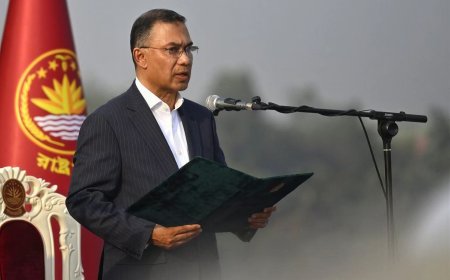
If Ahsan Mansur did the same, I would not say a word. But if the new governor, Md. Mostaqur Rahman, does it, questions will arise in my mind.
The reason for this is that we perceive him as a political appointment by the government, someone who will follow the Finance Ministry’s orders.
This perception, this signaling -- this is what will create a crisis ahead, and its impact will fall on the taka’s value.
Because why you consider a 10-poisha piece of paper as 1,000 taka depends on trust and perception.
Starting with this distrust, I don’t think the new governor will be able to overcome it, because he has taken office at an extremely critical time when he will have to make many difficult decisions, each with trade-offs.
When he makes those decisions, the affected side will accuse him of favoring BNP cronies.
In all critical areas, he will face public anger, and the consequence will fall on the taka’s value.
I’m sorry, BNP.
You can play with fire, but you cannot play with the central bank governor like this.