
























































Making of Bangladesh Foreign Policy: A Roller Coaster Journey
Bangladesh stands at a critical juncture. What it requires is not novelty, but a restoration of balance -- anchored in sovereignty, guided by realism, and executed with quiet confidence.


Before I venture into this complex subject, it would be a serious omission if I did not recall the invaluable contributions of our senior colleagues who relinquished their comfortable positions in the Pakistan Foreign Service and aligned themselves with the Provisional Government of Bangladesh at a moment of existential crisis. They were no less heroic on the diplomatic front than our freedom fighters on the battlefield. It was these committed individuals who, scattered across various world capitals, laid the foundations of Bangladesh’s wartime diplomacy and mobilized global opinion in our favour.
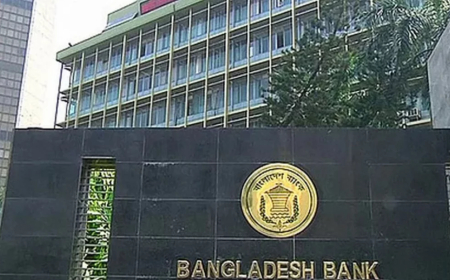
Following independence, the Ministry of Foreign Affairs was established in Segun Bagicha, Dhaka. By late 1972 and early 1973, most Bengali diplomats serving under the Pakistan Government had joined the Bangladesh Foreign Service, collectively constructing the institutional foundation upon which our diplomatic engagement would evolve.
Recently, I read with keen interest an article by Jon Danilowicz, a former U.S. diplomat who served in Dhaka, titled the Balancing Act. It offers a thoughtful exploration of Bangladesh’s ongoing struggle to craft a coherent and credible foreign policy under the banner of “Bangladesh First.”
The wide-ranging engagement the article has generated is, in itself, encouraging. Abed Chowdhury, as ever, elevated the discourse to a philosophical plane, reminding us that historical asymmetries continue to shape global power relations. Another contribution by S. I. Khan is equally illuminating. Together, these reflections -- along with those of several other luminaries -- have enriched the debate with depth and intellectual rigor.
Having served nearly 35 years in Bangladesh’s diplomatic service, I offer the following reflections with a sense of professional responsibility. Foreign policy is not mere rhetoric; it is the disciplined pursuit of national interest through realism, balance, and strategic foresight.
From Idealism to Strategic Awakening
Bangladesh’s foreign policy, in the immediate aftermath of independence in December 1971, was anchored in Sheikh Mujibur Rahman’s oft-quoted principle: “Friendship with all, malice to none.” While morally compelling, it often lacked strategic precision within a deeply polarized global order. His approach was widely perceived as India-centric, which contributed to a degree of public unease.
Although efforts were made to reach out to the Arab world and China, these initiatives did not initially yield the desired results. However, a notable achievement was that most Arab countries extended recognition to Bangladesh following his participation in the 2nd conference of Organisation of Islamic Cooperation in Lahore in 1974.
Ziaur Rahman: Reclaiming Sovereignty and Balance
The emergence of Ziaur Rahman on November 7, 1975, following a series of coups and counter-coups, marked a decisive turning point. Riding on his immense popularity -- stemming from his role in proclaiming independence, as well as his reputation for integrity -- he restored internal stability and reoriented foreign policy toward autonomy and pragmatic diversification.
His government actively engaged the Middle East, opened avenues for Bangladeshi expatriate workers, strengthened defence and economic ties with China, and expanded relations with the West, including Japan. Zia also made it clear that Bangladesh would not yield to regional overreach. On issues such as water sharing and broader strategic concerns, he asserted Bangladesh’s sovereign right to pursue its interests, even elevating matters to international forums when necessary.
His success in securing a UN Security Council seat -- defeating Japan -- and his role in initiating South Asian Association for Regional Cooperation, despite formidable resistance, reflected a confident and independent diplomacy. His membership in the Al-Quds Committee further underscored the trust he commanded in the Islamic world. His legacy remains a defining framework for Bangladesh’s distinct diplomatic identity.
Ershad: Continuity with a Subtle Tilt
The decade-long rule of Hussain Muhammad Ershad largely preserved the structural framework established by Zia. Bangladesh maintained constructive relations with the West, the Middle East, and Asia, benefiting from continuity in economic and development partnerships.
However, his tenure also revealed the limits of that balance. A comparatively closer alignment with India -- whether tactical or circumstantial -- at times blurred the strategic autonomy that had been carefully cultivated. While not amounting to a fundamental departure, this subtle shift signaled the beginning of a more accommodating posture, the implications of which became more pronounced in later years.
Khaleda Zia: Strategic Balance with Firm Restraint
Under Khaleda Zia, Bangladesh returned to a more calibrated and self-assured foreign policy. Building on Zia’s legacy, her governments reinforced strategic diversification while upholding national dignity in external engagements.
Her approach to India merits particular attention. She neither courted confrontation nor conceded ground under pressure. Instead, she practiced a quiet yet firm diplomacy -- engaging where interests converged and resisting where they diverged. This preserved Bangladesh’s policy space and ensured that bilateral relations, though often strained, did not compromise core national interests.
The extended tenure of Sheikh Hasina marked a discernible departure from this tradition of balance. During this period, Bangladesh’s foreign policy appeared increasingly aligned with Indian strategic interests.
Unlike previous governments -- which, despite pressures, sought to preserve autonomy -- this phase witnessed an unprecedented degree of accommodation and subservience .The perception gained ground that Bangladesh’s strategic choices were being shaped, if not dictated , from across the border. Such overdependence risked weakening the country’s negotiating leverage and diluting its standing in the broader international arena.
Yet, to her credit, Sheikh Hasina did secure certain notable gains. Foremost among them was the arrangement granting Bangladesh perpetual access to the Tin Bigha Corridor, facilitating the movement of residents of Dahagram and Angarpota -- enclaves long stranded under adverse possession within Indian territory.
She also concluded, in 1996, a 30-year agreement with India on the sharing of the Ganges waters, a long-disputed issue between the two countries. Whether Bangladesh received its equitable share, however, remains open to question. With the agreement nearing its expiry, India has thus far shown not much enthusiasm toward its renewal.
The Interim Government: Resilience Amid Hostility
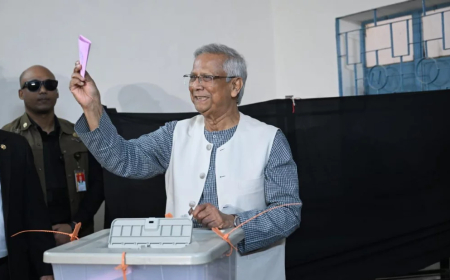
The interim administration led by Muhammad Yunus operated under extraordinary constraints -- domestic turbulence coupled with overt external pressure, particularly from segments of India’s political and media establishments.
Despite these challenges, it made a concerted effort to reclaim Bangladesh’s independent voice. Yunus demonstrated resilience by maintaining global engagement while resisting undue pressure, thereby laying the groundwork for restoring balance in foreign policy.
The Present Government: Promise Under Pressure
The new government under Tarique Rahman has begun with promising signals -- emphasizing governance, restraint, and public welfare. Yet it faces a severe external shock.
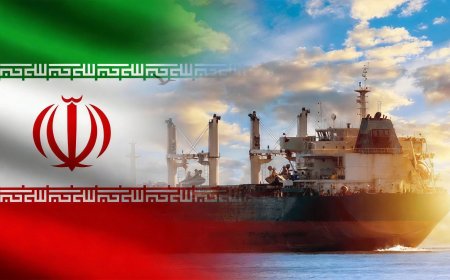
The crisis in the Persian Gulf has disrupted energy supplies and global markets, placing Bangladesh under acute economic strain: Fuel shortages, rising import costs, declining exports, and falling remittances. These pressures are further compounded by domestic inefficiencies and opportunistic market practices.
In such a context, foreign policy must function as an instrument of urgent economic stabilization -- securing energy supplies, stabilizing trade, and mobilizing international support with speed and precision. The broader policy orientation, succinctly articulated as “Bangladesh First,” may well serve as its conceptual foundation.
Though it is still too early to pass judgment on the new government’s ability to manoeuvre amid the region’s complex geopolitical and geostrategic dynamics, the grapevine is already working overtime to detect any sign of inclination.
Conclusion: Toward Strategic Clarity
Bangladesh’s foreign policy trajectory offers a consistent lesson: Most governments -- despite constraints -- have sought to balance external pressures, particularly from India, while safeguarding national autonomy. Only in one prolonged phase did that balance erode significantly, to the detriment of national interest.
What is required now is the right kind of leadership to effectively harness this potential.
Ashraf Ud Doula is a former Secretary to the Government of Bangladesh and has served as Ambassador to several countries.
What's Your Reaction?