

























































The Broad Banner of the LGBTQIA+ Community
A person’s sexual orientation is an innate characteristic of that person and must not be a basis for discrimination.

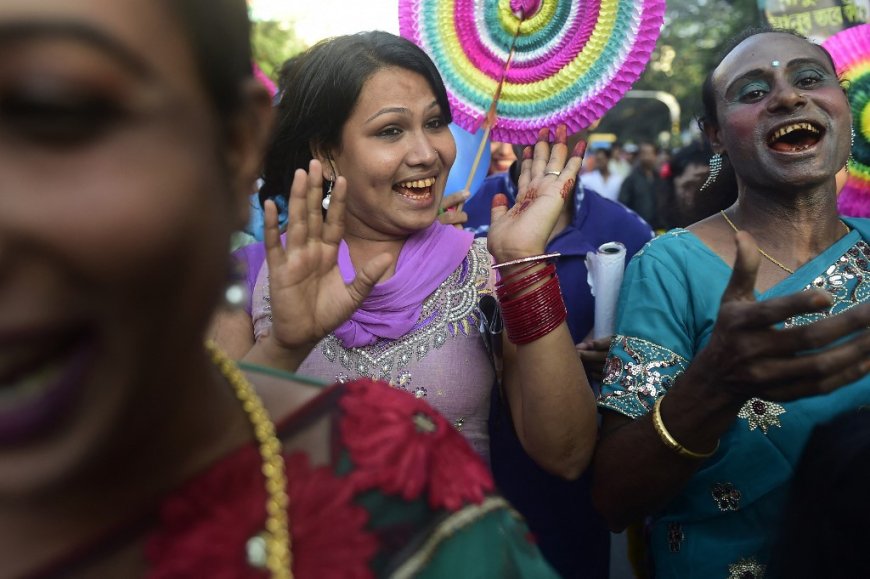
Sexual orientation is a real thing. Even those who are heterosexual have one. Like most people, if you are sexually attracted to and fall in love with a person of the opposite gender, you are heterosexual or a straight person.
As in the case of a minority of people, if you are sexually attracted to and fall in love with a person of the same gender, you are homosexual or a gay/lesbian person. If you are sexually attracted to and can fall in love with people of both the same and opposite gender, then you are a bisexual person.
According to the paper titled “Perspectives on the complex genetics of same-sex sexual behavior” by the Broad Institute, this orientation in a person is determined by a complex interaction of that person’s various genes.There is no single gene that determines whether that person is straight, gay or bisexual, but a group of genes belonging to that person interact with each other in various complex ways that establish that person’s sexual orientation.
While it is not yet conclusive whether this interaction starts pre-birth or after (though most likely pre-birth according to, for example, a Wikipedia article titled “Prenatal hormones and sexual orientation"), one thing that has been established beyond doubt by endless medical research is that a person’s sexual orientation, no matter when established, is immutable i.e. it cannot be changed. This applies to every human being.
The paper titled “Resolution on Appropriate Affirmative Responses to Sexual Orientation Distress and Change Efforts” by the American Psychological Association (APA) summarizes the methodologies and findings of those researches. Those who fret about gays “converting” young impressionable people into their deviant ways ought to take note.
Similarly, no amount of counselling, therapy, electric shock, religious instructions, black magic, forced marriage to a member of the opposite gender or sexual intercourse with that person can convert a gay/lesbian person to a straight one.
Therefore, a person’s sexual orientation is an innate characteristic of that person and must not be a basis for discrimination. It should be noted that in a heteronormative world where young homosexuals have often realized their orientation much later on in life do not negate what has been established scientifically so far.
It has also been established that two nearly identical people, one gay and one straight show no differences other than which gender they are sexually attracted to. This difference has been dismissed as a mental or physical illness since the attraction to the same gender by itself has been shown to have no effect on that person’s other attributes and functions in a way that an illness does.
WHO therefore removed homosexuality from its International Classification of Diseases (ICD) in 1990, where it was previously listed as a mental illness.
Gender dysphoria is a real thing too. There is a small number of people among us who experience this phenomenon every moment of being awake (sometimes even while asleep).
While yours truly is still educating himself about this condition, I say from personal conversations with transgender people in the UK and Bangladesh, i.e. those who experience gender dysphoria, that every moment of their lives is overshadowed by the realization of a profound inconsistency between their physical gender attributes (i.e. their “biological gender,” which is how other people see them) and what they perceive themselves to be from the depths of their inner selves, often from the earliest of their conscious childhood times.
This perception is neither a flicker of the imagination, nor a fleeting moment, but a complete, constant and holistic awareness of who they are. This is their “gender identity” which in the case of transgender people is diametrically opposite to their biological or physical gender.
The paper titled “What is Gender Dysphoria” by the American Psychiatric Association (APA) best summarizes the latest available information about this condition.
The psychological distress associated with such dysphoria can only be really understood by those who experience it every moment. To say that it is crippling would be a gross understatement. Different transgender people with different family and social situations, along with different resources choose different levels of remedial steps to relieve themselves of this pain.
They range from simple hormone injections to full on genital surgery in order to bring their biological gender closer to their actual gender identity. This is no mental illness, nor it is the manifestation of some “ideology” as the Muslim conservatives in the X group claim. This is real pain. Gender identity, which can thus be different from a person’s physical gender is also an innate characteristic of a person and must not be a basis for discrimination.
It would go amiss if I failed to mention a few other people within the LGBTQIA+ group. There are those among us who, also due to gender dysphoria, do not see themselves either as a man or a woman. Their biological gender could be either that of a man or a woman, but they simply cannot place themselves within that binary framework. They feel deep down belonging to an undefined gender -- they are “non-binary.” That is their gender identity and that too must not be a basis for discrimination.
Then there are those among us whose biological attributes, especially the reproductive organs are neither fully of a man nor of a woman or are of both. This is one group of people, called “intersex”, that are probably the most marginalized in Bangladesh, for very few of them actually make themselves known.
Your author has had the fortune to have a conversation with only one. They exist and deserve human dignity and any restorative steps that are ethical from their own points of view. But most of all, they too are part of society, equally valuable ones at that.
The topic of non-binary people brings us to an absurdity that has been established by the previous government in Bangladesh -- the supposed existence of a third gender. If we recognize a third gender in the country, then who constitutes the first and who constitutes the second? There is no such thing as a third gender.
There are females, males, transgenders, transexuals (i.e. transgenders after completing hormonal and surgical body change), non-binary and intersex people, but no third gender humans. The attempt by Sheikh Hasina to create an umbrella term for certain sexual minorities was a dastardly endeavour to escape from the complexity of the matter and lump various people in an artificial grouping for political expediency.
What was worse was the conflating of this artificial third gender with Hijra people. There is nothing uniquely innate about Hijra people. The Hijra community is a centuries old establishment, originally respected and protected by Moghul Kings but turned into social rejects under British rule.
Today the Hijra community consists of gays, transgenders, even very poor heterosexual boys who have been rejected by family and society. The community, under the guardianship of various guru-maa's provide food, shelter, and security to those for whom family and society were no more.
In return, those given such love must earn money for the guru-maa’s through extortion of businesses and individuals. They must also often resort to prostitution to male clients, for which their own manhood is often surgically removed. The guru-maa’s themselves were once given refuge by their own guru-maa’s.
This community exists only because the rest of us forced it to. If in a distant future, we can imagine no familial, social or state sponsored discrimination against members of the LGBTQIA+ community, no forced physical estrangement from their own families etc., the Hijra community will cease to exist. That should be the goal in Bangladesh 2.0.
Riaz Osmani is a political and social analyst.