

































![A Ledger of the Soul: Navigating the Allah-Bhagavant Nexus in a 19th-Century Puruṣākāra Jñāna Caupara [Gyan Chauper]](https://counterpointbd.com/uploads/images/202608/image_430x256_6a93baa3b09a7.jpg)



















There is a sensible way out, and it lies inside the Constitution, not outside it. If the new government wants to preserve the Reform Council model, it should table a constitutional amendment under Article 142 defining the Council’s status, powers, voting threshold, relation to Parliament, and oath.

You have to heal those it hurt, reassure those who hurt on its behalf, and do all of this under the watchful eye of a public that has very little forgiveness left in the tank. You are blamed for problems you inherited and applauded cautiously for small, unsexy fixes that don’t photograph well.
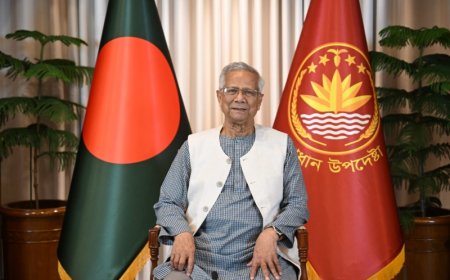
Today, 18 months later, as the nation takes stock of the past and looks at the future, it is an opportunity to evaluate the performance and legacy of Muhammad Yunus and his Interim Government. The performance and work of the Interim government, despite some shortcomings, must be commended, perhaps even celebrated.
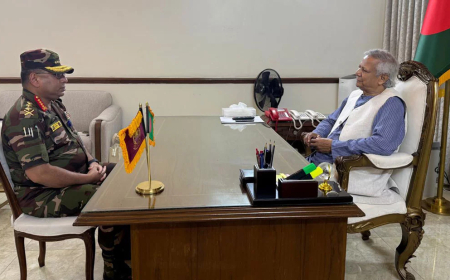
In an era of polarized discourse and manufactured divisions, Dr. Yunus and General Waker-uz-Zaman showed us the path forward: Humility in the face of criticism, prioritization of the nation over self, and relentless pursuit of reform and justice.

No one can predict exactly what Bangladesh's constitutional architecture will look like by year's end. The process will be messy, contentious, and imperfect. But the direction is clear. Two-thirds of voters have chosen a path away from capricious rule toward a system where power is tempered.

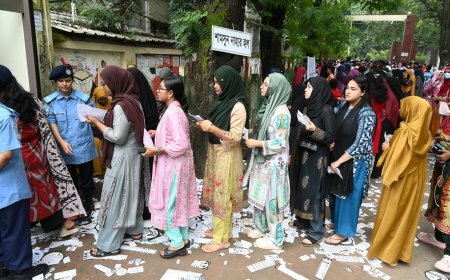
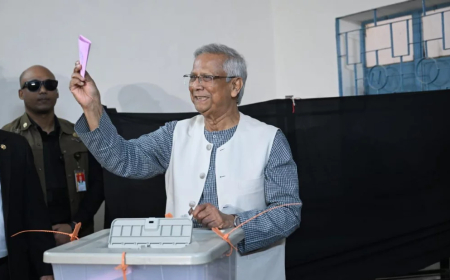
The winners and losers, and those in between, in the aftermath of the February 12 polls
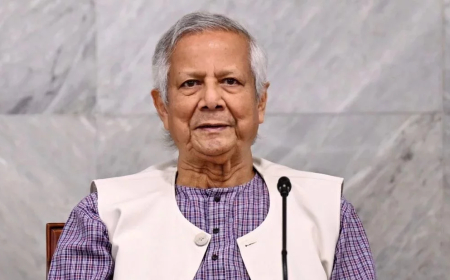
A Yunus presidency could arguably benefit Bangladesh considerably. Despite domestic criticism from certain groups, he continues to command considerable respect internationally, and no other Bangladeshi figure possesses comparable global stature
What Dr. Yunus and his team of advisers stepped into was not a functioning state awaiting a caretaker, it was institutional wreckage requiring reconstruction. What followed was a period of institution-building that, whatever its imperfections, deserves recognition.
Bangladesh will remember the outgoing Chief Adviser with respect for stepping up when the country desperately needed him. His record in government is, predictably, mixed. Was it fair to have expected more?

As with the constitution, good principles can only help if properly applied in practice. In the long run, the verdict of history on the interim government will depend on the ability of its successors

For the Interim Government, this election will be how their legacy is viewed by posterity. Whatever they have achieved and whatever mistakes they have made, everything will be subsumed by this election. If they are able to preside over a good election and hand over power without incident to an elected government, then they will be judged a success.

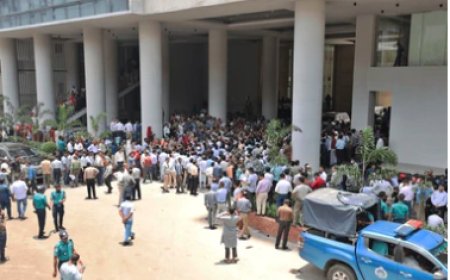
Now, at any moment, a mob can be summoned and the state paralyzed. The potential that emerged after Hasina’s fall is now impossible. This country will become a playground for fallen Indians and Chinese.
That is the real horror. If one clearly innocent doctor required thirteen layers of influence to secure bail, how many other innocent people are still inside -- unseen, unheard, and unrescued?
It is no longer an abstract fight over who controls the political clock. It is a concrete, urgent battle for the very foundations of public order, institutional integrity, and rational discourse.
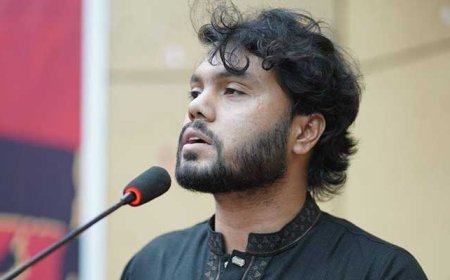
Hadi wanted elections. He believed in the electoral process. He believed in democracy. He was running for election in Dhaka-8. He believed in the slow, painstaking process of building a new Bangladesh and knew there could be no short-cuts.
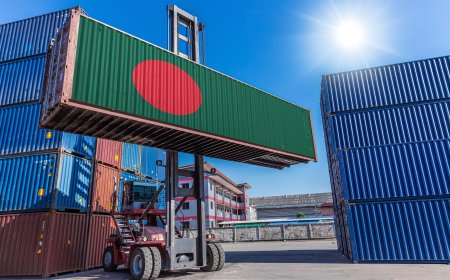
The reality in Chittagong is: three days at the outer anchorage, indefinite waiting inside the port for a berth, one week to discharge using small lighter vessels, discharge stops if the sea is rough -- all added up, instead of 2 days, in some cases it is taking 25 days.