
























































What Legacy Did She Leave For Us?
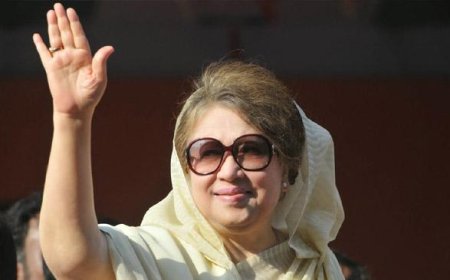
Her entry into politics in the early 1980s was a response to national crisis, not personal ambition. She became more than a political leader. She became a symbol -- of democratic resilience, of refusal to capitulate, and of the belief that political legitimacy must come from the people, not from force.

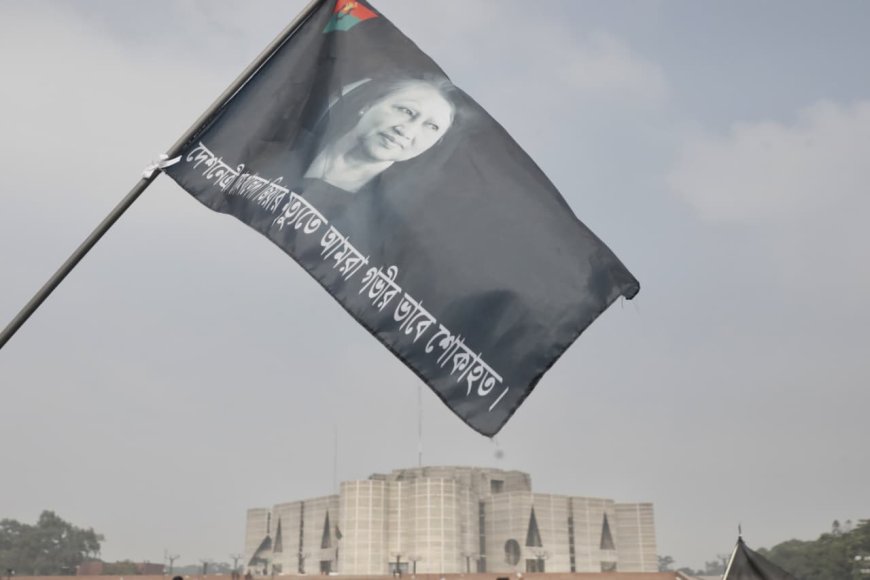
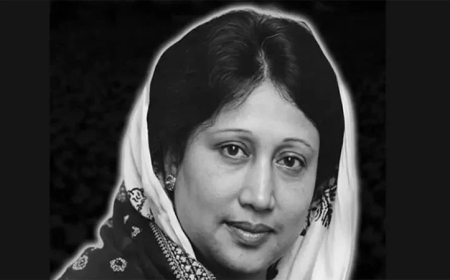
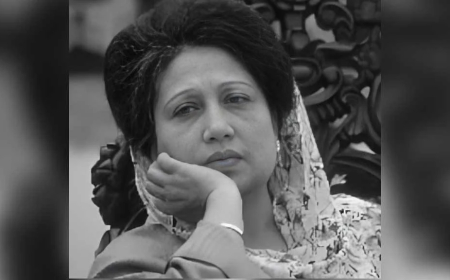
The passing of Begum Khaleda Zia closes one of the most consequential chapters in Bangladesh’s political history. Her life was never the story of a conventional politician groomed for power.
It was the story of a woman who began as a housewife with no formal higher education, no political training, and no expectation of public life -- yet became one of the most enduring symbols of democratic resistance in South Asia.
Her entry into politics in the early 1980s was a response to national crisis, not personal ambition.
After the assassination of President Ziaur Rahman on May 30, 1981, Bangladesh entered a period of military consolidation as Hussain Muhammad Ershad seized power in 1982, imposing martial law and suspending the Constitution.
In that moment, Khaleda Zia -- like Corazon Aquino in the Philippines or Violeta Chamorro in Nicaragua -- stepped forward from private grief into public leadership.
She formally joined the Bangladesh Nationalist Party in 1982, the party founded by her late husband, and by 1984 she had risen to the position of chairperson -- a role she would hold until her last breath.
From that point onward, she became one of the central figures in the nationwide movement against General Ershad’s military regime.
When the regime attempted to draw her into the 1986 election to legitimize its rule, she refused, rejecting both pressure and inducements. She was placed under house arrest several times.
That refusal became a defining moment in her political identity. It established her reputation as an uncompromising leader, even when the personal cost was high.
Her first major test of democratic leadership came in 1991, when Bangladesh returned to parliamentary democracy after years of military rule. As the country’s first female prime minister, she governed while still learning the machinery of the state.
She made mistakes, as any leader does, but her intent was clear: To restore competitive politics, protect pluralism, and prevent the concentration of power in a single political force.
Her early years in office helped re‐establish parliamentary norms and revive democratic institutions weakened by authoritarian rule.
Her democratic instincts were tested again in 1996. Faced with a nationwide opposition movement demanding a neutral caretaker government to oversee elections, she ultimately accepted the formula and agreed to step down before the end of her term.
By handing power to a non‐partisan interim administration and allowing fresh elections, she demonstrated that the legitimacy of the electoral process mattered more than holding office.
It was a rare moment in South Asian politics: a sitting prime minister voluntarily relinquishing authority for the sake of restoring public confidence in democracy.
Her commitment to democratic principles would be tested repeatedly in the years that followed.
During the 2007-2008 military-backed caretaker government, she was imprisoned after declining to compromise with an administration intent on altering the political landscape.
Her detention came to symbolize her persistence in the face of pressure from unelected authorities. She declined both exile and any legitimization of a political transition orchestrated outside the democratic framework.
Khaleda Zia's approach to public campaigning was marked by a consistent adherence to principle. During the 2008 election campaign, despite genuine safety concerns, she frequently declined protective measures such as bulletproof glass enclosures, choosing instead to engage directly with the public.
In contrast, her opponent, Sheikh Hasina, delivered her speeches from behind bulletproof glass during the same campaign.
Whether viewed as a symbolic gesture or a strategic decision, Khaleda Zia’s actions underscored her belief that political legitimacy is derived from close engagement with the public rather than maintaining distance.
In 2014, she refused to participate in an election held under a partisan government, insisting on the caretaker system her party had long defended. The boycott was not merely tactical; it was a statement about the erosion of electoral credibility.
In 2018, she was convicted in a corruption case that her party and many observers described as politically motivated. Her imprisonment was widely seen as part of a broader effort to neutralize the opposition.
Even then, when opportunities arose to leave the country for medical treatment, she refused. She chose to remain in Bangladesh, even at the cost of her health. As she often said: “I have no other home but this country. My life and death are tied to this land.”
In 2024, she again declined to legitimize an electoral process her party viewed as fundamentally compromised.
Through these decisions, she became more than a political leader. She became a symbol -- of democratic resilience, of refusal to capitulate, and of the belief that political legitimacy must come from the people, not from force.
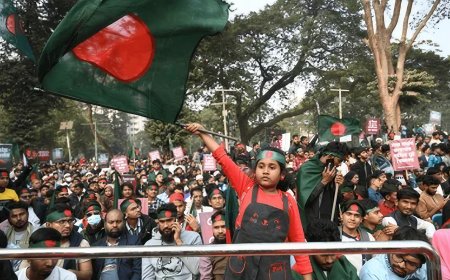
Her large funeral reflected her significant impact on national politics. Though her life has ended, her fight continues. She is remembered for refusing to support authoritarianism, rejecting exile, facing the public openly, and prioritizing principles over personal comfort.
Once an untrained housewife drawn into public life by tragedy, her legacy highlights that democracy endures only when people accept its challenges with dignity and conviction.
Barrister Salah Uddin Bhuiyan is an Advocate, Supreme Court of Bangladesh.