






















































Begum Khaleda Zia's Quiet Battle for the Girl Child
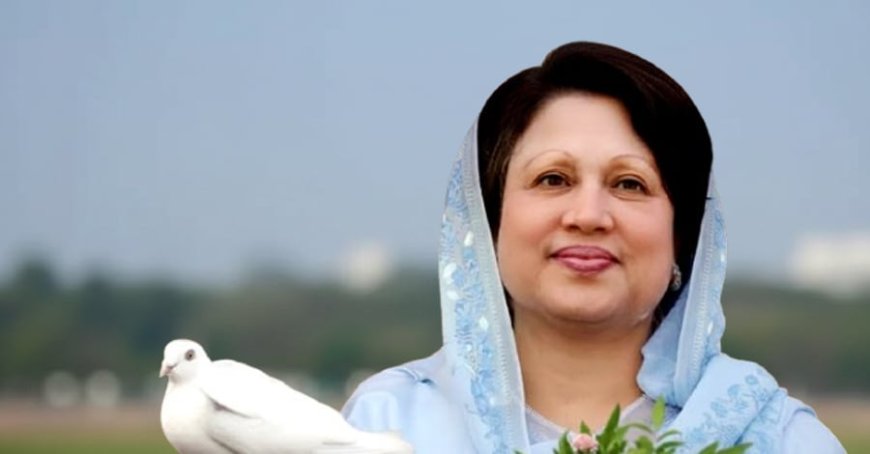
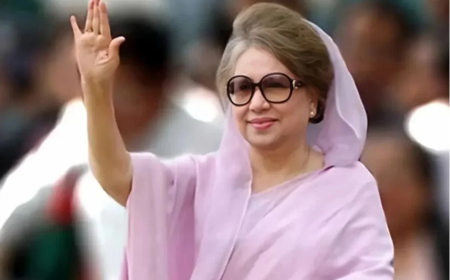
That millions turned out for former Prime Minister Begum Khaleda Zia’s funeral prayer in Dhaka, in the largest public send-off afforded to anyone in Bangladeshi history, communicated a broad legitimacy and organic sentiment that no party machinery can manufacture. Respect in Bangladesh is traditionally rationed along partisan lines, but she remained the enigma, the odd one out.
Suffice it to say, Begum Zia was, by and large, the people’s guardian in the most literal sense of the phrase.
Across changing eras and political seasons, she incrementally and iteratively developed a gifted instinct and unflinching tenacity to understand, respond to, and communicate the pulse of Bangladeshi citizens in a way her peers never matched. That instinct was learned not through formal academic training or political education, but through lived experience of a public life she was thrust into by circumstances not of her own making.
Even after nearly two decades away from the office of Prime Minister, heartfelt tributes came not solely from her base in the BNP, but from diverse corners of a polarized society that are rarely seen in the same frame in Bangladeshi politics.
The uncommon optics of both the Speaker of the Pakistani National Assembly and the External Affairs Minister of the Indian Government flying to Dhaka at the same time to pay their respects pointed to an inescapable truth: over more than five decades in public life, and across the full arc of post-independence Bangladesh, Begum Zia, through sheer will and a duty thrust upon her by the devastating trauma of her husband’s assassination, became an unlikely but commanding stateswoman whose positive contributions to Bangladesh and beyond demanded respect in death.
Shaped by the Lived Experience of Public Life
The farewell was less a political referendum on the BNP’s popularity than a sombre acknowledgement of Begum Zia’s personal character. By now, it seems clear that she was far more popular as an individual than her party is as a political institution. Over the years, she showed extraordinary grit under intense pressure and absorbed it like few others.
She carried herself with a distinctive grace amidst both triumph and adversity. She faced her opponents with a dignity that, frankly, felt un-Bangladeshi. Quiet defiance against authoritarianism became her defining trait.
Bottom line: Begum Zia kept the light on for the sacred fight for democracy when many others, including many within her own party, either dimmed it or traded it away for short-term gains.
Fate would have it that she left this world at her peak, as a symbol of national unity for those who opposed the now-deposed Awami League regime, and only after what must have felt like a lonely final battle against Sheikh Hasina, waged from prison, house arrest, and later from a hospital bed.
In the end, she prevailed in the Battle of the Begums. She held out long enough to witness the 2024 mass uprising that allowed her to die a free woman, surrounded by a family she had been kept away from for more than a decade. For Begum Zia, confined by the Pakistani military establishment in 1971 while her husband heroically went to war, and decades later forced into detention again as she stood in near-solitude as a bulwark against authoritarianism, history closed its circle.
Begum Zia’s farewell did not erase the controversies of her time in power, and it should not. Her years in office warrant criticism: the formation of the Rapid Action Battalion and the early emergence of extrajudicial killings, rampant public sector corruption, the 2004 attack on Awami League leadership, rising militancy, nationwide power outages, violence targeting minorities, particularly members of the Hindu community, and her political decisions that contributed to the onset of the 1/11 military-backed caretaker government regime, each demanding scrutiny.
Her image was also clouded by a strange and avoidable episode that began in the mid-1990s, when BNP activists started observing her birthday on August 15, the death anniversary of her archrival’s father and Bangladesh’s principal political architect, Bangabandhu Sheikh Mujibur Rahman.
That choice felt like a rare blip in an otherwise consistent impulse to think in larger, big-picture terms and to avoid symbolism that intensified divides. Even with these legitimate criticisms, something subtler became noticeable after she passed: cross-partisan regard for her as a person, if not as a faultless politician, which has made her part and parcel of the nation’s collective consciousness.
The claim is perhaps testable: among Bangladesh’s heads of government and heads of state since independence, Begum Zia seems to have carried the lowest sustained unfavourability, or dislikability, across generations and across geography. A parallel fact strengthens the point: in General Elections since 1991, she ran in 23 constituencies across the country and never lost, a feat even her political nemesis, Sheikh Hasina, and indeed no one else in Bangladesh, could match.
Begum Zia was also, through what she did and, just as importantly, what she refused to do, the only one among Sheikh Mujibur Rahman, General Ziaur Rahman, General Hussein Muhammad Ershad, and Sheikh Hasina who was not labelled, by one side or another, as authoritarian or autocratic, or as intentionally leaning toward those leadership styles. Bangladesh would do well to learn from Begum Zia’s life by appreciating that political leaders can err, but that their overarching conduct in public life, and the discipline of respecting public perception, while in power and in opposition, in good times and bad, through thick and thin, leaves its own lasting record.
Another dimension remains fairly underappreciated: Begum Zia’s imprint on Bangladesh’s public policy landscape.
Promoting Female Empowerment
First, girls’ education sat at the centre of Begum Zia’s first-term social policy agenda, backed by fiscal incentives designed to primarily reach rural, conservative households. Foremost among the measures taken by her government was the rapid socialization and implementation of the Female Secondary School Assistance Project, which worked simultaneously as an education promotion initiative and a child marriage prevention tool by tying state-led financial support to girls staying in school, meeting attendance requirements, and delaying marriage. The impact tracked the policy design and directly led to Bangladesh achieving gender parity in secondary school enrolment.
A World Bank paper reported that the share of girls enrolled at the junior secondary level rose from 35% in 1990 to 51% in 1994, and to 58% by 2005. Rigorous research evaluation later found that exposure to the program increased girls’ completed schooling by 1.6 to 2.0 years and delayed marriage by about 1.4 to 2.3 years, with positive spillovers, or external benefits, into women’s labour market participation rates and lifetime financial earnings that made the initiative as much an employment- and empowerment-related public policy strategy as an education policy.
That logic carried a personal irony for Bangladesh’s first elected female Prime Minister and the second in the Muslim world. Begum Zia’s own formal education ended around the time she married at 15, a point her detractors often mocked and referenced to cast her in a negative light. But her government went on to make girls’ education a marquee priority, advancing some of the most consequential reforms in Bangladesh’s history on that front and leaving an enduring legacy of scope, scale, and tangible impact that remains among the BNP’s strongest records in office.
It would not be a stretch to suggest that her own biography, shaped by an early marriage and an education cut short, strengthened her individual resolve to use the machinery of government, and her position in society, to help families not only send their daughters to school but keep them there, and postpone the same early turn that had narrowed her own life choices and opportunities.
A political contradiction ran alongside it. For years, amid non-stop and reasonable criticism from progressive and secular voices, she held together anti-Awami League coalitions that included Islamist forces and right-wing political parties whose politics frequently collided with her government’s push to expand girls’ education and women’s employment.
In a twist that still unsettles tidy moral accounting, some of the very actors most uneasy with women’s leadership accepted Begum Zia’s, and her government pressed ahead with policies that expanded opportunities for girls in concrete, measurable ways that still echo in Bangladesh today. History will weigh the bargains that made those coalitions workable against the outcomes they helped deliver.
Second, her government took a stand against violence against girls and women, and the BNP’s clearest legal legacy on that front came through the state’s response to acid violence. Two legislative instruments in 2002, the Acid Crime Control Act and the Acid Control Act, moved the response beyond rhetorical outrage and into enforcement. Together, they combined tougher penalties and specialised court procedures with a licensing and regulatory regime covering acid import, production, transport, storage, sale, and use, alongside a national control framework and victim support provisions.
The Acid Survivors Foundation placed the peak of acid attacks in 2002, followed by visible declines in subsequent years as enforcement and regulation strengthened.
Begum Zia categorically signalled that violence targeting girls and women would be treated as a prosecutorial priority rather than a private matter to be settled quietly, as had historically been the case in rural Bangladesh. Contrary to the advice of many within her own party and Islamist coalition partners who were, in effect, hostile to women’s empowerment, she sanctioned law enforcement to pursue perpetrators, often the husbands of victims, through speedy arrests and swift trials. Doing so was politically risky, but it sent a deterrent signal.
For girls and women, the downstream effects were direct: safer mobility, fewer school dropouts driven by fear and stigma, and fewer families pushed into ruin by long-term medical costs, reconstructive care, and lost income.
Third, school-age girls’ health improved through public health decisions taken during Begum Zia’s years in office that expanded high-coverage delivery platforms for children. During her first term, Bangladesh launched nationwide National Immunization Days in 1995 and used the same mass-mobilisation machinery to pair vitamin A supplementation with those campaigns, bringing prevention services to households at scale. Her government continued scaling routine immunisation coverage through the Expanded Programme on Immunization, with valid full immunisation rising from 52% in 2001 to 63% in 2003, and to 71% in 2006.
For young girls in particular, who bear a disproportionate share of the public health consequences when preventable illness spreads through households, these policy decisions reduced the burden of vaccine-preventable disease and micronutrient deficiency, lowered the frequency of illness that disrupted growth and learning, and supported school attendance by cutting down sick days and easing household medical costs that could otherwise have pulled daughters out of school.
Fourth, Begum Zia made it a point to extend household incentives for schooling beyond secondary education by using large-scale primary education support programs that reduced the direct cost of keeping children, including girls, in school. She did so with a sophisticated and creative policy approach, linking food security interventions to school enrolment and attendance.
During her first term, the Food for Education programme provided in-kind cash transfers linked to attendance.
During her second term, the Primary Education Stipend programme supplemented that approach with a cash stipend tied to enrolment and attendance conditions. These were tangible social policy instruments that have been emulated extensively in other developing countries: they put a material benefit on the table for rural families who kept children in school, and they increased the base of girls entering and staying in the education pipeline before reaching the secondary stipend years.
Fifth, her years in office included some of Bangladesh’s first credible steps on disability inclusion, with direct implications for girls who faced the highest barriers to socio-economic participation. The adoption of the National Policy on Disability in 1995 formalised a government stance that disability inclusion required state-led action and has been carried forward in ensuing decades by other governments. In fiscal year 2005 to 2006, her government introduced a first-of-its-kind Disability Allowance, providing a predictable monthly transfer to registered beneficiaries.
Those moves did not remove the structural barriers to inclusion on their own, but they did create state instruments that households and service systems could use to support girls with disabilities.
Sixth, her second term placed women’s economic participation and access to finance into more explicit economic frameworks and regulatory structures in ways that were considerable at the level of institutions and rules. The Industrial Policy 2005 and the SME Policy Strategies 2005 explicitly identified small and medium enterprises as a priority area and included provisions to support women entrepreneurs. In 2006, the Microcredit Regulatory Authority Act created a statutory regulator to license and supervise microfinance institutions, formalising oversight of a sector in which women constituted the overwhelming share, reportedly over 90 percent, of borrowers.
Silence from Progressive Activists
In reflecting on her career, and even more on the person Begum Zia was, I want to end on a personal note. I began writing opinion columns around 2016, when my view of Begum Zia was rather negative. At that point, she seemed to be politically at her weakest, and Bangladesh appeared to have moved on from her, with her name deliberately filed away by her opponents as a relic. My early perspective was shaped less by a neutral reading of her years in office as Prime Minister and her struggles as an opposition leader than by what I absorbed from intellectual circles, political commentary, and a media ecosystem that rarely treated her achievements with any seriousness.
The emphasis, again and again, was on her failures, some real but others amplified into propaganda that, after all these years, appears nothing short of laughable, often framed through targeted attacks on her as an individual, from the topmost echelons of the Awami League to its activist base. The cumulative effect was to portray her as something close to an anti-Bangladesh, or pro-Pakistani, anti-hero who should be discarded. Nothing could be further from the truth.
Looking back, what remains most jarring is not only the ferocity of the attacks, but the imbalance between those who condemned them and those who stayed quiet. During the Awami League era, Begum Zia faced a strain of misogyny and shaming that went far beyond criticism of her time in office.
It was personal, sexualized, and designed to humiliate. Scurrilous rumours circulated that do not bear the dignity of repetition, even to refute them, here.
Her eviction from her Cantonment residence became a moment of nationally televised public shaming, with claims that pornographic magazines and alcohol bottles were found inside her bedroom, later reported to have been planted by security agencies at the behest of her opponents. Sheikh Hasina spoke of throwing her into the Padma River. Astonishingly, she also insinuated that Begum Zia’s failing liver and chronic health issues were the result of heavy alcohol consumption.
The Awami League supremo took aim at Begum Zia’s clothes, questioning her preference for French chiffon sarees over local sarees, and attacking her make-up and her character, while also, bizarrely, feeling no shame in sharing with the nation how Begum Zia had performed, or more specifically, failed to perform, in school as a young girl and then twisting that into an insult by alleging, without any evidence, that she had only passed mathematics and Urdu and failed in other subjects.
The insinuation followed that Begum Zia’s strength in mathematics reflected an ability to count illicit money, and that her strength in Urdu reflected an affection for Pakistan. The level of vitriol was unbecoming of a Prime Minister. What is hard to forget is how few women’s rights voices publicly treated that smear campaign as unacceptable. Begum Zia rarely responded. She met the attacks with silence and composure, and over time, that restraint became part of her public credibility.
Bangladesh has a habit of turning its politicians into saints or villains. The best tribute I can pay to Begum Zia is to resist both of these instincts and state what I eventually came to see as an observer of Bangladeshi politics. She was not a rigid conservative. She was not a rigid progressive. She was a pragmatist who governed from the political centre and responded to the needs of the day.
She backed market liberalisation-based reforms and private sector expansion when Bangladesh needed them, drawing on right-of-centre economic thinking and what is commonly deemed neoliberal economics. She also leveraged the state apparatus aggressively in social sectors, particularly to push for reforms in public health and education, advancing policies that carried a plainly redistributive, social-democratic, or left-wing economic character in the traditional sense.
Dignity and Grace
One of the qualities that branded her leadership, and that I came to admire, was that Begum Zia understood her limitations better than most, including the fact that she was not a policy technocrat. She relied on subject-matter experts and gave them political cover to deliver programs.
She preferred bargaining over dictatorial decrees and coalition management over permanent confrontation. She spoke less and listened more, which, again, was very un-Bangladeshi.
None of this cancels what deserves sensible criticism. The darker chapters of her time in office are real, and they belong not only in the public record but also in open debate, and they should be discussed extensively. But two traits must be mentioned, traits for which Bangladesh will remember her, in general, in positive terms. On democracy, she could be stubborn and uncompromising to a fault, even when it cost her years of freedom and coincided with a serious decline in her health. On questions of national interest, she could be both flexible and willing to compromise beyond ideological lines when the country demanded or needed her to do so.
In 1991, despite a strong mandate, she accepted the opposition’s demand to institutionalise a parliamentary system, even though she personally favoured a presidential model that likely would have suited her popularity better. In 1996, she accepted the demand for a caretaker government. Her government first oversaw a one-sided election to pass the constitutional amendment establishing the caretaker system, and then she returned to voters almost immediately for a competitive election held under that caretaker arrangement, which the BNP ultimately lost to the Awami League. In both cases, she yielded to, and bowed to, the public will.
The point is not to glorify Begum Zia. It is to recognize a stateswoman who did not behave as if she were indispensable to the functioning of the state, who did not advertise her achievements as daily theatre, and who did not package and sell her personal sacrifices as a television soap opera.
She stayed in Bangladesh as a matter of principle and commitment to the country, and faced her opponents, whether that was General Hussein Mohammad Ershad’s military regime in the 1980s, the 1/11 regime in the late 2000s, or Sheikh Hasina’s Awami League regime for the past 15 years.
Consider the counterfactuals. During 1/11, Begum Zia was offered the option to leave the country. She refused. Sheikh Hasina, when offered that option, left.
Begum Zia also chose to take the BNP into the 2008 election despite signs that the party was underprepared and that forces beyond the campaign trail had already influenced the likely outcome, including back-channel dynamics among the Awami League, the military establishment, and international actors described in former Indian President Pranab Mukherjee’s memoirs.
Even so, Begum Zia appears to have judged that a political government led by the Awami League was preferable to the continuation of a military-backed arrangement. Whether that decision ultimately served her interests is a question for historians.
While detained, she also signalled opposition to the minus two formula by stressing that a return to civilian politics was non-negotiable and required space not only for her, but for Sheikh Hasina too, however sour their rivalry. In practical terms, Begum Zia’s decision to remain in the country also meant Sheikh Hasina had room and reason to return to Bangladesh and contest in the 2008 election. A similar pattern appeared earlier. In the late 1980s, Begum Zia refused to legitimise General Ershad’s one-sided electoral exercise, while Sheikh Hasina, after having said she would not, chose to participate, a decision that helped extend Ershad’s time in office.
In the last phase of her life, Begum Zia remained consistent in resisting what she saw as one-sided contests under Sheikh Hasina as well. Taken together, those political decisions point to a strength of character.
She resisted on the streets and in courtrooms and, at times, largely by herself, even when leaving the country to protect her own health or to join her family in exile was an option, not once but multiple times. Her staying in Bangladesh was an act of public service that people have come to admire today. Her finest hours as a politician came when she was out of power, when the trade-offs were personal and success was never guaranteed.
Equally important is that Bangladeshis value the fact that the foundations of the social safety net architecture and the economic system it relies on today were laid by the policy work and institution building shepherded under Begum Zia’s watch.
A part of me suspects that Begum Zia’s style of politics would read differently if she entered politics today, in an age when every gesture is filtered through social media and optics routinely outrun the work that happens behind the scenes. The current climate also rewards a more combative temperament, and she was not built for that ecosystem.
She was not instinctively theatrical, and she seldom seemed interested in turning politics into a running commentary about herself or her family. Her leadership style rested on a conviction that building coalitions and forging consensus among actors from the extreme left to the extreme right of the political spectrum would serve the national interest better than going at it by herself, and, as such, was collaborative to its core.
Even the language she used when communicating with the media and the public writ large reflected a different sensibility, with a preference for saying we over me. She was a figure from a more reticent era, and she often let the work sit noiselessly rather than chase the moment. A lesson for young politicians from her life is that there is no shortcut to success in politics.
Political authority that will stand the test of time is earned slowly, through discipline, patience, and the accumulation of hard work that cannot be staged, and certainly not by brute force or a demand to be revered.
As she passed away from this world, she left behind something rare: an instinctive bond of respect with voters. That bond was not built solely through public relations exercises, and it will not be easy for successors to replicate. A certain authenticity in her ought to be remembered across the board.
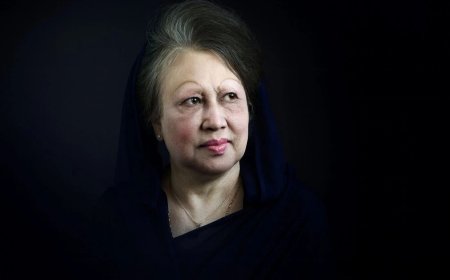
She will be recalled as an imperfect woman of exceptional character, grit, and determination, defined by firm defiance and resilience through a life of ebbs and flows, highs and lows, and, through it all, she was a class apart from the rest.
May Begum Khaleda Zia rest in eternal peace.
Mir Aftabuddin Ahmed is a Canada-based Public Policy Columnist with more than 140 published articles across Bangladeshi and Canadian media and policy outlets. He currently serves as a Policy Development Officer with the City of Toronto. He can be reached at [email protected]. The views expressed are his own.