


































































The Dead Will Be Watching
One institution will carry three kinds of weight at once: The grief of a country that has buried its young; the fragile hope that it can still build rules stronger than instinct; and the scrutiny of a world deciding what kind of Bangladesh it must now learn to live with.


There are days when a nation sits down to decide whether it has learned anything from itself. March 12 will be one of those days.
What begins that day is not routine legislative business. It is the first real test of a country’s moral map.
1,400 killed and over 30,000 injured are not just UN figures; they are the silent preface to every speech that will echo in Shongshod Bhaban that day.
Each Member of Parliament will walk across invisible outlines of young bodies, mostly students, mostly under 30, who never got to see what came after the slogans, the sirens, and the hope.
This is the moment when politics must answer to their sacrifice.
Alongside the 13th National Election Bangladesh witnessed a referendum where Bangladeshis said “yes” to change. The July National Charter that people endorsed is not a manifesto in the usual sense; it is an 80‐plus point blueprint that tries to put legal walls around the very instincts that brought us to the brink.
A promise that the state would at last restrain itself by law, not loyalty. On March 12, the country will watch to see whether that promise begins to take form, or quietly slips back into the familiar language of delay.
The referendum’s “yes” carried a moral weight no election result ever could. It was not a victory slogan but a civic oath: Never again shall we go back. The public has done its part. They queued, voted, and said in unison that Bangladesh deserves a new structure.
Prime ministerial term limits, separation between party chief and head of government, a rebalanced presidency, and a Parliament that no longer functions as a notary public for the executive. Now the burden shifts to those seated inside the chamber.
In village tea stalls and city living rooms, people already have a quiet checklist in mind. Will the session announce a calendar for constitutional amendments, instead of vague assurances that “work is underway”?
Will there be a timeline for creating the upper house that the Charter promises that can slow bad laws and give the regions, professionals, and minorities a second microphone?
Will we see a clear roadmap to insulate the Election Commission, with a transparent selection committee written into the Constitution rather than improvised through executive discretion?
And then there are the rules inside the House itself.
Will the new Parliament begin the work of dismantling Article70‐style gag provisions so MPs can finally hold their own government to account without risking their seats? The Charter’s proposal to bind MPs only on confidence votes and finance bills, and free them on all other questions, is not a technical tweak; it is the difference between a legislature and a choir.
Its fate in this first session will tell us whether the parties that campaigned in the name of “restoring Parliament” actually trust Parliament to speak. In the end, it comes down to one thing: Will the Prime Minister speak as the voice of a people, or as the voice of a party?
If that clarity is lost in words like “complex issue,” “further consultation,” or “gradual progression,” the damage will not just be political; it will be emotional.
The country has heard this vocabulary before, in the long, polite burial of the 13th Amendment, in the endless “dialogues” that always seemed to end exactly where they were meant to.
To repeat it now, after an uprising and a landslide and a people’s charter, would be to tell citizens that even their cleanest verdict is only raw material for elite negotiation.
To neglect these reforms would be to break faith with the very citizens who got the parliament elected. It would confirm a brutal truth: That even after an uprising, the old system still knows how to protect itself. The disappointment will not be abstract.
It will live in the throats of parents who sent their children to marches believing that, this time, the state would finally rewrite its rules; in the hospital wards where boys with pellet-scarred eyes learned to say “quota” and “charter” before they could stand again; in the dormitories emptied by court cases that now carry the weight of crimes against humanity in UN language.
And if nothing moves, if Parliament remains a theatre for commands, not conscience, people will see the old pattern resurface instantly. MPs voting under party orders; constitutional amendments wielded as threats, not guardrails; oversight bodies muzzled by executive power.
When that happens, the street becomes, once again, the only institution that feels alive. The message to the young will be devastating: You can change governments. You can even write Charters. But you cannot make power restrain itself for long.
Even beyond Bangladesh’s borders, this first session will be watched like a weather report; a forecast of whether the referendum’s promise can be translated into institutions that endure.
India, recalibrating after the fall of Hasina and the formal ban on the Awami League activities, will be scanning not the rhetoric but the signals of stability: Whether the Charter’s term limits and checks reassure New Delhi that no future government will swing wildly between appeasement and hostility, whether minority protection is taken seriously, whether the security forces now answer to rules instead of personal loyalties.
If the Parliament appears functional and anchored in reform, New Delhi will hopefully see an equal partner, even if no longer a familiar one. If it does not, the temptation will grow in Delhi to again treat Bangladesh as its “sister state”.
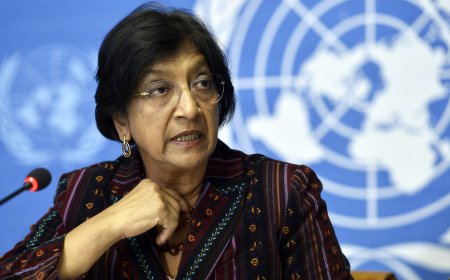
Other actors will be reading the same barometer. Brussels, which just documented last year’s abuses in its annual human rights report, will be looking for proof that “never again” is written into law, not just spoken into microphones. The UN system that counted the dead and named the crimes will be watching not only for institutional reform, but for some path to justice.
Inquiries, trials, or commissions that take “crimes against humanity” out of the footnotes and into courtrooms. Investors, who do not care for poetry but care very much about predictability, will watch whether oversight institutions can actually say “no” to power without being dissolved.
All of this is why March 12 feels so raw. On that day, one institution will carry three kinds of weight at once: The grief of a country that has buried its young; the fragile hope that it can still build rules stronger than instinct; and the scrutiny of a world deciding what kind of Bangladesh it must now learn to live with.
To sit before a screen and watch MPs rise under all that, knowing how easily the moment could be wasted will be a quiet agony. There will be the usual distractions: The mispronounced clauses, the performative outrage, the jokes on social media about who wore what, who said what. The circus will be familiar; but the stakes will not.
In simple terms, March 12 will show us what this new Parliament really thinks of the July Charter and of the country that dared to say yes to it. As it remains, the last folded letters of a generation that asked, with their lives, for a different kind of state.
Apurba Jahangir is a writer, political analyst, and former deputy press secretary to the Chief Adviser of the Interim Government of Bangladesh.