





















































A Time Travel to July 2008: Inside the Mind of a Mother
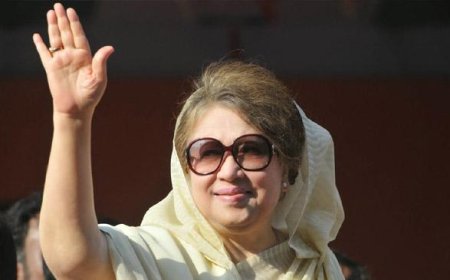
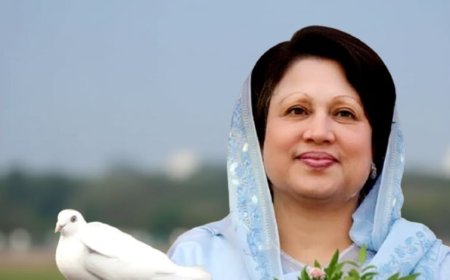
This piece was originally published on July 27, 2008, at rumiahmed.wordpress.com during a time when both sons of Begum Khaleda Zia were in detention in Dhaka and both were reportedly being tortured. Khaleda Zia was facing intense pressure to leave the country for Saudi Arabia.
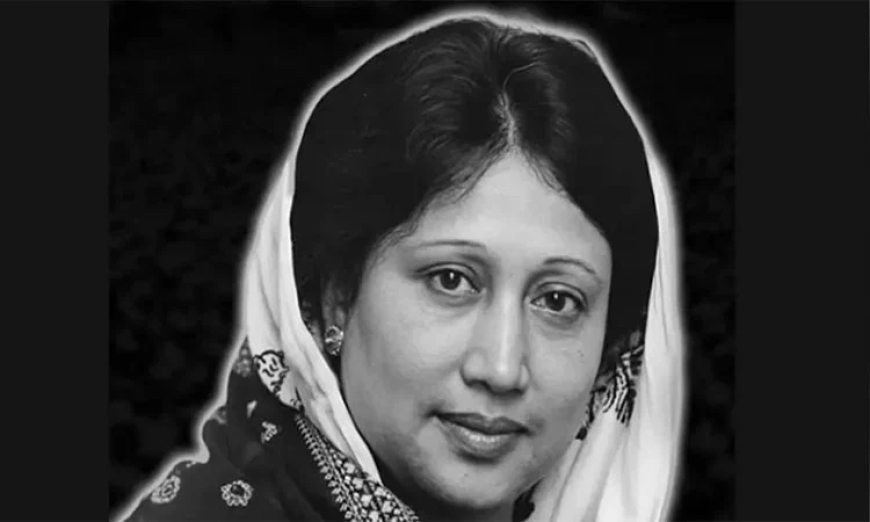
One of the many negative characteristics of the BNP’s 2001-2006 government was "paranoia."
During those five years, Khaleda Zia was captivated by an uncontrollable suspicion of an Awami League-hatched, bureaucracy-and-NGO-supported conspiracy against her government. She could never accept her 1996 street defeat in agreeing to the CTG system, nor her election defeat, which she always believed was engineered.
In fact, Khaleda Zia’s mortal hatred -- or possibly fear -- of conspiracy originated much before her 1991-1996 governance.
Depriving her husband of the Army Chief position in 1972, attempts to send him out as an ambassador to Czechoslovakia throughout 1974-1975, the events of 1975, and numerous attempts to kill her husband between 1975 and 1981 made Khaleda Zia severely obsessed with conspiracy theories.
The en masse defection of top-tier BNP leadership and multi-pronged attempts to dismantle the BNP only emboldened that paranoia.
Throughout her anti-autocracy movement through 1990, she was struck several times by betrayals. Notable among those were BNP Secretary General Obaidur Rahman’s secret liaison with Ershad, and Sheikh Hasina’s somersault to join the 1986 election.
Even at the fag end of the anti-Ershad movement, the "jewel in Khaleda’s crown" -- some senior leadership of Chhatra Dal -- decided to betray her by colluding with Ershad.
During her last government, she apparently lost her clear vision to the overwhelming cloud of this fear of conspiracy. Every single political step of her government was somehow meant to prevent conspiracy.
The removal of B. Chowdhury was the first in a chain of events. Despite all her carefulness and all the paranoia, she could not prevent 1/11. And 1/11 came as the perfect epitome of what she had always feared.
Since 1/11, her party has been vandalized, and she, as well as both her sons, have been arrested. Most of her long-trusted colleagues have abandoned her.
Both her sons, whom she raised as a single mother, are morbidly sick as a result of severe torture inflicted on them by the people she herself chose to protect her.
While we all talk about the torture of Tarique or Arafat, the nation has easily forgotten that the most tortured person post-1/11 is Khaleda Zia herself. You tie a mother down and torture both her children in front of her -- can there be a torture worse than this?
Her family has been broken since March 2007. She knows how her daughters-in-law are regularly being harassed and how her minor grandchildren are living in fear and confusion. She is acutely aware of what her sons have been through.
She was informed in graphic detail of the torture inflicted on her son Tarique Rahman, day after day, remand after remand. She knows how much force one needs to apply, and for how long, to break two strong thoracic vertebrae of a young, healthy man.
She knew all this much before we learned of it. She knew all this, and then she noticed attempts at more remands for Tarique Rahman, which were snubbed by the High Court.
She was also informed of the alleged near-death situation involving Arafat Rahman within hours after he was taken to the torture chamber and hung from the ceiling.
Khaleda Zia also knows why the Police Chief, Nur Muhammad, in collusion with the Military Chief, Moeen, put a total outsider, ex-Deputy Minister Abdus Salam Pintu, in the August 21 case.
She knows it is a far-fetched effort to falsely convict Tarique Rahman for the August 21 event and threaten a potential capital punishment.
We knew of all this torture for only a few days. None of us have to like or love Tarique Rahman or Arafat Rahman; still, our hearts have got to dip a bit at the torture. Khaleda knew all this for at least six months to a year. And she is the mother.
As a mother, she could visualize what her sons were going through. She solely carried all this agony, pain, nightmare, fear, and sorrow by herself.
Alone in her jail room, she tried to figure out the pressure impact of the kicks and hits on Tarique’s back while Mannan Bhuiyan talked about a "new BNP" in his Gulshan flat.
She shivers at her son Arafat’s nervous breakdown while the Daily Star and Prothom Alo write for the 12,000th time to tell us how corrupt, inhuman, and criminal Tarique and Arafat were.
She had, in fact, no one to share her feelings with, nor did she care for one. Her mother died in the meanwhile.
And yet, she remained hell-bent against a deal. For her, a deal is a conspiracy. And conspiracy is something she has despised and feared for the last 36 years. Reflexively and inherently, she is unable to be part of a deal.
So in the future, remote or near, for those whoever may take interest in Khaleda Zia’s next move -- especially those AL policymakers who are always afraid of an Army-BNP deal -- please know it as a certainty.
Please know it for sure: Khaleda Zia will rather break, but never bend.
This lady does not understand the politics of a deal. Even if the BNP changes its decision tomorrow and joins the elections, please know that it was a political decision, not a deal with anybody.
For those decent civil society people in the government who are resorting to the very uncivil and nasty tactic of bargaining with a mother for her sick sons, let it be known that this lady won’t budge. She did not budge for the last six months; she will not now.
Khaleda Zia remains tortured, yet hell-bent. She may lack many political qualities, including the shrewdness needed to survive in politics.
Yet, she survived all the bad days only with her steel-strong willpower. This uncompromising tenacity will surely help her sail through the rough seas ahead.
Dr Rumi Ahmed Khan is a Professor at the South Asia Institute, University of Texas, Austin; the Convenor of the Bangladesh Research Analysis and Information Network; and a pioneer of democracy and human rights activism among the expatriate Bangladeshi communities. This essay will be published in a book on diaspora and citizens’ activism during the July Uprising.