




























![A Ledger of the Soul: Navigating the Allah-Bhagavant Nexus in a 19th-Century Puruṣākāra Jñāna Caupara [Gyan Chauper]](https://counterpointbd.com/uploads/images/202608/image_430x256_6a93baa3b09a7.jpg)




















A Bangladeshi-American Story
I look at a black and white photo of our maternal grandmothers from the 60s, and wonder if they ever imagined their descendants would get together like this in the New World. We are continuing the journey of immigration, something that started thousands of years back for humankind.


Sitting in the verandah of a two-story house in east Buffalo, New York, I look around the minority-led neighborhood. Young black kids ride their bikes near grilled-up grocery stores, tree-lined sidewalks are dotted with vegetable gardens, and Bengali words are heard across the streets.
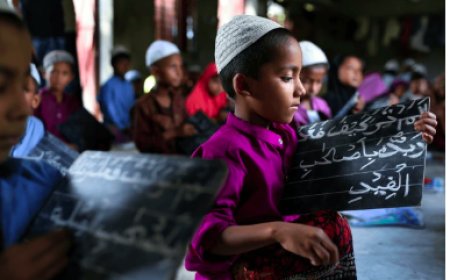
An old, two-story brick exterior building that once served as a 300-person refugee center is being converted into a mosque and madrassa. Underneath the midday blue sky, a cool breeze blows as young Arab teenagers, mostly in traditional attire, are fixing the landscape. They are most likely volunteers, showcasing how the mosque can serve as an institution for community growth, in addition to spiritual upliftment. Instead of playing around, these kids are dedicating their time and effort to beautifying an Islamic institution, one that can teach, inspire, and build the Muslim community.
One sees a sizable Muslim population in this town; several churches have been converted to masjids, billboards depict women in headscarves, and restaurants serving halal food are prevalent. With ethnic neighborhoods and businesses lined across town, multiculturalism is a mainstay in this place. There are an estimated 95,000 Muslims in the Buffalo metropolitan area, according to the Muslim Public Affairs Council of Western New York. Now, this upcoming madrassa has become another venue for fellow Muslims to stand shoulder-to-shoulder and pray in unison.
I am here on a mission of clan connectivity -- visiting my elder cousin Syeda Mahfuza Begum. She is the granddaughter of my maternal grandmother’s eldest sister; our mothers are cousins. I had never seen this second cousin before, and only identified her in 2021, when I decided to update my maternal family tree. She is among 66 siblings and cousins in my generation and was raised by her paternal uncle, upon her father passing away. I asked my mother to give her a call and spoke to her, leading to WhatsApp messages, and eventually an all-cousin videoconference.
Connections are a curious matter; either you have this with someone or not. My cousin’s warmth gravitated me and upon receiving her sincere invitation, I decided to take a few days off work and purchase the flight ticket for a 1,500-mile trip from Houston to Buffalo. I never imagined I could be gaining a cousin with my clan research project.
Mahfuza and her family came to New York state back in 2021. They purchased a two-story home and massively renovated the interior, adding bedrooms and a bathroom in the attic. Winters in the northern borderlands are brutal, requiring the entire family to shovel hills of snow. However, summer weather was just right for my vacation.
Bangladeshis started coming to Buffalo in droves from 2006, as many moved away from New York City, Massachusetts, and even Michigan. Many cited cost of living, job opportunities, and a more spacious lifestyle as reasons to live in Buffalo, according to the Partnership for the Public Good. They purchased homes near mosques, leading to a large population in the city’s east side. This group has rebuilt dilapidated homes, opened stores, and established mosques. One example is the Buffalo Islamic Cultural Center, a multigenerational community center that provides religious, educational, and recreational services.
An estimated 100,000 Bangladeshis live in the Buffalo region, according to The Buffalo News. To provide another example of the community’s pull, there is a Bangladeshi-run, 60,000-square-foot Buffalo Trade Center, a collection of shops and food court that brings the sights, smells, and tastes of the motherland straight into this American town. Alongside an indoor playground and plans for further expansion, this center aims to be a center of gravity for the Bangladeshi community.
My Travels Across Buffalo and Beyond
My cousin (now feeling more like a big sister) Mahfuza and I took a trip to Buffalo’s downtown, a lakefront district dotted with Art Deco buildings, including the city hall. We went into the 32-story building and took the elevator for a spectacular view from the 28th floor; one can see the blue water bodies, radial street plan, and multicolored buildings. Constructed after World War I, the structure features a stained-glass ceiling, intricate geometric designs, and murals depicting the history of Buffalo. While walking across downtown, a Bangladeshi couple said salaam to my cousin as we were passing by the road; we were on our way to have shawarmas from an Arab gentleman operating a food truck. Urban parklands, walkable grounds with public transportation, and a diverse population make this a vibrant area.
Next, my nieces Labiba and Abtaha attend the University at Buffalo and showed me around their higher education grounds. The 153-acre south campus holds ivy-covered, ivory buildings, and tree-lined quads. Two of Labiba’s architectural models are on display in one of the buildings, and an interior wall has her name listed. To see one of us having their studio work recognized was a matter of deep pride for me, and I shared photos with 53 clan members in our group chat.
Finally, my cousin, her husband, and daughters were nice enough to take me to Niagara Falls. Four of the five Great Lakes drain into Niagara River, and yes, we took the popular boat trip. Hearing and seeing thousands of gallons of water crashing from the waterfalls is an exhilarating experience, as you get to sense nature’s power and where we stand as humankind on this grand earth. The awe-inspiring physical and visual experience is unmatched, and you understand why this is the quintessential tourist attraction in North America.
Immigration of Our Clan
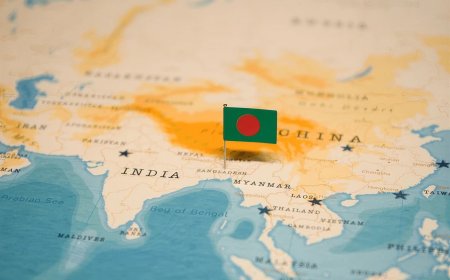
Mahfuza and her family are part of the 800,000-strong Bangladeshi-origin population across the US, a number cited by Bangladesh Finance Ministry in 2018. As written by Ahrar Ahmed in Multicultural America, the initial group of Bangladeshis arrived here in the 60s and 70s; a large number were graduate students.
As the Immigrant Act of 1965 was implemented for employer-based preferences, Bangladeshis from middle class and professional backgrounds utilized increasing opportunities in this land. In the early ’70s, approximately 1,000 Bangladeshis lived in the US, which included pharmacists and other healthcare professionals. In the ’90s and new millennium, diversity visas and family- sponsored preferences significantly increased the Bangladeshi population.
My grandmother’s clan started immigrating to the US in 1989. My cousin Mahfuza is among the most recent members of this flow. Seeing her family gives me hope for the future of clan -- these are hardworking individuals striving for upwards economic mobility in this land. Her daughters are gaining higher education, plus she and her husband are both working in the hospitality and manufacturing sectors, respectively. Despite the 1,500-mile distance, I would like to visit them again to celebrate the milestones of life -- graduation, marriage, etc.
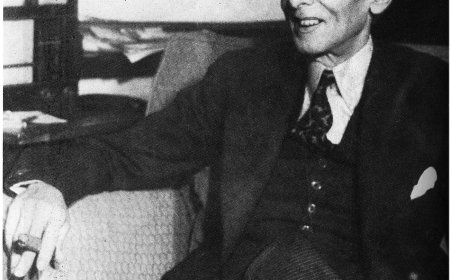
I look at a black and white photo of our maternal grandmothers from the 60s, and wonder if they ever imagined their descendants would get together like this in the New World. We are continuing the journey of immigration, something that started thousands of years back for humankind.
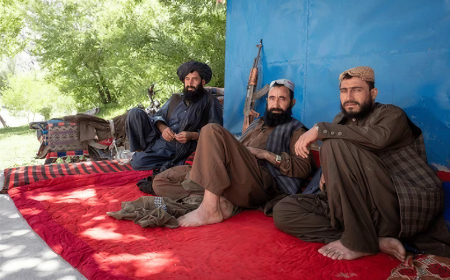
As per my clan’s history written by an ancestor from the 1800s, our forefathers came from Afghanistan to Delhi in the mid-1400s to support Sultan Bahlol Lodi in his quest to rule India. Some of these Pathans eventually settled in Sylhet, northeastern Bangladesh during the 1600s, as the Mughal Empire kept winning battles against them. In the twenty-first century, our clan is simply continuing the journey.
Immigration, globalization, and continuous human journey to discover the elusive “land flowing with milk and honey,” that is what has led us here, from the emerald rice fields of Sylhet to the land of red apples, snow-capped winters, and blue coasts. We are scattered across the nation, from New York to California, Michigan to Texas. May this journey bring success and enlightenment to all striving for a better future.
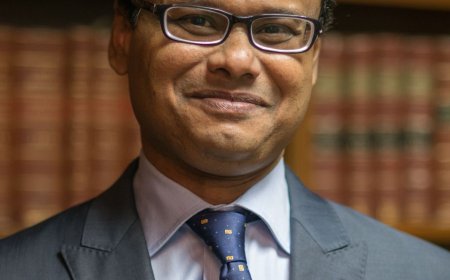
Tamim Choudhury is a public affairs specialist for an international volunteering agency within the US government. With a business administration bachelor’s degree and public administration master’s degree -- both from Texas A&M University.