































































Behind the Russia–Ukraine War and the Illusion of a Fragile Truce
In Ukraine, time is measured in survival. In Moscow, it is measured in leverage. In the West, it is increasingly measured in patience. And therein lies the most dangerous imbalance of all.
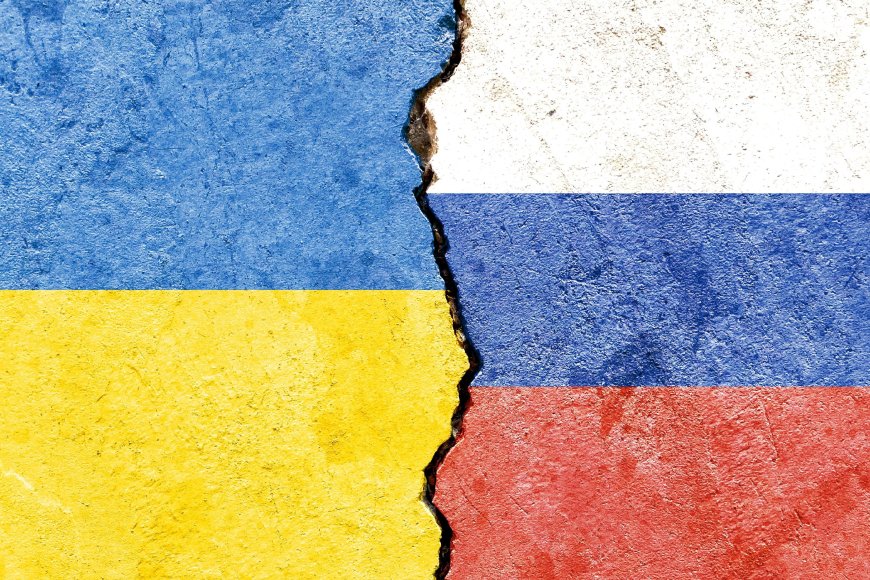
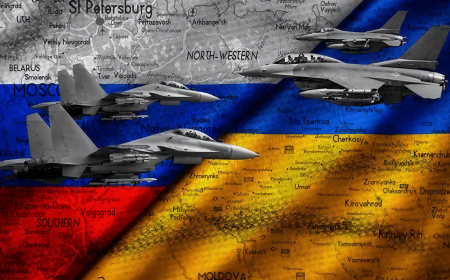
Russia’s full-scale invasion of Ukraine on February 24, 2022, marked the most consequential war in Europe since World War II.
What began as a dramatic escalation of a simmering conflict has since hardened into a grinding war of attrition -- one that continues to defy easy solutions despite periodic diplomatic overtures and ceasefire talk.
The roots of the war lie well before 2022. Ukraine’s 2014 Euromaidan uprising, which led to the fall of the pro-Russian government of President Viktor Yanukovych, fundamentally altered Kyiv’s political trajectory.
Moscow responded swiftly, annexing Crimea in March 2014 and backing separatist insurgencies in Donetsk and Luhansk, plunging eastern Ukraine into the protracted Donbas conflict.
The invasion eight years later was less a sudden rupture than the violent culmination of a long-unfolding confrontation.
At the heart of the conflict is Ukraine’s westward drift -- towards the European Union and NATO -- which Russia has consistently framed as an existential threat to its security buffer and regional influence.
Beyond immediate security anxieties, Moscow’s actions reflect a broader ambition: reasserting itself as a great power and reshaping a European security order that has steadily moved away from Russian dominance since the end of the Cold War.
Domestic politics have also played a role. The war has consolidated power around President Vladimir Putin, reinforcing nationalist narratives and bolstering regime legitimacy at a time of economic pressure and political stagnation.
External confrontation has served as a powerful tool of internal cohesion.
The West’s Support and Its Limits
Since 2022, Ukraine’s resistance has been sustained largely by Western support. According to tracking by the Council on Foreign Relations, the United States has committed roughly $128 billion in military, economic, and humanitarian assistance.
The European Union and its member states have collectively provided around €187 billion in aid, including military support, financial assistance, and refugee-related costs.
On December 18-19, EU leaders agreed at a Brussels summit, on a €90 billion financing package to support Ukraine’s military and economic needs for 2026-2027. Yet the political foundations of this support are showing signs of strain.
In the United States, initial framing of the war as a defence of democracy and a deterrent to Russian aggression has gradually given way to fatigue and division.
Younger voters and working-class Americans are increasingly skeptical, questioning the war’s endgame and calling for renewed focus on domestic priorities.
While broad support for Ukraine remains, the conflict is increasingly viewed through the lens of another open-ended foreign entanglement -- with growing voices arguing that Europe should shoulder a greater share of the burden.
Europe’s calculus is even more complex. For countries in Eastern Europe, the war is widely perceived as existential: “Ukraine today, us tomorrow.”
In Western and Southern Europe, however, the conflict has translated into higher energy prices, inflationary pressures, industrial disruption, and the challenge of refugee integration.
Moral support for Ukraine remains strong, but domestic political pressures are mounting.
Across the continent, analysts observe a gradual shift from urgency to exhaustion -- war fatigue that is fueling calls for a ceasefire and negotiations, even in the absence of a clear settlement framework.
Trump’s Ceasefire Push and Its Boundaries
Against this backdrop, former US President Donald Trump’s renewed push to broker a ceasefire has drawn intense global attention.
His initiative is driven not only by strategic considerations for the US and Europe but also by domestic political incentives -- positioning himself as a dealmaker capable of ending a costly and unpopular war.
However, the proposals on the table fall short of a comprehensive peace plan.
The deal largely envisages a temporary freeze along current frontlines, a halt to major offensives, the establishment of humanitarian corridors, protection of critical nuclear infrastructure such as the Zaporizhzhia nuclear plant, and the possibility of gradual sanctions relief.
Crucially, they defer -- rather than resolve -- the core issues of occupied territory and long-term security guarantees.
The resulting deadlock is rooted in irreconcilable positions. Russia views a ceasefire as an opportunity to consolidate territorial gains without committing to withdrawal, effectively legitimizing control over occupied areas.
For Ukraine, such an arrangement risks locking in occupation, undermining sovereignty by losing territory, and repeating the failures of past agreements such as the Minsk accords, which allowed Russia time to regroup and rearm.
In stark terms, a ceasefire without security guarantees would amount to victory without peace for Russia and defeat without security for Ukraine.
Global Balancing Act
Meanwhile, the broader international response has been anything but uniform.
The United Nations issued a resolution on December 18 and strongly condemns Russia’s aggression, reaffirms Ukraine’s sovereignty and territorial integrity, and demands an immediate end to the war and withdrawal of Russian forces.
Despite sanctions imposed by the US and EU and Europe’s efforts to reduce dependence on Russian energy -- cutting imports from roughly $8 billion to an estimated $1.5 billion by 2027-28 -- Russia has found alternative economic lifelines.
India and China, while avoiding direct military involvement, have indirectly sustained Russia’s war economy. India has significantly increased imports of discounted Russian crude, which now accounts for roughly 30-40 percent of its oil purchases.
By late 2025, India had become the second-largest buyer of Russian crude after China, accounting for nearly 38 percent of Russia’s exports.
Maintaining a neutral diplomatic stance, New Delhi has leveraged cheap energy to diversify import sources, while providing Moscow with a vital export market.
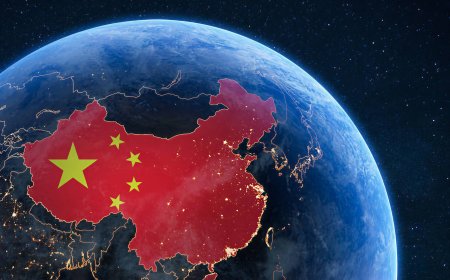
China’s role is more strategic. Beijing claims neutrality, refrains from supplying lethal weapons, and avoids endorsing territorial annexation.
Yet in practice, Sino-Russian trade -- worth an estimated $245 billion in 2024 -- has surged, with large-scale purchases of Russian oil, gas, and coal conducted through yuan-ruble transactions that bypass the dollar system.
The war has deepened Russia-China convergence, though unmistakably on China’s terms: pro-Russia without alliance, anti-West without war.
No Clean Victory, No Easy Peace
Amidst attacks by Russia in Odesa, Ukraine began fresh negotiations with US aimed at ending the war that is focus towards security guarantees, a peace framework, and reconstruction mechanisms -- though no final settlement has been reached yet, especially on territorial disputes.
For now, the US-brokered ceasefire effort has produced no breakthrough. By sidestepping questions of sovereignty and territorial integrity, it risks freezing the conflict rather than resolving it.
Such a stalemate would prolong casualties, entrench occupation, and leave Ukraine exposed to future aggression.
The central tragedy of the Ukraine war is that all major actors see unacceptable risks in compromise. For Putin, retreat threatens regime credibility. For Ukraine, concession undermines sovereignty and survival.
For the West, disengagement risks emboldening revisionism elsewhere. These competing fears lock the war into a narrow corridor where continued fighting appears less dangerous than peace.
Unless the strategic calculus changes -- through a decisive shift on the battlefield or a credible framework for security guarantees -- the war is likely to persist as a conflict without resolution, defined not by sweeping victories but by the slow erosion of all involved.
In Ukraine, time is measured in survival. In Moscow, it is measured in leverage. In the West, it is increasingly measured in patience.
And therein lies the most dangerous imbalance of all. In this uneasy imbalance, peace remains elusive, and the illusion of a truce risks becoming another chapter in a war defined by endurance rather than resolution.
Brigadier General (Retd) Mustafa Kamal Rusho works at the Osmani Centre for Peace and Security Studies (OCPASS).