































































What India Must Do To Help Restore Stability In Bangladesh
The tragedy of Osman Hadi’s death should have been a moment for empathy and restraint. Instead, it is becoming a catalyst for deeper division. If India continues to allow its media and political discourse to inflame rather than inform, it risks locking the relationship with Bangladesh into a cycle of hostility that will endure far beyond the current crisis.
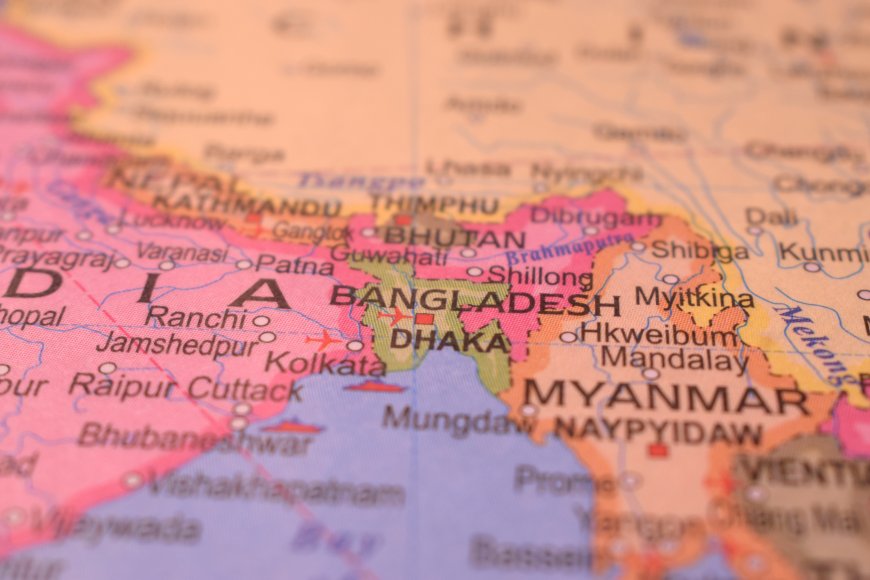
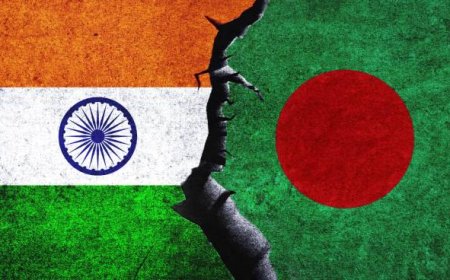
The killing of Bangladeshi student leader Osman Hadi has pushed Dhaka-New Delhi relations to their most dangerous moment in decades.
A relationship that was already strained after the fall of Bangladeshi Prime Minister Sheikh Hasina in August has now entered a phase of open hostility, driven not only by diplomatic missteps but by the reckless role played by Indian media and political discourse.
At a moment that demands restraint, clarity and responsibility, large sections of India’s public sphere are instead pouring fuel on a rapidly spreading fire of anti-India sentiment in Bangladesh.
Relations between Dhaka and New Delhi were fragile long before Hadi was shot on December 12.
India was widely perceived in Bangladesh as having placed a political bet on Sheikh Hasina’s continued rule and as being slow, reluctant, and awkward in adjusting to her fall.
That perception hardened further when New Delhi allowed Hasina to remain in India after she fled and as many of her political allies and supporters also found shelter across the border.
For many Bangladeshis, this reinforced the belief that India was no longer acting as a neutral neighbor but as an interested political actor deeply entangled in Bangladesh’s internal power struggles.
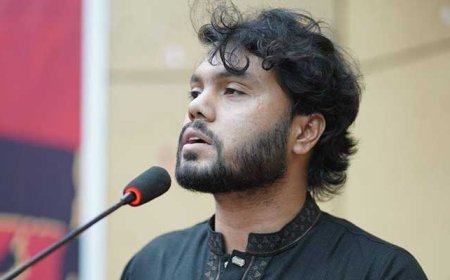
Hadi’s killing has magnified those suspicions into something far more explosive. He was not simply another activist. He symbolized a generation that had mobilized during the July mass uprising, demanding accountability, dignity, and political change.
His death has become a focal point for anger not just against domestic actors but against what is widely perceived as external complicity.
The widespread belief that the accused fled to India, regardless of the ongoing legal process, has created a powerful narrative of impunity.
The reciprocal summoning of high commissioners by Dhaka and New Delhi this week reflects more than diplomatic irritation. It signals a collapse of trust and decency at a moment when both are desperately needed.
Yet the most destabilizing force at work is not diplomacy but discourse. That is reflected in the coverage of the lynching of a Hindu man in Bangladesh, which has further inflamed emotions on both sides of the border.
The victim, 27-year-old Dipu Chandra Das from Mymensingh, was beaten to death by a mob on Thursday night over allegations of blasphemy, his body tied to a tree and set on fire.
Bangladeshi authorities intervened quickly and arrested seven suspects. The interim government strongly condemned the killing, pledging that those responsible would be held accountable.
However, the reporting in large sections of the Indian media chose not to highlight accountability or the swift arrests but to portray Bangladesh as descending into communal chaos.
Graphic details were amplified. A criminal act was transformed into a sweeping civilizational indictment.
Such reporting neither protects minorities nor advances justice. Instead, it hardens communal identities, deepens fear, and reinforces hostile narratives at a moment when restraint and accuracy are most urgently required.
Since Hasina’s fall, large sections of the Indian media have responded to Bangladesh’s turmoil not with analysis but with alarmism.
Instead of recognizing the July protests as a broad-based, youth-driven democratic movement, many Indian television channels and online platforms have uniformly branded Bangladeshi protesters as Islamists, radicals or extremists.
This framing is not only inaccurate. It is incendiary. It imports India’s own domestic political anxieties into a neighboring country undergoing political transition and delegitimizes popular dissent by casting it as religious fanaticism.
This narrative erases the political and social roots of Bangladesh’s unrest and replaces them with a simplistic and threatening caricature.
It tells Indian audiences that what is unfolding next door is not a struggle over justice and governance but a security menace. And it tells Bangladeshis that India does not see them as citizens with grievances but as a problem to be managed.
Equally dangerous is the tendency within pro-government Indian media and right-wing political commentary to project Bangladesh as a territorial and security threat to North-East India.
Commentators casually invoke fears of infiltration, instability, and cross border disorder, often without evidence and without context.
This is not journalism. It is securitization. Once Bangladesh is framed primarily as a threat, every political development there is read through a lens of fear.
Cooperation becomes suspect. Restraint is portrayed as weakness. Escalation begins to look inevitable rather than avoidable.
The consequences are visible. Protests in Dhaka and Chittagong, and demonstrations even near India-Bangladesh border posts, show how quickly bilateral tensions are spilling onto the streets.
Public anger is no longer confined to political elites or activist circles. It is becoming mass sentiment. When that happens, governments lose room for quiet diplomacy.
In Bangladesh, any authority seen as soft on India risks losing legitimacy.
In India, media-driven narratives push policymakers toward hardened positions that leave little space for nuance or compromise.
This is precisely why responsibility matters. India is the larger power in this relationship. Its media eco-system is louder, more influential, and more capable of shaping narratives across borders.
With that influence comes obligation. To treat Bangladesh’s crisis primarily as a security problem is not only analytically flawed but strategically self-defeating.
It guarantees deeper resentment, longer-term mistrust and a neighbour that increasingly defines itself in opposition to India.
History’s Warning
History offers a clear warning. Anti-India sentiment in Bangladesh has ebbed and flowed over the decades, often rising during moments of perceived interference or arrogance and receding when engagement felt respectful and balanced.
What makes the current moment different is the speed and scale at which hostility is spreading. Social media amplification, sensationalist television debates and inflammatory headlines are turning episodic anger into something closer to structural alienation.
India can still choose a different path. That begins with cooperating transparently in the investigation surrounding Hadi’s killing. Even more importantly, it requires confronting the media narratives that are distorting reality.
Indian political leaders and institutions cannot pretend that television studios and digital platforms operate in a vacuum. Silence in the face of reckless framing is itself a form of endorsement.
Responsible behavior does not mean shielding Bangladesh from criticism or ignoring genuine security concerns. It means recognizing the difference between analysis and agitation.
It means acknowledging that a neighbour’s political transition is not a threat by default. And it means understanding that regional stability is not preserved through suspicion but through credibility.
The tragedy of Osman Hadi’s death should have been a moment for empathy and restraint. Instead, it is becoming a catalyst for deeper division.
If India continues to allow its media and political discourse to inflame rather than inform, it risks locking the relationship with Bangladesh into a cycle of hostility that will endure far beyond the current crisis.
What is at stake is not just bilateral goodwill but the basic architecture of trust in South Asia. Once that collapses, rebuilding it may take not months or years but generations.
Ashok Swain is a professor of peace and conflict research at Uppsala University, Sweden. This piece was originally published on Scroll.in and is reproduced here by special arrangement.