

































































The Democratization of Human Rights Violations
The authoritarian habits cultivated over a decade and a half did not disappear with the fall of a government; they seeped into the public bloodstream. When state violence takes a step back, social violence often steps forward.
For a country long haunted by the vocabulary of "crossfire," "enforced disappearance," and "unknown assailants on motorcycles," the past year and a half has delivered an unexpected twist.
Those phrases have faded from the daily news cycle, replaced by a more inventive cast of horrors. Bangladesh did not abolish human rights violations; it merely outsourced them.
The decline in direct state-led abuses has been widely noted. But even a brief look at the data shows that what vanished from one door quietly re-entered through another.
Human rights organizations counted at least 140 deaths in 256 incidents of mob violence between January and October this year.
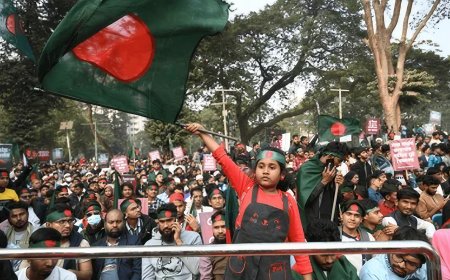
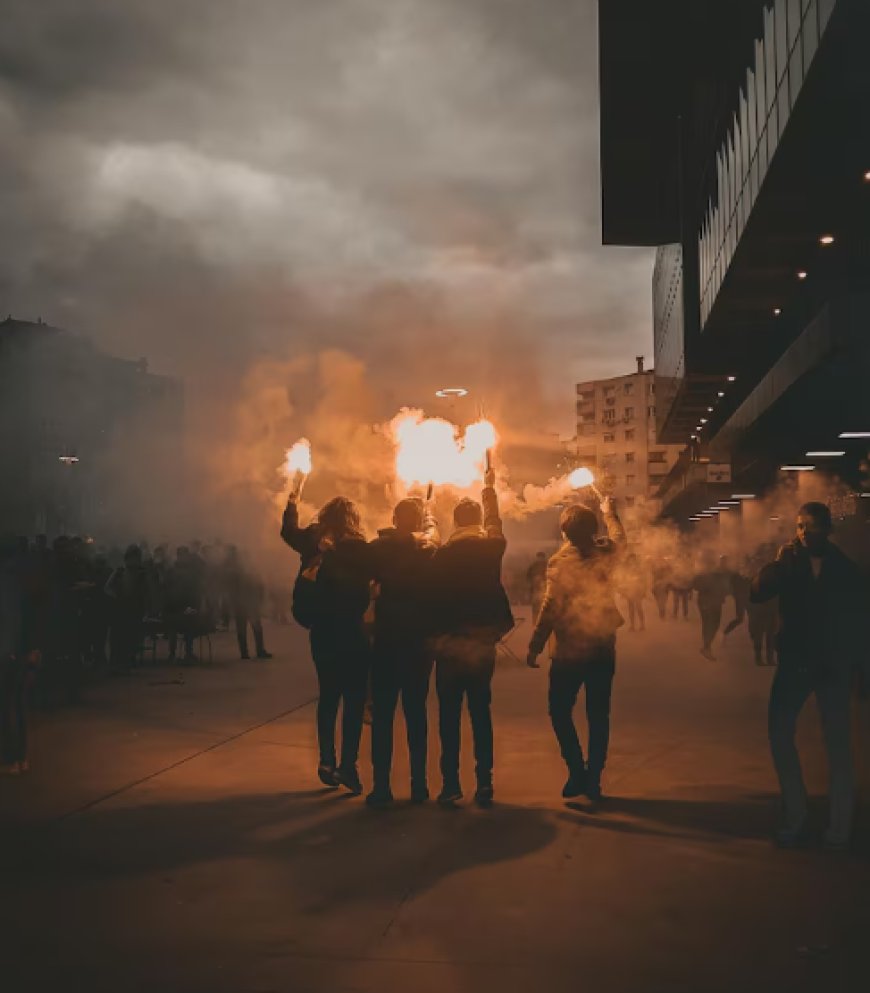
These are not mere statistics; they signal the rise of a new national actor. The mob, once a fringe performer in our political theatre, has now secured a central, well-lit stage.
The cast rotates, the motives vary, yet the performance remains consistent: swift, unaccountable, and occasionally applauded by bystanders who prefer their justice unregulated.
Political violence has been equally generous. Adhikar reports that 281 people have died in the chaotic clashes that followed the end of the Awami League’s long rule.
Add to these another forty extra-judicial killings and more than 150 lynchings since August 2024, and the picture becomes clearer. Bangladesh is not enjoying a human rights improvement; it is experiencing a change in management.
Nothing illustrates this transformation better than the surge in unidentified bodies. The Human Rights Culture Foundation recorded 66 such bodies in October, up from 52 in September.
The locations of these discoveries form a grim geography lesson: riversides, railway lines, fields, abandoned lots, and the occasional drainage canal. Some bodies arrive in sacks, some with slit throats, some tied, some bruised, all anonymous.
In the Khulna region alone, the Naval Police recovered 50 bodies from rivers between August 2024 and August 2025. Just 20 were ever identified. The rest returned to statistical obscurity, their stories untold.
This proliferation of nameless corpses would usually prompt a national crisis. Instead, it has blended into daily life with surprising ease. A body floating down the Buriganga competes with traffic congestion for public attention.
The normalization of horror may be Bangladesh’s most frightening achievement yet.
Prison custody offers another window into this evolving landscape. Between August last year and this November, at least 112 people died in prison according to the Law and Arbitration Center, while MSF places the number slightly higher at 119.
Four Awami League leaders died in Bogra jail within days last December, capturing national attention briefly, until other tragedies replaced them.
That prisons remain among the most dangerous places in the country tells us less about inmate behaviour than the persistent culture of neglect, impunity, and medical explanations crafted with suspicious punctuality.
In parallel, the political industry of case-filing has expanded dramatically. Thousands of cases -- many of them imaginative, loosely connected, or entirely transactional -- have appeared across the country.
Filing a case has become a versatile tool: a method of political turf management, a way to seize property, or simply a way to settle personal scores. This is not law enforcement; it is legal entrepreneurship.
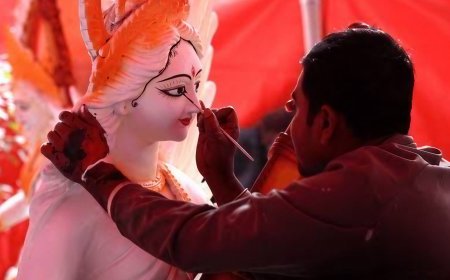
Then there are the shrine attacks, a phenomenon that has grown with unsettling frequency. Government figures earlier recorded 44 attacks on 40 shrines within just five months.
Yet after those numbers were released, even more brazen incidents followed.
Four shrines in a single Comilla village were attacked in September. In Rajbari, a grave was dug up, the remains dragged out and burned on a highway.
The perpetrators believed they were defending faith, which raises the uncomfortable question of what, exactly, passes for faith these days.
These events are often dismissed as isolated outrages, but the pattern is unmistakable. Certain groups have discovered that violence wrapped in religious pretext travels through society faster than any fact-check.
And as long as mobs find ideological cover, they will continue to act with the confidence of institutions. The interim government maintains that real reforms have begun, from investigating past disappearances to signing international conventions.
But reforms cannot be judged by announcements alone. They must be measured against what happens at ground level.
If unidentified bodies keep surfacing with increasing frequency, if mobs operate with greater authority than law enforcement, if political violence finds new incentives, then something fundamental has not changed. Or worse, something fundamental has adapted.
What we are witnessing is not merely a breakdown of order; it is the diffusion of violence across society. Abuse is no longer concentrated in the hands of specific agencies. It is democratized, decentralized, and available for freelance use.
The authoritarian habits cultivated over a decade and a half did not disappear with the fall of a government; they seeped into the public bloodstream. When state violence takes a step back, social violence often steps forward.
This moment, therefore, requires more than legal reforms or institutional statements.
It demands a sober confrontation with the country’s political culture, its appetite for vigilante justice, and the dangerous satisfaction people derive from public humiliation and punishment.
Bangladesh is learning the hard way that human rights violations do not always need a uniform. Sometimes all they need is a crowd, a rumour, and the confidence that no one is keeping score.
Until that changes, the statistics will continue to rise, the rivers will continue to deliver their silent evidence, and the mob will continue to enjoy its new role as the country’s most enthusiastic enforcer -- unlicensed, unaccountable, and uncontested.
Writer: H. M. Nazmul Alam is an Academic, Journalist, and Political Analyst based in Dhaka, Bangladesh.