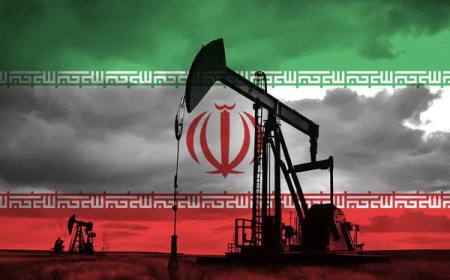



























































Iran, Israel, and the Illusion of War
This is not peace. And it is not war. It is the controlled demolition of the Sykes-Picot agreement in favour of an integrated Middle East. Iran is reshaping its internal power structure and regional posture. The Middle East is not descending into chaos. It is being reorganized.
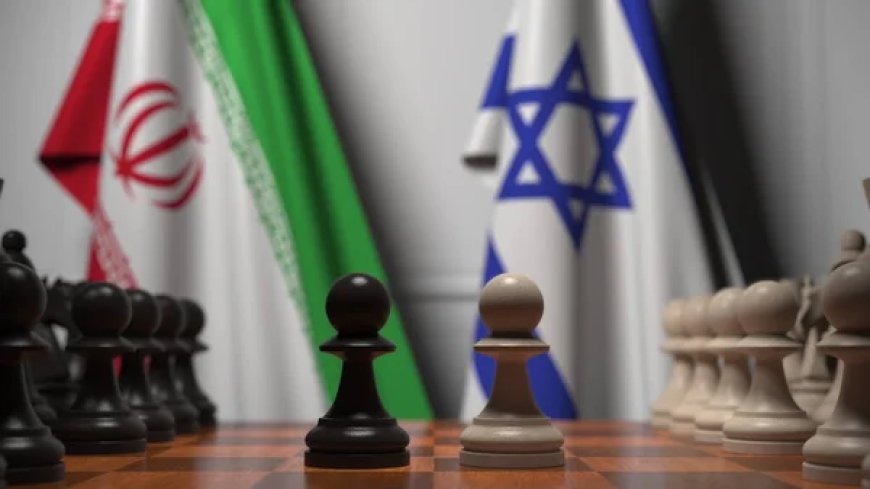
What is unfolding between Iran and Israel is not regime change, nor is it a conventional war spiraling out of control.
It is something far more unsettling for observers trained to think in binaries of peace and conflict: A managed confrontation, designed to eliminate liabilities, rebalance leverage, and push the region toward a new equilibrium.
Despite years of speculation, Iran is not facing regime change in the classical sense.
The United States and Israel are not pursuing an Iraq-style decapitation strategy against Tehran, nor are they attempting the Hezbollah model -- where an entire leadership ecosystem is methodically erased through targeted strikes.
Iran is not Hezbollah, and this distinction matters. What is happening is an internal transition within Iran, masked by external conflict.
Silent Consent
In the coming Iran-Israel confrontation, many Iranian hardliners will die. This is not a failure of Iranian intelligence, nor a sign of Israeli omnipotence. It is a consequence of calculated tolerance.
Iran has already demonstrated this pattern:
● Qassem Soleimani, the architect of Iran’s regional proxy network, was assassinated by the United States. Iran retaliated symbolically, but structurally absorbed the loss.
● Ismail Haniyeh was invited to Tehran and killed there -- an act that would be unthinkable without at least tacit internal consent.
● Hezbollah’s top command was consolidated in predictable locations, enabling Israel to eliminate them in one of the most devastating leadership strikes in the organization’s history.
These were not random lapses. They were filters.
Iran is pruning its proxies -- and simultaneously pruning its internal hardliners. Within Iran’s power structure, not all “hardliners” are aligned with the same long-term vision. Those who remain ideologically rigid, operationally reckless, or incompatible with Iran’s evolving regional strategy have become liabilities rather than assets.
From Tehran’s perspective, such actors are expendable. This is not weakness. It is strategic housekeeping.
Iran’s Internal Transformation
Iran is undergoing an internal transformation that external observers consistently misunderstand. The Islamic Republic is not abandoning its ideology, but it is reorganizing how that ideology is operationalized.
The old model -- maximum proxy aggression, perpetual low-level chaos, ideological maximalism -- has reached diminishing returns. Sanctions, demographic pressure, economic stagnation, and regional fatigue have forced recalibration.
The new model prioritizes:
● Strategic depth over tactical bravado
● Leverage over spectacle
● Integration over isolation
This requires discipline. And discipline requires removing actors -- internal or external -- who cannot adapt.
From Asset to Liability
Israel, meanwhile, is entering a far more dangerous phase of its regional role. It is no longer a stabilizing force from the perspective of major regional players. It is becoming a toxic asset.
In the coming theatrical confrontation with Iran, Israel’s vulnerabilities will become clearer, not less. Iran does not need to annihilate Israel militarily to reshape the balance of power. It only needs to expose Israel’s structural dependencies.
One plausible move is the targeting of the Haifa oil refinery. Such a strike would not merely damage infrastructure -- it would rewire Israel’s energy dependence, pushing it decisively toward the Gulf.
This is not accidental.
Iran has already worked -- quietly but consistently -- to increase GCC leverage over Israel. Energy dependency, trade corridors, and diplomatic normalization all become tools of constraint. A more dependent Israel is a more manageable Israel.
An Unspoken Alignment
Contrary to popular narratives, Iran and the GCC are not locked in an existential struggle.
Competition exists, but so does convergence. During Iran’s most recent internal unrest, Gulf states and Turkey provided various forms of support to the Iranian government -- financial, diplomatic, and logistical. This is not ideological solidarity. It is strategic alignment.
All major regional actors share a common interest:
● Preventing uncontrolled escalation
● Avoiding energy market collapse
● Limiting Western military re-entry
● Preserving regime continuity
Regional integration -- however informal or uneven -- is now more valuable than ideological purity.
War as Theater, Not Catastrophe
What is being sold as an Iran-Israel war is, in large part, performative. It is violence with guardrails. A real war would look very different.
If this conflict were genuine and unconstrained, three things would happen almost immediately:
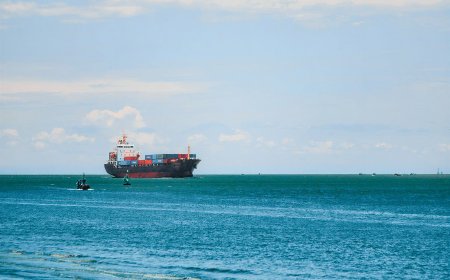
1. Iran would shut down the Strait of Hormuz.
2. Israel would strike Iran’s major oil and gas fields and refineries.
3. Iran would destroy Israeli desalination plants, the Galilee water management system, and the Leviathan offshore gas field.
None of these have happened. And that absence is the point.
If even one of these thresholds were crossed, all bets would be off. The global economy would face a shock so severe that only a world war-level mobilization could stabilize it. Energy markets would collapse, supply chains would fracture, and political systems would enter crisis mode.
The fact that none of the major players are willing to cross these lines tells us everything we need to know.
Controlled Violence, Managed Transition
This is not peace. And it is not war. It is the controlled demolition of the Sykes-Picot agreement in favour of an integrated Middle East. Iran is reshaping its internal power structure and regional posture.
Israel is being repositioned from untouchable actor to constrained participant. The GCC is increasing its leverage without direct confrontation. And the United States, while still present, is no longer the architect of outcomes.
The Middle East is not descending into chaos. It is being reorganized.
Quietly. Brutally. And very deliberately.