





































































Somaliland’s Israel Gambit Is a Strategic Own Goal. Bangladesh Learned This Lesson in 1971
Bangladesh rejected Israel’s recognition not because it could afford to be principled -- but because it could not afford not to be strategic. Somaliland should take note. The lesson is clear: recognition divorced from coalition-building and regional consensus can be worse than no recognition at all.
For unrecognized or partially recognized polities, diplomatic recognition is often treated as a numbers game. One state today, another tomorrow, and momentum will eventually follow. However, history suggests otherwise. Not all recognition is equal, and recognition from the wrong state, at the wrong moment, can actively sabotage an aspiring state’s legitimacy.
Somaliland’s reported efforts to court Israeli recognition fall squarely into this trap. Rather than advancing its quest for statehood, such a move risks isolating Somaliland diplomatically, inflaming regional opposition, and eroding the moral foundations of its long-standing claim to sovereignty. There is a cautionary precedent that Somaliland’s leadership would do well to study: Bangladesh in 1971.
When Recognition Becomes a Liability
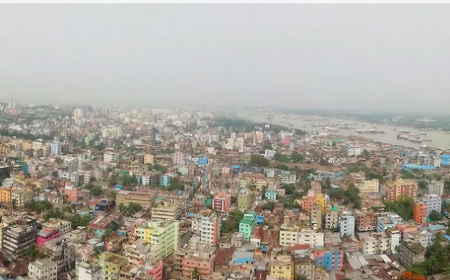
During Bangladesh’s war of independence, the country was fighting off a genocidal campaign by the Pakistani military that left hundreds of thousands -- possibly millions -- dead. Amid this existential struggle, Israel quietly offered to recognize Bangladesh as an independent state, potentially becoming its first diplomatic backer. The Bangladeshi government-in-exile rejected the offer immediately.
This decision was neither ideological nor symbolic. It was strategic. Recognition by Israel at that moment would have immediately and severely alienated Arab and Muslim-majority states, complicated Bangladesh’s relations with newly decolonized African countries, and undermined its campaign for broader international legitimacy -- especially at the United Nations.
As historian Srinath Raghavan documents, Bangladeshi leaders understood that premature recognition from Israel would do more harm than good to their diplomatic objectives.
Bangladesh instead waited -- at immense cost -- for recognition from India, the Soviet bloc, and eventually the broader international community, including Muslim-majority states whose support proved decisive in securing Bangladesh’s UN membership in 1974.
The lesson is clear: Recognition divorced from coalition-building and regional consensus can be worse than no recognition at all.
Israel Is Not a Neutral Diplomatic Partner
Supporters of Somaliland’s Israel outreach often argue that recognition is recognition -- that an unrecognized polity cannot afford to be selective. This argument ignores Israel’s current global standing.
Israel today faces widespread accusations by Amnesty International, Human Rights Watch, and even the late Nelson Mandela and Desmond Tutu of maintaining an apartheid system against Palestinians.
Its ongoing war in Gaza has triggered genocide proceedings at the International Court of Justice, unprecedented diplomatic backlash across the Global South, and mass protests from North America to Southeast Asia. Recognition by a state accused of apartheid and genocide is not a neutral milestone, but a reputational anchor.
For Somaliland, whose strongest case for recognition rests on normative claims -- democratic governance, stability, and post-conflict reconciliation -- association with Israel at this moment is profoundly counterproductive.
Rather than legitimizing Somaliland’s aspirations, Israeli recognition would likely unify opposition across the Arab world and much of Africa, while complicating relations with Gulf states that remain highly sensitive to public opinion on Gaza, including the United Arab Emirates.
There Isn’t Even Consensus Within Somaliland
Another reality often obscured by external advocacy is that Somaliland’s claim to independence is not uncontested within its own territory.
Somaliland’s unilateral 1991 declaration of independence has never been recognized by Mogadishu or any other government, and its claim remains legally disputed under international norms of territorial integrity. Its territorial claims over Sool, Sanaag, and Cayn regions are actively contested by neighboring Puntland and local groups.
The 2023 conflict in Las Anod starkly illustrates these internal fractures: The Dhulbahante clan population of the disputed regions has largely rejected Somaliland’s secession, sought alternative administrative arrangements like the SSC-Khaatumomovement, and engaged in armed clashes with Somaliland forces as they struggle for control and representation. External reporting underscores how deeply contested national identity and political authority remain in these areas.
Moreover, while a 2001 referendum overwhelmingly endorsed Somaliland’s constitution which included independence, observers noted that regions like Sool were either not fully accessible to observers or exhibited higher security concerns and opposition to the process. Historical accounts suggest that consensus was not uniform across all communities.
Somaliland does enjoy relative political stability in the west and north of its territory, but political marginalization of minority clans, periodic protests, and unresolved border disputes reflect ongoing domestic tensions over governance and the depth of support for full secession. Freedom House notes political pluralism but also internal pressures -- including election delays and opposition protests -- that complicate the narrative of a unified, homogeneous independence movement.
This internal complexity matters. External recognition that glosses over real social cleavages and contested legitimacy does not strengthen Somaliland’s case -- it magnifies fault lines, both domestically and regionally.
Domestic Opposition Cannot Be Wished Away
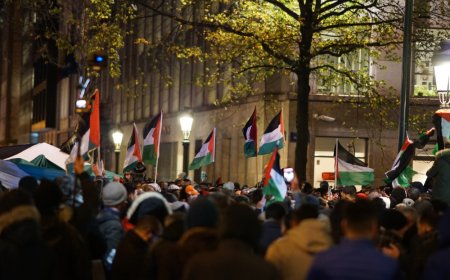
Equally damaging is the domestic backlash against external moves like Israel’s recognition. Mass protests across Somali regions, including large demonstrations in response to the recognition, highlight broad opposition to perceived fragmentation of Somali territory and to policies seen as exploiting local grievances. Associated Press reporting describes tens of thousands of Somalis rejecting the move and asserting Somali unity.
Of course no external analyst -- myself included -- can claim to speak for the people of Somaliland. But from a geopolitical perspective, ignoring visible popular opposition weakens Somaliland’s claim to democratic legitimacy abroad. Statehood bids are not purely legal exercises; they are political narratives. Public consent matters. Bangladesh’s leadership in 1971 grasped this instinctively. Recognition that fractures domestic unity or delegitimizes a liberation struggle internationally is not a victory -- it is a liability.
A Region Closing Ranks
The regional timing makes this gambit even riskier. The UAE’s recently announced drawdown in Yemen, Egypt’s heightened Red Sea security posture, Turkey’s expanding Horn of Africa footprint, and Saudi Arabia’s renewed diplomatic engagement all point toward a tightening alignment around Somalia’s territorial integrity.
Cairo, Ankara, and Riyadh have each reiterated their support for Mogadishu and a unitary Somali state. In this environment, Israeli recognition would not shield Somaliland -- it would expose it. Rather than opening diplomatic space, it would hand Somaliland’s opponents a powerful rhetorical weapon: that its statehood project is externally manufactured, regionally destabilizing, and morally compromised.
Bangladesh’s Enduring Lesson
Bangladesh today is a sovereign, recognized state with diplomatic relations across the Muslim world, Africa, Asia, and beyond. That outcome was far from inevitable in 1971. It was achieved through restraint, coalition-building, and a willingness to forgo short-term symbolic victories in favor of long-term legitimacy.
Somaliland stands at a similar crossroads. Recognition by certain states may feel like progress, but history shows that the costs of the wrong recognition can far outweigh any immediate gains.
Bangladesh rejected Israel’s recognition not because it could afford to be principled -- but because it could not afford not to be strategic. Somaliland should take note.
Atif Choudhury is Founder and CEO of the US-Bangladesh NextGen Fellowship & Policy Institute, a Non-Resident Fellow at the Vanderbilt Center for Global Democracy, a Non-Academic Fellow at the University of South Carolina Rule of Law Collaborative, and an Academic Relations Strategist at the Qatar Cultural Attache Office in Washington DC.