





















































Bangladesh's Bulwark of Democracy
She now walks the pathways of the afterlife, while we who remain must honor her legacy by continuing the struggle she led: the struggle for democracy, for justice, and for the betterment of the people of Bangladesh.
Decades ago, when the world was a different place, and to be a leader meant by default to be a man, a prime minister stood up in the House of Commons and said this about his predecessor:
"The only guide to a man is his conscience; the only shield to his memory is the rectitude and sincerity of his actions. It is very imprudent to walk through life without this shield, because we are so often mocked by the failure of our hopes and the upsetting of our calculations; but with this shield, however the fates may play, we march always in the ranks of honour."
Winston Churchill spoke these words for Neville Chamberlain in 1940. The world has changed since then, and we have learned that conscience and honor are not the exclusive province of men.
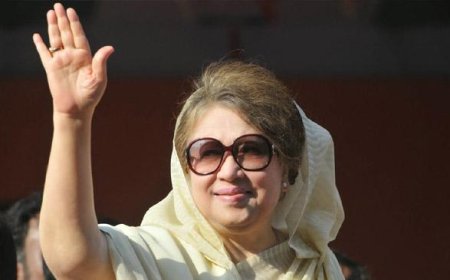
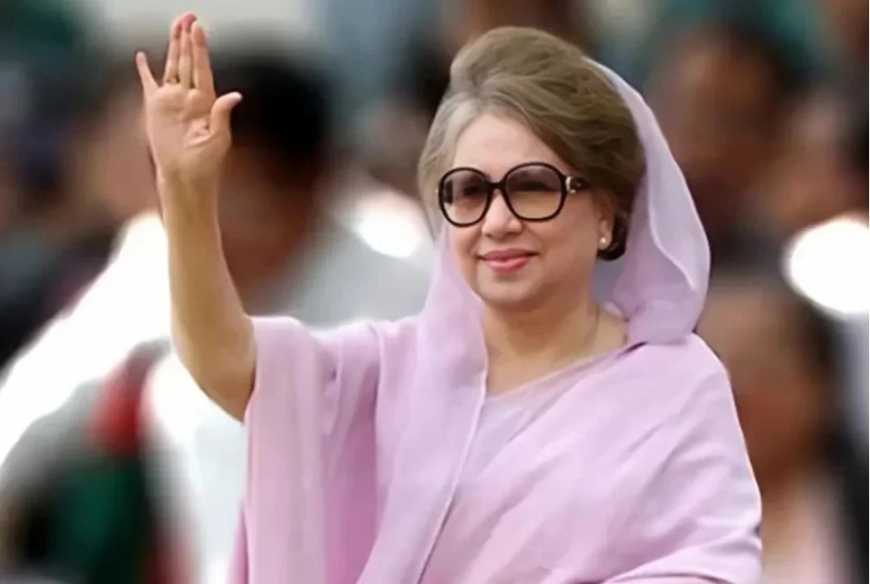
Khaleda Zia proved this truth throughout her life. Honor, prudence, perspicacity -- she embodied these qualities in both her personal conduct and her political career.
As long as she remained on the political scene, we had, in the back of our minds, an assurance: there was an adult in the room who would remain acutely aware of the appropriate, the good, the honorable -- and who would consistently over-index toward these values in her decisions.
For most of her political life, Khaleda Zia was spoken of in the same breath as Sheikh Hasina. The two women dominated Bangladeshi politics for a generation, and observers often treated them as mirror images of one another. This was always a false equivalence.
Had Khaleda Zia found in Hasina a kindred soul -- someone equally willing to believe in and invest in democratic institutions -- the politics of Bangladesh would have looked impossibly different and immeasurably better. The two of them, working in concert rather than conflict, could have built a democracy that was the envy of South Asia.
Instead, Hasina chose the path of autocracy, imposing a fifteen-year dictatorship on Bangladesh, while Khaleda Zia remained the sole bulwark of democracy and liberal politics in our country. History will record which of them chose rightly.
Khaleda Zia possessed an indomitable will. By consistently opposing the autocracy of H. M. Ershad in the 1980s, when she took over the party founded by her husband Shahid President Ziaur Rahman, she earned the moniker of "the uncompromising leader" -- a title she would prove worthy of again and again.
Despite the torture and privations inflicted on her and her family by the 1/11 caretaker government, she refused to go abroad into exile.
During the Hasina dictatorship, despite failing health, she chose imprisonment over becoming a fugitive in foreign lands. Each time she faced such a choice, the benefits of her steadfastness accrued to the people of Bangladesh, while the costs were borne by her personally.
In life, Khaleda Zia was a politician, and so each of her actions was subject to the calculations of politics. There was never a dearth of people lining up to criticize her: her political opponents, the forces of misogyny that could never accept a woman wielding power, and those who simply could not bring themselves to credit her accomplishments.
Now that she has passed, however, we will be able to judge her legacy more dispassionately. And we will discover, more and more as the years go by, the enormity of her contribution and her singular importance to the project of constructing a modern, welfare-centric Bangladeshi state.
We will also probably realize, that to the extent that the political liberalism of Locke, Mill, and Kant had any champion in Bangladeshi politics, it was her.
Khaleda Zia changed the face of Bangladesh. The country she found in 1984, when she became the Chairperson of BNP, looked vastly different from the Bangladesh of 2006, when she completed her final term as prime minister.
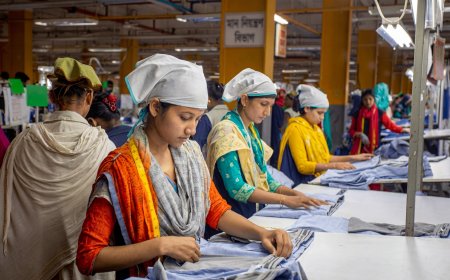
Under her leadership, Bangladesh experienced sustained economic growth that lifted millions out of poverty. She championed the garment industry that would become the backbone of our export economy. She expanded access to education, particularly for girls, understanding that no nation can prosper while leaving half its population behind.
Her government's investments in primary education and maternal health laid the groundwork for the demographic and social gains Bangladesh would achieve in subsequent decades.
Her contributions to Bangladesh's economic transformation and female empowerment stand as her proudest accomplishments --achievements that benefited all Bangladeshis, regardless of political affiliation.
Yet perhaps her greatest service to the nation came during its most sustained years of darkness. Khaleda Zia successfully led Bangladesh through the long valley of Hasina's dictatorship and brought us through to the other side.
The movement for democracy exacted a terrible toll on BNP and its supporters. Countless leaders and activists were subjected to torture, arbitrary detention, and enforced disappearance. Many were murdered outright; others vanished without a trace, their families left to grieve without answers or closure.
The regime's brutality was designed to break the party's will, to make the cost of resistance so unbearable that BNP would simply cease to exist as a political force. It did not work.
Khaleda Zia herself lost her younger son, Arafat Rahman -- a grief that no parent should have to bear, and one she bore with dignity even as her political enemies sought to exploit her sorrow.
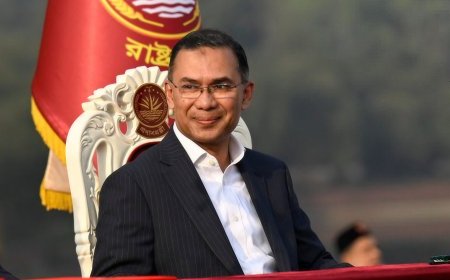
Her other son, Tarique Rahman, was in London and she went these long years without having him by her side or being able to spend time with her grandchildren, who had always been her delight.
By the time he had returned to Dhaka, she was on life support. Her health deteriorated severely during her years of imprisonment, so much so that she was confined to a wheelchair during her final public appearances.
Yet through sheer willpower and force of character, she held BNP together when lesser leaders would have capitulated, and in doing so, she held together Bangladesh's hope for democratic restoration.
In the end, Khaleda Zia gave everything she had for the people of Bangladesh. And the people of Bangladesh responded in kind: they made her the most victorious politician in the history of our democracy.
She contested eighteen constituencies across four general elections, in every corner of the country, and won every single one. No other leader can claim such a mandate. No other leader earned such trust.
The Holy Quran, in Surah Al-Furqan, teaches us how to distinguish the righteous from the wicked. The righteous servants of the Almighty, we are told, "walk upon the earth with humility, and when the ignorant address them harshly, they respond only with words of peace."
Throughout her career, Khaleda Zia faced the harsh words of the ignorant -- the slander, the false charges, the manufactured controversies. And she responded not with vengeance but with perseverance, not with bitterness but with continued service.
She now walks the pathways of the afterlife, while we who remain must honor her legacy by continuing the struggle she led: the struggle for democracy, for justice, and for the betterment of the people of Bangladesh.