





























































Neither Competent nor Prudent
As with the constitution, good principles can only help if properly applied in practice. In the long run, the verdict of history on the interim government will depend on the ability of its successors

Patience, capability, and wisdom are not qualities commonly associated with the 47th US President. They don’t need to be.
Imposition of a coup on Venezuela is nothing new across Latin America, but the US threatening to upend NATO over Greenland when it has had airbases there since WW2 with Denmark’s consent, makes as little sense as it sounds.
Yet for Donald Trump, so long as the spotlight remains mesmerized by his outpourings, he seems unconstrained by conventional measures of good leadership. This poses many problems for other world leaders.
In the UK, Sir Keir Starmer’s 18-month-old government has chosen more than most allies to play the supplicant. One of several timid policy choices that are unlikely to reverse his faltering reputation and seems less prudent by the day.
For Bangladesh, the global instability generated deepens further the economic pressures on ordinary people and the scale of the challenge facing the new government elected in February’s election.
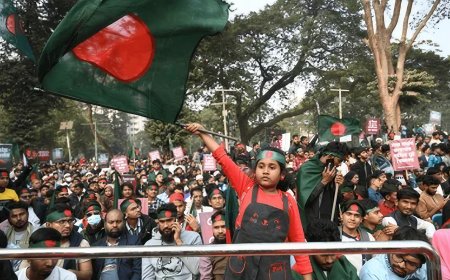
Tarique Rahman’s return from exile and the crowds attending Begum Khaleda Zia’s funeral helped visualize the BNP’s prevailing opinion poll leads. Hopes run high that years of quiet middle age parenting in the suburban Surrey fringes of Greater London have made a statesman of the new BNP chair and will give substance to the party’s promises.
Of course, the same polls also make clear that Jamaat-e-Islami can expect its largest ever share of the vote. Jamaat’s organizational tenacity could yet pay off to catapult it into office. Whichever party wins, a key indicator of its competence and prudence will be whether it is still riding high in 2030. This will be easier said than done.
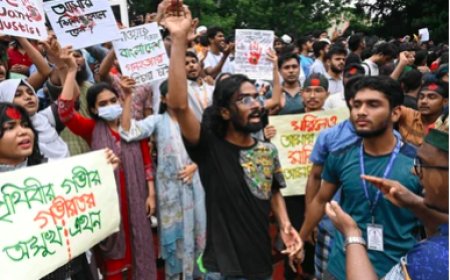
Only two years ago, Sheikh Hasina seemed immovable. While her ousting is justified by the shooting of unarmed protesters during the Long July Revolution alone, the time since has brought forth plenty more evidence of previous illegal or unwise policy choices.
Much of this relating to corruption and cronyism was hidden in plain sight. At the time people pointing out such lack of prudent policy were regularly answered with claims of competence in building infrastructure, navigating crises and longevity.
Following the hollow 2024 election though, it seems even the AL leadership gave up pretending. If at first when anti-quota demonstrations grew in July 2024, it assumed further state violence could suppress them, it soon realized the opposite.
By the time the promoters of Digital Bangladesh cut off the internet and their own propaganda, the ending had become inevitable and only a matter of time.
Knowing when to quit and picking the time of your own retirement are rare enough skills in world politics. In Bangladesh, where power and money tend to trump over ideology and principle, they are rarer still.
Interim government Chief Adviser Prof Mohammed Yunus will attain this accomplishment next month. Enough surely to guarantee a pass mark for assessing the impact of the IG. But not enough to negate the need for more scrutiny of those areas where it has not had clear success.
To be fair, the fact GDP growth has slowed overall should be set to one side as a factor as this can be attributed to factors beyond the interim government’s control.
The damage done by corruption under AL rule was too long-lasting and entrenched for a start. Nobody should expect economic miracles within 18 months, let alone in an uncertain geo-political climate. It is also reasonable to assume the rate of domestic investment should pick up once business certainty arrives under an elected government.
Increased remittances via official channels may be chalked up as a success, but the fact people went back to work and the wheels of the economy restarted is clearly less to do with the administration and more to do with people’s need to live.
Much more should be expected of a non-aligned interim government, especially one appointed after an uprising against the state murder of unarmed protesters, to ensure rule of law and constitutional rights. Alas, independent investigations into past human rights abuses and the torture cells of Aynaghar, were not followed up by removing all risks to journalists and human rights defenders under draconian laws.
Too many individuals are also still subject to harassment by frivolous or untenable charges and cases. Chief Adviser Yunus adopts a relatively collegial laissez faire leadership style, so this failure is a collective one among all the cabinet advisers and others (such as the NCP) on whom hopes for reform rested after the interim government came to office.
As the IG quickly turned into a caretaker government in all but name, keeping the peace is its most vital task. Unfortunately, the violent mobs who attacked the newspaper offices of Prothom Alo and Daily Star and vandalized Chhayanaut in mid-December didn’t just spring out of nowhere.
They were emboldened by the IG’s lukewarm response during its tenure to earlier attacks and constant incitement against cultural centres, heritage sites, media outlets and places of worship and shrines.
It is regrettable political parties have been unable or unwilling to meet even the smallest of the targets set by the July Charter for more women parliamentary candidates. With so much of the history of the Grameen Bank and Bangladesh’s RMG sector linked to the empowerment of women, it was a major missed opportunity for the Chief Adviser not to have taken more of a lead by leveraging his reputation to ensure a better outcome.
Few of the high hopes initially placed on the IG have come to pass. The in-tray awaiting the next government will be fuller than normal. The perennially toxic culture wars over history endured by Bangladeshis since independence have only been made harder to calm down by the de facto banning of the AL.
No doubt a yes vote in the constitutional referendum will be spun as a key legacy of the IG. An upper house, more term limits, and proportional representation are certainly good ideas, but as with the constitution, good principles can only help if properly applied in practice.
In the long run, the verdict of history on the interim government will depend on the ability of its successors. The people of Bangladesh must hope they have as much empathy, good judgment, skill and vision as they can get.
Niaz Alam is the Dhaka Tribune London Bureau Chief.