


























































Ali Riaz’s Big Bet
Is tinkering with the formal rules of the game the triumph of hope over experience (this time politics will be different)? Or a more technocratic faith in the power of institutional architecture to push back against the potent political imperatives of rents and control (we can design our way to democracy)? Either way, fixing the rules seems a misplaced focus when history has shown that the amassing of political power rapidly renders such niceties ornamental.

In the Room Where it Happens
Like all the best books, Ali Riaz’s A Fractured Path: Challenges of Democratic Transition in Bangladesh (October 2025, UPL Books) can be read in two ways. The first is as a straightforward scholarly account of democratic transitions, why and how they happen, why they often fail, and what that means for Bangladesh’s stop-start journey to popular sovereignty.
Ali Riaz is a prominent, much-published and highly regarded scholar of Bangladeshi politics, with a better grasp than most of the history, institutions, events, and main players. His brisk new book about Bangladesh’s democratic transition is sensible of the challenges ahead but not so worn down by the bumpy journey as to lack optimism.
Read it for its insights into the roadblocks and potholes Bangladesh is likely to encounter on its latest adventure, and it should serve you well.
You can also read A Fractured Path as the roadmap of one of the main drivers of Bangladesh’s recent political detour.
For those who do not know, in 2024 and 2025 Professor Riaz headed the Constitutional Reform and Consensus Commissions tasked by the Chief Advisor to the Interim Government, Professor Muhammad Yunus, to propose workable institutional reforms to prevent the return of authoritarian rule.
Somehow, in between these vast responsibilities, possibly while in the very rooms where it happened, he wrote a book that reveals how his own understanding of Bangladeshi politics has imprinted the reform agenda.
If like me you have been mystified by the focus and process of reforms, this book will help you understand their choices and methods.
Changing the Rules to Change the Players
Of the reforms themselves, many words have been spilled on how proposals were generated, by whom, which party backs or seeks to derail them. These are necessary and important debates, but as Riaz reminds us, this is not our first democratic rodeo; we have been here before, in 1971, 1991, and 2009.
Despite the many lessons of those past episodes, the current reform agenda emphasizes amending the formal rules of governance by limiting prime ministerial terms, allowing floor-crossing, and reinstating a neutral caretaker regime to stage elections, among others.
This seems like a narrow approach to the necessary rebalancing of political power. I was particularly struck by the lack of reflection on the Caretaker Government experience, in particular its much-ignored adverse effects.
These include that delegating the defense of democracy to a non-party government can end up weakening other institutions of democracy such as the internal democracy of political parties and judicial independence, with the overwhelming imperative of protecting the holy grail of election integrity.
As we saw in 2006, the caretaker system ultimately strengthens the conditions for authoritarianism, destroying the integrity of institutions charged with checks and balances in unrecoverable ways.
Such distant possibilities seem to weigh little against the bet that frequent and fair elections prevent authoritarian rule, and that a caretaker regime is the least bad way of making sure they happen. At the very least, it will result in a rotation of the ruling elite, which we can all agree is good in itself.
But is a rotating ruling elite what we mean by democracy? It is never quite clear what it means to Professor Riaz, other than the absence of authoritarian rule.
Is this tinkering with the formal rules of the game the triumph of hope over experience (this time politics will be different)? Or a more technocratic faith in the power of institutional architecture to push back against the potent political imperatives of rents and control (we can design our way to democracy)?
Either way, fixing the rules seems a misplaced focus when history has shown that the amassing of political power rapidly renders such niceties ornamental. It is striking that A Fractured Path is framed by an understanding of the illicit concentration of political power for corrupt ends, and yet we learn little about how to stop it from happening again.
How do political parties end up getting so much power? Why do we let them?
The Worst of All Parties
One reason Ali Riaz is muted on this matter may be that his analysis betrays a belief that the group he understands to be the main anti-democratic forces, the Awami League, have crashed and been taken off the road, at least for now. He is not blind to the democratic deficits of other parties, i.e., the BNP, as revealed by the 1991-2006 period in particular.
But the structural nature of the tendency to authoritarian backsliding in Bangladeshi politics emerges less clearly than the innately "autocratic" (Riaz insists) nature of the Awami League. This uneven-handedness is most notable in the chapter "The Three Transitions -- Hope and Despair," an account of the main prior democratic transitions.
His description of the BNP’s resistance to demands for a neutral caretaker regime after claims of vote-rigging in the first 1996 election has an indirect quality with the effect of eliding the roles of key actors, including a suggestion that their motivations included adhering to the law:
The BNP’s obdurate attitude on the caretaker government issue and the insistence that the opposition adhere to the existing constitutional provisions pushed the country to a crisis (pp. 40).
Begum Khaleda Zia’s leadership receives little specific mention and the blame for the democratic backsliding throughout the 1990s and early 2000s is shared across the parties and the system.
This is so despite the fact that it was the Awami League who pushed for elections under a caretaker government in 1996 and then handed power over to the victorious BNP in 2001, the only time a democratically elected government has ever done so without full-scale street battles in the entirety of Bangladeshi history.
The broad-brush account of the second failed transition is in sharp contrast to the vivid reporting of the Awami League’s backsliding after 2009, credited directly to Sheikh Hasina personally and the particular characteristics of her party machine.
Unlike her previous stint in power, Riaz notes, Hasina’s 2008 landslide victory made her "more brazen in terms of her rhetoric and approach toward the opposition" (pp. 44).
The abolition of the 15th amendment establishing the caretaker system was a step taken, he suggests, by Hasina herself. He later explains that her (justified) paranoia about assassination attempts by the opposition and their associates made her political strategy "personal, and vengeance seemed to be driving her" (pp. 47).
For Riaz, the 2009-2024 regime was a "personalistic autocracy" and a "kleptocracy," terms which position both his analysis of the old regime’s political nature and of its economic approach at an extreme end.
The Awami League is not only different in the degree of its democratic backsliding (from, implicitly, the BNP) but in kind: It is an innately thuggish force that cannot be tamed by democratic rules. Their ouster is therefore the principal concern here.
The extreme language of "autocracy" and "kleptocracy" do not help us understand some of the crucial features of the old regime. The Awami League and its partners more than likely looted the public coffers and the banks on a scale unseen in Bangladeshi history.
But that is not all they did. The development success story was only partly myth, even if many gains during the period may have been despite rather than thanks to government policy.
Popular acquiescence to and surprisingly resilient support for the increasingly authoritarian Awami League must be explained with reference to the lived experience of their rule, particularly by the rural majority so far from the seminar rooms of the Dhaka political cognoscenti.
Here, Professor Riaz’s political scientist focus on the mechanics of politics has the effect of obscuring the material basis of rule -- the fact that the politics of Bangladesh have always been the politics of development.
His position in an interim government precariously mandated after the overthrow of an entrenched ruler may also have shaped his need to foreground the worst of what became a very bad government.
But the evidence suggests that it is precisely because looting was not the sole economic agenda of the Awami League government that they managed to hang on long after they had broken the opposition and destroyed democratic institutions.
And while this may be an inconvenient truth for an interim government that has ruled the Awami League ineligible for the 2026 elections, there is also enough evidence to suggest that they remain popular enough to present a future political force.
Their exclusion in 2026 may have been necessary given the violence that would result from their participation. It is also justified by the grotesque failure of Sheikh Hasina and other Awami League leaders to acknowledge or apologize for their violently authoritarian excesses.
Nevertheless, opinion polls and qualitative research suggest a significant proportion of the electorate would probably still back them against the party of the government-in-waiting, given the chance.
An impressive campaign of misinformation from abroad on the one hand, and some disappointment with the interim government on the other have no doubt helped in a premature nostalgia for the old regime.
Citizens vs Parties
Is there anything wrong with Ali Riaz’s big bet that changes in the rules governing politics, statecraft and regular elections will restore Bangladesh’s fractious and violent polity? Yes, if we are betting on that alone.
Political analysts such as Mirza Hassan and Asif Shahan have argued cogently that the conditions for sliding back into the cesspit of authoritarian rule remain intact so long as (I paraphrase) no countervailing civic power exists with the capacity to prevent backsliding or corruption.
Without strong organized citizen pressure on ruling parties and the state machinery to obey the rules, there are no robust reasons to believe they will always do so. Democracy is not just about political parties and elections. None of the major social organizations with strong constituencies and deep roots such as Mohila Parishad or farmers’ and workers’ groups participated in these reform debates, which were exclusive to educated middle class men.
Several of the political parties involved had the thinnest of claims to represent the popular will, having been set up weeks earlier.
Democracy needs citizens to have the power and the position to engage with, monitor, and hold accountable the state actors whose hold on power most needs checking -- permanent human rights commissions, citizen oversight of procurement and public sector recruitment, anti-corruption monitors, macro-fiscal watchdogs (the list goes on).
None of this has been enabled by the post-uprising exercise in reform agenda-setting.
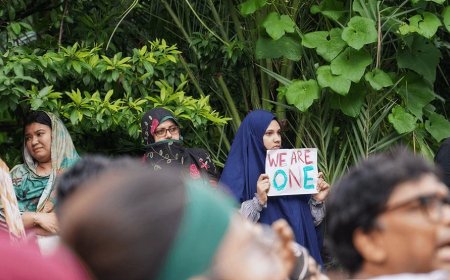
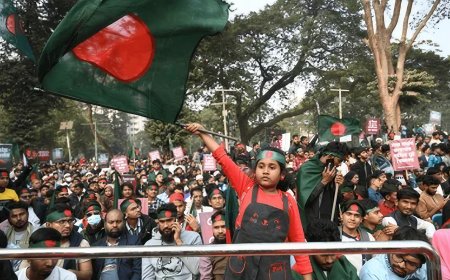
On whether organized citizen groups can provide the deterrence of accountability, several expert observers whose views I respect are optimistic. An argument doing the rounds says the "spirit" of the July Uprising remains among the population at large, providing a latent force against authoritarianism of sufficient heft to give potential rule- breakers pause.
This might be so. But as a scholar of contentious politics, I see no reason to believe it will stand up to the test, for two reasons. One is that relatively spontaneous mass uprisings of the kind seen in July 2024 are vanishingly rare; nothing of that scale or sustained nature is likely to recur soon. No mass organizations or movements have emerged out of the Uprising that could re-create such an uprising.
And it would be an unusually stupid ruler who behaved with the arrogance and insulated folly of Sheikh Hasina that triggered the huge public participation in the protest movement. The rulers, as well as the ruled, have learned from the experience. We are unlikely to see a reprise of July soon.
A second reason against optimism about citizen power is that we have seen precious little sign to date of positive popular forces shoring up the democracy promised by the mass uprising. Instead, organized Islamo-fascists and their fellow-travelling YouTubers on the right have instigated and committed brutal violence against key institutions of liberal democracy with apparent impunity.
The major newspapers, Prothom Alo, and The Daily Star, and the progressive cultural organization Chhayanaut were attacked while the security services stood by. Nothing could more clearly demonstrate how citizen power has degraded into vicious mob rule, and not into the hoped-for democratic counterweight to the excess power of political parties.
Perhaps an electoral democracy will create the space needed for more positive citizen engagement to emerge. An elected government wishing to last beyond the usual single term in office should probably make that a priority.
The conditions for democracy are worse both at home and abroad than they were when Bangladesh was last planning a return to democracy, 18 years ago. Riaz does not exaggerate when he assesses the destruction of state institutions and political culture during the last regime.
Institutional reconstruction will not be easy, particularly when there remains resistance within the civil administration and security forces. The Bangladeshi elite consensus that invisibly underpinned the long period of modest development progress with relatively inclusive growth and investment in human development is no longer in place.
The international environment has also worsened with the end of the rules-based order and human rights as the foundation for global governance; the dramatic turn to capricious fascism in the erstwhile democratic policeman, the US, as well as several of its European allies; and a volatile world economy on a heating planet which has cancelled international aid.
India not only backed the old regime but continues to try to intervene, increasingly through heavily resourced campaigns of disinformation about the conditions of minorities.
This misinformation builds handily on the ugly facts of the post-Uprising period, including that the rights of minorities, particularly Hindus, indigenous peoples, the Ahmadiyya communities, as well as the rights of women, have been a low priority for the interim government.
None of these conditions are conducive to the restoration of popular sovereignty, human rights, and law and order in Bangladesh.
Read Professor Riaz’s important book for how it puts this democratic moment into historical comparative context, for his deep knowledge of Bangladeshi politics.
But consider, while you read, whether his big bet that democracy will come through changing the formal rules is likely to pay off in a polity where the spoils are attractive, the contender are hungry, and political parties have never policed themselves unless the citizens forced them to.
Naomi Hossain is a Global Research Professor of Development Studies at SOAS University of London.