



























































Of Moral Authority and Convenient Amnesia
Concern about minority safety in Bangladesh is not illegitimate. But when that concern is amplified selectively, weaponized by domestic political actors, and accompanied by conspicuous silence on India’s own minority challenges, it acquires the flavour of moral exhibitionism.

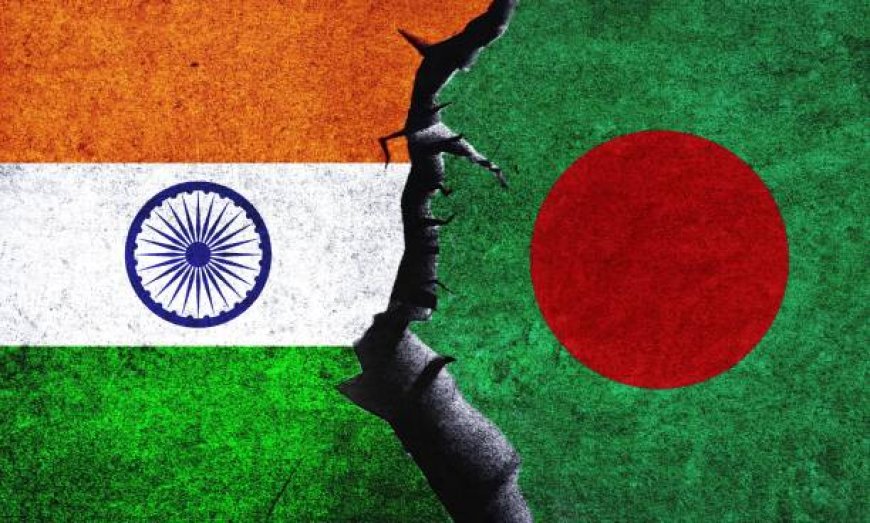
Dhaka and Delhi have never enjoyed the luxury of a simple relationship. Geography forbids it, history complicates it, and politics routinely weaponizes it.
Yet the current phase of tension feels qualitatively different -- not because disagreements are new, but because violence on the streets, moral posturing across borders, and performative outrage at home are now feeding each other in ways that threaten to turn structural mistrust into something more enduring.
The immediate backdrop is grim. Bangladesh has witnessed a surge of violent protests, political killings, and ideological intimidation since the fall of Sheikh Hasina.
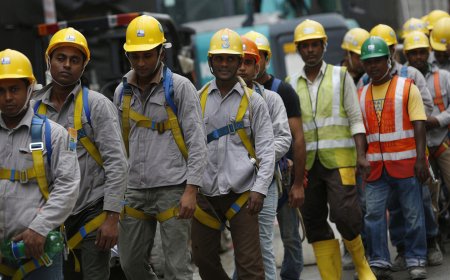
Into this volatile landscape came the brutal killing of Dipu Chandra Das, a 27-year-old garment worker from the Hindu minority community in Mymensingh, beaten to death by a mob over allegations of blasphemy.
His body was tied to a tree and set on fire. The footage travelled faster than facts ever do, igniting outrage on both sides of the border.
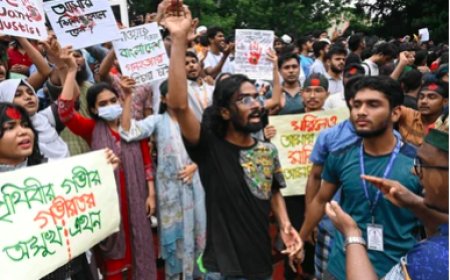
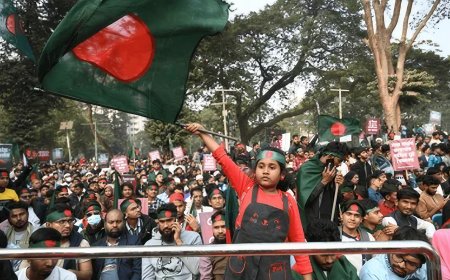
Almost simultaneously, Dhaka was convulsed by protests over the killing of student leader Sharif Osman Hadi.
His supporters allege that the main suspect has links to the ousted Awami League and has fled to India -- an allegation Bangladeshi police say they cannot confirm.
Yet in a country already primed to read events through the lens of external interference, the rumour proved combustible.
What followed was a dangerous convergence: Grief mutating into rage, rage acquiring a geopolitical direction, and domestic violence being rapidly internationalized.
In India, Hindu nationalist groups seized upon Dipu’s killing as evidence of systemic persecution of minorities in Bangladesh.
Protests were organized outside Bangladesh’s diplomatic missions in Delhi, Siliguri, and Kolkata. Visa centres were forced shut. Consular services were disrupted.
Diplomatic notes were exchanged. High commissioners were summoned. Each side accused the other of failing to protect diplomatic premises.
On paper, these incidents might appear episodic. In reality, they signal a deeper corrosion of norms. Embassies are not symbolic real estate; they are protected spaces under the Vienna Convention on Diplomatic Relations.
When groups of protesters can gather at night outside a foreign mission, issue threats, and disperse without consequence, the message conveyed is not merely public anger -- it is state tolerance of that anger as a political instrument.
When a visa centre in Siliguri is coerced into shutting down and removing signage, protest crosses into enforcement. Precedents are quietly set.
Dhaka, for its part, has hardly been immune to street-level excess. Protesters marched towards the Indian High Commission before being stopped by security forces.
Stones were hurled at the Indian Assistant High Commission in Chittagong, triggering a sharp response from Delhi.
Twelve suspects were arrested, then released without charge -- an outcome that satisfied no one. Counter-rallies followed in India.
Bangladesh formally objected to protests outside its mission in Delhi, calling them unjustified. Former diplomats on both sides expressed alarm at the depth of suspicion now on display.
The irony is that both governments are, at least rhetorically, saying the right things.
Bangladesh’s interim administration, led by Nobel laureate Muhammad Yunus, has declared unequivocally that there is no place for mob violence in the new Bangladesh and has promised accountability in Dipu’s killing.
Police have announced the arrest of twelve suspects. India, meanwhile, has framed its concern as a matter of minority protection and regional stability.
Yet rhetoric cannot substitute for context. Bangladesh is indeed facing a serious internal challenge. Human rights groups warn of a rise in lynchings over the past year.
Hardline Islamist groups, emboldened by the power vacuum left by Hasina’s fall, have vandalized Sufi shrines, attacked Hindus, curtailed women’s sports, disrupted cultural events, and intimidated journalists and rights activists.
Two major newspapers and a cultural institution were recently vandalized and branded “pro-India” -- a label that now functions less as a descriptor than as a licence to attack.
As political analyst Asif Bin Ali has warned, extremist groups increasingly see themselves as the mainstream. By dehumanizing critics as foreign agents, they lower the moral cost of violence.
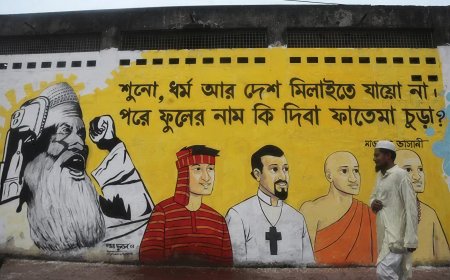
In this environment, the biggest victims of anti-India politics are not India, but Bangladeshis themselves: Secular thinkers, moderates, minorities, and institutions that once anchored pluralism.
This is the uncomfortable reality Delhi must reckon with. Concern about minority safety in Bangladesh is not illegitimate.
But when that concern is amplified selectively, weaponized by domestic political actors, and accompanied by conspicuous silence on India’s own minority challenges, it acquires the flavour of moral exhibitionism.
International watchdogs have repeatedly flagged communal violence and discriminatory laws within India. None of this seems to temper New Delhi’s confidence in lecturing Dhaka.
The problem is not only what is being said, but who is saying it -- and after doing what.
For over a decade, India maintained close relations with Sheikh Hasina’s government, endorsing elections whose credibility was widely questioned and prioritizing predictability over democratic legitimacy.
Now, as Delhi calls for free, fair, and inclusive elections in Bangladesh, the reaction in Dhaka is not reassurance but skepticism. The message may be sound; the messenger is compromised by recent history.
That skepticism is magnified by Sheikh Hasina’s continued presence in India. Bangladesh has sought her return to face trial, including on allegations of crimes against humanity.
Delhi’s refusal -- or silence -- on these requests has become politically radioactive.
Reports that Awami League leaders continue political activity from Indian territory, whether accurate or not, reinforce long-standing suspicions of patronage. In diplomacy, perception hardens quickly into belief.
These tensions are unfolding against a larger backdrop of narrative unease. Victory Day on December 16 is not merely a commemoration in Bangladesh; it is a foundational moment.
When India’s prime minister marked the day by celebrating India’s victory without explicitly acknowledging Bangladesh’s liberation, it was read in Dhaka not as a slip, but as reframing.
The Indian Army’s more historically grounded statement -- acknowledging the joint struggle and the birth of Bangladesh -- only highlighted the drift between institutional memory and political messaging.
For Bangladeshis, whose national identity is inseparable from 1971, such shifts strike at the question of agency.
Meanwhile, Bangladesh is moving towards elections scheduled for February 12. There is broad consensus that an elected government would be better positioned to restore legitimacy, tackle extremism, and recalibrate foreign relations.
It is widely expected that the BNP will emerge dominant, with the Awami League barred from participation, though Islamist parties such as Jamaat-e-Islami may test that outcome.
Until then, Muhammad Yunus faces his hardest task: Containing violence in a country where authority is contested and patience is thin.
Indian policymakers are not oblivious to the stakes. A parliamentary panel has reportedly described the situation in Bangladesh as the biggest strategic challenge for Delhi since 1971.
Stability in Bangladesh is vital for India’s own security, particularly in the northeast. Exaggeration in sections of the Indian media -- portraying Bangladesh as sliding inexorably into communal chaos -- serves neither accuracy nor strategy.
The deeper danger is that right-wing actors in both countries are feeding off each other. Provocation across the border validates extremism at home. Each street protest, each incendiary headline, narrows the space for restraint.
As former diplomats like Humayun Kabir have warned, the level of distrust now visible is unprecedented.
Bangladesh and India are condemned by geography to coexist. They are also bound by history, whether they like it or not. Influence rooted in trust endures; influence asserted through symbolism and selective outrage does not.
Regional stability cannot be sustained through megaphone diplomacy or street-level pressure.
It requires restraint, reciprocity, and a willingness -- especially on the part of the larger power -- to temper moral certainty with self-reflection.
Both sides claim to want stability, democracy, and harmony. Achieving those goals will require resisting convenient amnesia -- about past indulgences, present responsibilities, and the fragile lives caught between competing narratives.
Without that honesty, the danger is not merely a diplomatic rupture, but the normalization of hostility as policy.
H. M. Nazmul Alam is an Academic, Journalist, and Political Analyst based in Dhaka, Bangladesh. Currently he teaches at IUBAT.