





















































To Live Long Enough To Die A Hero
Khaleda Zia’s moral authority came not just from her political positions, but also from her very persona. She was the epitome of dignity and grace. Authenticity is a virtue in politics, something she exhibited all her political life.
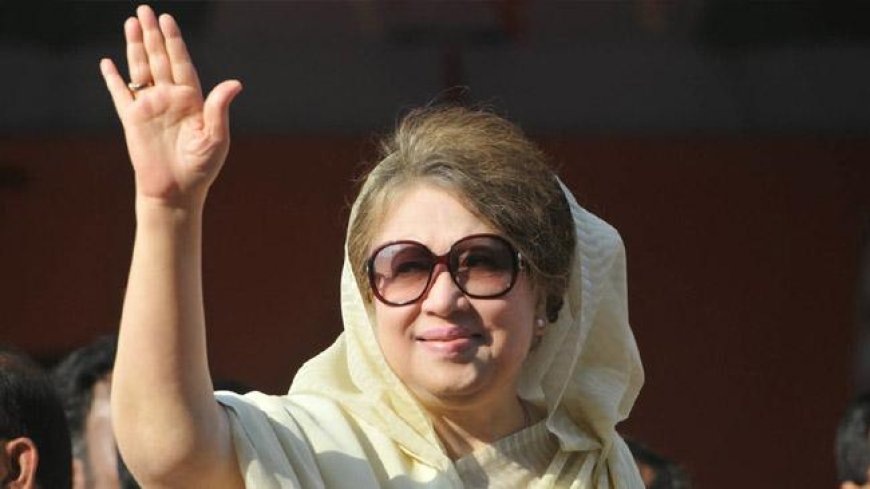
As this piece is being written, Bangladesh is in the midst of an emotional drama to rival any Bollywood tearjerker. Overcoming life’s vicissitudes, a son reached his dying mother just in time before she breathed her last. The story resonates with every family in Bangladesh as everyone has a relative abroad who may face the same dilemma.
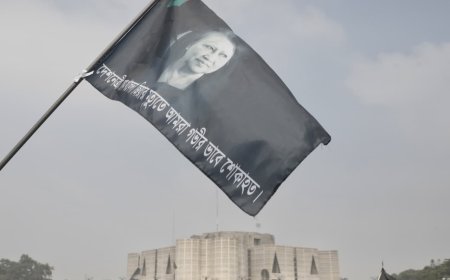
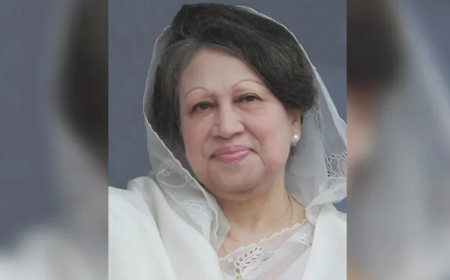
Of course, the family in concern is not just any other Bangladeshi one. The mother in question is Begum Khaleda Zia, prime minister between 1991-96 and then 2001-06. Suffering from liver complications, aggravated by years of ill treatment and incarceration by the despotic regime that was overthrown by the July 2024 popular uprising, she passed away early morning December 30.
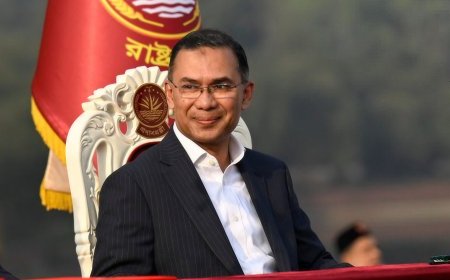
Her son and presumptive political heir, Tarique Rahman, tortured by the military in its last stint at political interference in 2007 and exiled to London, had returned home on the 25th.
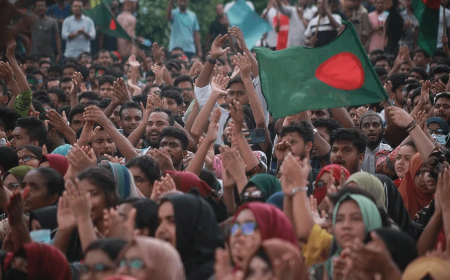
Bangladesh will hold its first free and fair election in seventeen years on February 12. After three rigged elections, years-long reign of torture and violence, and political uncertainty undermining the economy in the past couple of years, only a peaceful democratic transition through a free and fair election can allow Bangladesh to heal.
Mrs Zia lived long enough as the moral beacon for peace, stability and democracy across the political spectrum, and passed away after the electoral train had truly started. Emperor Babur is reputed to have asked the Almighty to take his life and let his heir, Humayun, recover from severe illness. While her complications might have extinguished her life well before the Long July of 2024, she lived long enough to ensure democracy returns to the only country she ever called home.
As it happens, this will not be the first time that the former Prime Minister has played a vital role in democratic transition.
Back in 2008, in spite of the military having tortured and exiled her son, Khaleda Zia had participated in an election she knew she was going to lose because playing field was tilted against her because she believed that even a flawed election and a poorly performing but elected government would be better than undemocratic rule.
A dozen years earlier, she had codified a system of non-partisan election-time government into the constitution, a provision that was rescinded in 2011 to pave the way for years of misrule that ended last monsoon.
And five years earlier, in 1991, she had worked with all political parties to restore parliamentary form of government, even though she herself was the presumptive frontrunner in a potential presidential election and thus could have ruled as an imperial president.
Of course, history is seldom linear. Bangladeshi democracy faltered in the early 2010s. By the end of that grim decade, Khaleda Zia had become the symbol of resistance. She had risked her own life by refusing to go into exile.
And this was not the first time that she had assumed that role.
Compared with the violence and plunder that was unleashed repeatedly by the fallen regime, the military government that ruled Bangladesh in the 1980s appear positively benign. Nonetheless, Khaleda Zia’s steadfast refusal to participate in any election under the junta denied it political legitimacy, and help her win the 1991 election.
After the fall of the despotic regime on August 5, 2024, in a meeting of pro-democracy politicians, civil society representatives, and youth revolutionaries who led the uprising, it was unanimously decided that the President would release Khaleda Zia unconditionally and withdraw all cases against her. Since her release, the former Prime Minister had urged for peace and stability, and shunned vengeance and retribution.
Bangladesh has been suffering from post-euphoric blues over the past seventeen months. The election pits Rahman’s moderate, liberal democratic party against an alliance of various Islamist outfits, and a motley crew of new and old parties. The economy remains moribund. Law and order is yet to be restored.
Against that grim background, there is general agreement across the board, including from people who never voted for her, that Khaleda Zia’s moral authority is a key factor why Bangladesh has not descended into anarchy as happens in so many countries that experience violent uprisings.
Khaleda Zia’s moral authority came not just from her political positions, but also from her very persona. She was the epitome of dignity and grace. Authenticity is a virtue in politics, something she exhibited all her political life. Mrs Zia had always carried herself in sari and make ups that befitted a person from her walk of life before she had entered politics.
First female prime minister in our Muslim majority country, leader of a political coalition that often included Islamists, she had never changed her appearance for political expediency.
Born two years before the freedom at midnight, she isn’t quite a midnight’s child. She had no superpowers like the children in Salman Rushdie’s novel. But her life, like that of his hero’s, parallels that of her country.
Growing up in the black and white era when the memories of the anti-colonial struggle was still fresh, perhaps she too dreamed of Dilip Kumar -- interestingly, the iconic actor held a much-remembered stadium concert in the early 1990s during her first term in office.
But her dreams, like those of her countrymen, would come crashing down in the subsequent years -- she was kept in detention with her sons while her husband was a commander of the Mukti Bahini in 1971. She had seen coups and countercoups that saw the military and civilian leaders of the country’s freedom struggle killed or discredited in the following decade.
Khaleda Zia’s life since the early 1980s can be seen through the prism of a classic hero’s journey: the life of a homemaker transformed by the assassination of her husband, initial refusal to enter politics, only to relent after a military coup, repeatedly tested through elections and stints in and out of government, ordeal during the years of oppression to resurrection and now the return with the elixir in the form of election -- the rise, fall, and apotheosis of Khaleda Zia is an epic tale indeed.
"Either die a hero or live long enough to see yourself become the villain" -- the dialogue from Hollywood blockbuster The Dark Knight offers a dichotomy, which Khaleda Zia defies by having lived long enough to die the hero that Bangladesh needs and deserves.
Jyoti Rahman is Executive Editor, Counterpoint.