





































![A Ledger of the Soul: Navigating the Allah-Bhagavant Nexus in a 19th-Century Puruṣākāra Jñāna Caupara [Gyan Chauper]](https://counterpointbd.com/uploads/images/202608/image_430x256_6a93baa3b09a7.jpg)



















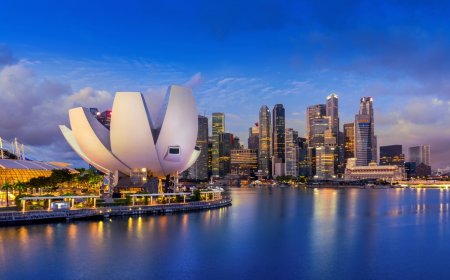
The Singapore Playbook
For a nation like Bangladesh, the challenge is not whether to depend on others, but how to manage that dependence intelligently. The question, then, is not how to escape vassalhood, but how to master it.



In today’s emerging multipolar world, the notion of sovereignty has become more fluid than ever before. No nation, large or small, stands entirely independent.
A vassal state is a country that depends on a regional or global power -- economically, militarily, or diplomatically. To survive, it often gives up part of its sovereignty.
For a nation like Bangladesh, the challenge is not whether to depend on others, but how to manage that dependence intelligently.
The question, then, is not how to escape vassalhood, but how to master it.
Bangladesh now faces a defining choice: remain a passive, aid-dependent state shaped by external agendas, or transform into a strategic vassal -- one that leverages partnerships, geography, and diplomacy to turn dependency into durable advantage.
History offers lessons, and Singapore provides a model: small in size, yet mighty in its ability to turn vulnerability into strength. Bangladesh, too, can rewrite its destiny -- if it learns the art of managing power rather than being consumed by it.
Two Main Paths to Vassalization
1. Zero-sum domination:
The dominant power (a global or regional power) only extracts resources and advantages, and keeps the weaker state dependent and deliberately weak.
2. Positive-sum partnership:
Both sides benefit from the relationship, creating a sustainable and mutually beneficial system.
Just like a company with solid leadership and a strong business model can survive crises, a state with strong resources, strategic geography, and political stability can negotiate better terms with powerful nations.
Bangladesh: The Current Context
Looking at Bangladesh today:
● GDP per capita: around $2,500, much of it driven by government spending
● Poverty: about 20% of people live below the poverty line
● Unemployment: about 5%, but most jobs are low-skill and informal
● Gas production: decreasing compared to national demand
● Natural resources: limited beyond natural gas
● Land: highly fertile; there's a common saying that, “gold grows from the soil”
● Debt-to-GDP ratio: about 40%, which seems good globally, but the real GDP numbers are uncertain
Take the statistics not with a grain, but with a fistful of salt.
The Singapore Story
Year 1965. Singapore was a neglected island with a population of 1.9 million. No oil, no farmland, no apparent future. After being expelled from Malaysia due to political and ethnic conflicts, the nation faced a severe existential crisis. There was massive unemployment.
Per capita income was just $500, and poverty was 70%. The economy was almost entirely dependent on the British naval base, where 30% of the people worked. The currency was pegged to the British pound.
The United States, during the Cold War, offered help, but only if Singapore took an anti-communist stance. At the same time, regional powers Malaysia and Indonesia were threats.
It was a classic zero-sum vassalization situation -- a powerless and dependent state.
Then came Lee Kuan Yew.
Under his leadership, Singapore was rebuilt on four pillars:
- Economic diversification
- Fiscal discipline
- Governance reform
- Strategic stability
Singapore carefully balanced its relations with multiple powers. Instead of relying on one side, it negotiated positive-sum partnerships where everyone gained. Between 1965 and 1970, Singapore invested about $50 million to build its own industrial estates. They attracted foreign investment by offering low tariffs (around 5%) and zero capital gains tax.
Results came fast -- by 1975, investments from the US, Japan, and Europe reached $1 billion, creating 50,000 new jobs.
Over time, Singapore reduced its dependency on Britain from 40% to 20%, and joined ASEAN to strengthen regional stability.
Singapore never fell into a debt trap. Though not financially independent at first, its policies were always forward-looking.
They introduced a mandatory pension scheme, which reached 20% of GDP by 1970. The fund was used for housing, education, and infrastructure.
They took only small loans from the World Bank (around $50 million) for schools and ports, but never accepted harsh IMF conditions.
The result is what we see before us today. Of course, Bangladesh, a country of 180 million people, cannot follow the Singapore playbook. But there is enough there to help us see how we can make the most of the situation we are in.