






































































The Trillion Dollar Question
The development of Chittagong Port is more than just a project; it is the key to Bangladesh's next wave of economic growth. If we cannot raise the FDI-GDP ratio from 0.3% to 2.5%, the ambition of becoming a trillion-dollar economy will stay just a dream.
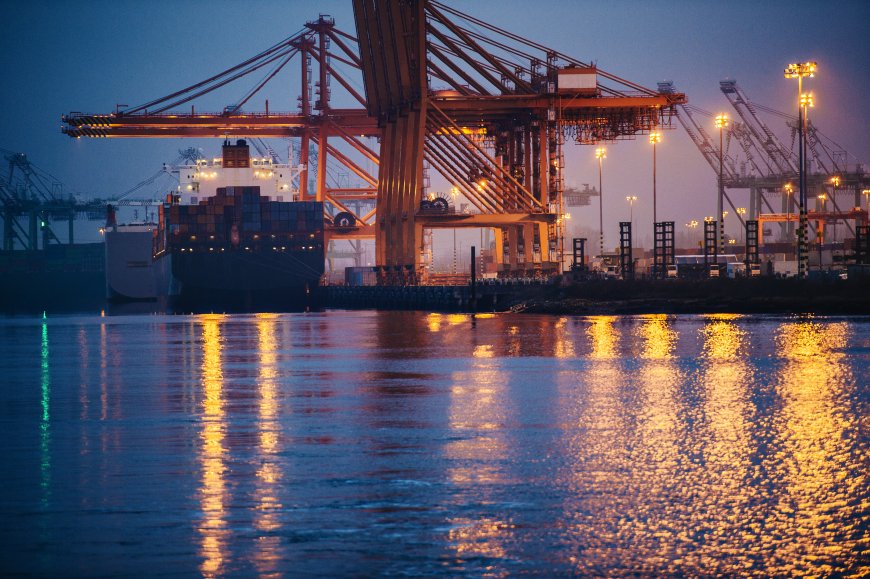
There is no need to reopen the debate about the Chittagong Port. Instead, the focus should be on practical solutions. Recently, during a keynote at a roundtable organized jointly by Voice for Reform and Bangladesh Research Analysis and Information Network, nearly everyone present agreed that if Bangladesh aims to become a trillion-dollar economy, there is no room for delaying foreign investment and the modernization of Chittagong Port. However, some people have questions about certain aspects.
Now, saying this is easier than doing it, because a port is not just infrastructure; rather, it is the focal point of the country's foreign trade, logistics, monetary policy, political economy, and administrative reform.
Chittagong Port is the primary gateway of our economy. Ninety-two per cent of the country's seaborne trade and ninety-eight per cent of its containerized cargo pass through it.
A record 3.3 million TEUs were handled in FY2025 -- yet despite this growth, the port's efficiency remains stagnant.
Singapore Port handles about 37 million TEUs annually, while Colombo handles 7.2 million TEUs. In comparison, Chittagong's 3.3 million TEUs are still significantly below regional standards.
According to the World Bank's Container Port Performance Index, Chittagong ranks 337th out of 405. Terminal crane productivity is only 18-21 moves/hour, whereas the international standard is 35-45. The World Bank also highlighted this in its October report. Most of the gantry cranes used at NCT are 20-30 years old. They frequently break down and remain inoperative for weeks due to a lack of spare parts. While a modern terminal operates with over 95% uptime, NCT's uptime is only 60-70%. This indicates that the current infrastructure is inadequate for our economic ambitions.
In August 2025, NCT alone handled a record 122,517 TEUs (+28% compared to the same period last year). NCT experienced 14% growth from July to September. However, despite CDDL's mediation, waiting times remain over 7 days.
The outcome is singular -- ships must wait 7-10 days at the outer anchorage, incurring an extra cost of £12,000-£20,000 per day. Due to these delays, Bangladeshi businesses face an estimated additional annual fee of $1.5-2 billion. This cost is ultimately passed on through product prices, export lead times, and the country's logistics costs.
In simple terms, port congestion causes a jam for the national economy.
Those familiar with port management, machinery maintenance, automation, or digital TOS understand that boosting a terminal's efficiency involves more than just installing new cranes. It involves long-term investment planning, a trained workforce, digitalization, access to global shipping networks, and strong management discipline.
This is why the government has taken the initiative to involve foreign operators through G2G and PPP models for NCT and LCT. Proposals for APM Terminals (Maersk Group) at Laldia Terminal and DP World at New Mooring Terminal have been submitted for discussion.
An analysis published in Prothom Alo on the Laldia Terminal contract revealed that the country faces a single main risk. If the port closes due to strikes or blockades, the government may have to pay compensation. Will politicians offer a guarantee on this issue? The hopeful news is that ports generally do not close during the many strikes and blockades across the country.
The two projects will attract over $1 billion in foreign investment, without drawing on the government's own budget. We will also face no financial strain.
DP World's international experience shows they can usually boost productivity by 30-50%, cut ship waiting times by 40%, reduce dwell times, and transform the entire terminal into a data-driven operation. Details are available in my article titled "Why Bangladesh Needs DP World’s Investment," published online in Counterpoint on July 7.
Currently, ports in Vietnam, India, and even Sri Lanka are modernizing rapidly. If Chittagong Port does not undergo radical reform now, we will become marginalized in regional trade and supply chains. Shipping lines will go directly to Colombo or Klang, and goods will come to Bangladesh via feeder services on smaller ships -- which will increase both time and cost for exporters.
Increasing port efficiency does not only mean faster loading and unloading of ships; its ripple effects extend throughout the entire economy. Export growth could rise by $5-8 billion annually. Lead times will decrease across all sectors -- RMG, agriculture, light engineering. Logistics costs could be reduced by 0.8-1.5% of GDP. Currently, Bangladeshi exporters' logistics costs are 20-40% higher than those in Vietnam and India. As long as this inefficiency persists, FDI will not come.
An efficient port is not only economically advantageous but also environmentally sustainable. If ships can turn around in 2 days instead of 10, fuel consumption and carbon emissions could be lowered by 20-30%. This will also support in meeting our Nationally Determined Contribution (NDC) targets.
Government revenue will rise. Increased TEU throughput results in higher port fees, customs revenue, and other duties. The biggest misconception is that foreign operators will reduce jobs. On the contrary, when terminal capacity expands, so does work, and workers gain more skills.
Short-term (1-2 years): Ship waiting times will decrease.
Medium-term (3-5 years): Throughput and revenue will increase.
Long-term (5-10 years): Export competitiveness and credit ratings will improve.
Not all information can be disclosed in PPPs or G2Gs due to commercial confidentiality. However, the public has a right to know certain details. For example: How much will the country benefit? How is the role of local professionals secured? What are the operator's KPIs? What is the total investment? What is the revenue share with Chittagong Port Authority?
Since the remainder of this government's term is less than three months, it is essential for them to consult with major political parties and stakeholders. Among the current discussions, the only question regarding the transparency of the agreement is one the government must address. Because the country's most significant economic reform is most successful when the issue becomes a state policy supported by all, rather than being someone's personal agenda.
Although a petition challenging the legality of the NCT handover is ongoing in the High Court, the government has assured that no steps will be taken without the court's verdict. This demonstrates that the process is progressing towards transparency and that public concerns are being acknowledged.
Another reality is that ownership and security control of the contract will remain entirely with CPA and the Navy. The foreign operator's jurisdiction is solely "Terminal Management" -- no control over the port or the state.
It is important to recognize that sovereignty does not mean 100% ownership alone, but also how effectively one can utilize one's own assets. Choosing a partnership in an efficient, revenue-generating port is a far more sovereign decision than retaining ownership of an inefficient, loss-making port.
In the era of globalization, "control" and "value creation capability" are more important than "ownership." Sovereignty remains intact as long as the government maintains control over the land, security, and regulatory powers.
Another security guarantee is that Bangladesh is involving operators from different countries. There is no dependence on a single nation; competition will thrive, and best practices will be fostered. These countries will prioritise security in their own interests.
The issue isn't just container handling -- it's the entire logistics system. If only crane speed is increased while customs, ICD gates, road links, and roads for container evacuation stay the same, half the investment in port upgrades will be wasted.
Chittagong's draft is shallow, so large ships cannot enter. Road conditions across the country are poor, causing delays in containers exiting the port. If the Bay Terminal is not implemented swiftly, draft limitations will prevent ships of 6,000-8,000 TEUs from calling at Chittagong, blocking the pathway to lowering logistics costs. Without the Bay Terminal, Chittagong will never become a port suitable for mother vessels.
Our customs are not modern but rather slow, with many allegations of unethical practices. Where customs clearance takes 30-40 hours in Bangladesh, it takes 12-18 hours in Vietnam. Without bridging this gap, no matter how much the port is improved, speed will not improve across the entire supply chain. Consequently, dwell time increases. Therefore, port development does not mean just port development -- it means modernizing the entire supply chain.
However, a major concern among analysts is the Payra Syndrome. Everyone's worry is to avoid the corruption seen in Payra Port. If a large infrastructure is built and remains unused, it will be nothing but a white elephant project. Therefore, decisions must be made based on real demand, draft depth, and shipping dynamics.
The lesson from Payra Port is: "If you build it, they will not come" -- unless there is the right operator, the right draft, and the proper market connectivity. The proposed operators for LCT and NCT will bring shipping lines from their global networks. That is, their own cargo flow is assured. This is entirely different from the Payra model, where the port was built without a reliable operator or assured cargo flow.
If the country takes precedence, then decisions must also focus on the nation's interests. The government now holds a strong position. Both LCT and NCT are high-value assets.
This enhances our bargaining power. We can secure maximum benefits if we have the political will and technical expertise. If we choose to proceed with an agreement with DP World, we must certainly address the visa issues with the UAE. We should also seize the opportunity to access global markets through the Al Jabal port.
Now is the time for farsighted economic policy, not petty politics.
The development of Chittagong Port is more than just a project; it is the key to Bangladesh's next wave of economic growth. If we cannot raise the FDI-GDP ratio from 0.3% to 2.5%, the ambition of becoming a trillion-dollar economy will stay just a dream.
Will we move forward based on data, or on noise? Data-driven decisions will shape our future, not noise; data should underpin policy. This transformation of Chittagong Port is not just a project; it is a significant mission for our economy.
Only by proceeding within a framework of data, transparency, and accountability can we hope to achieve this goal, and this foreign partnership can propel Bangladesh's future forward.
Reforming Chittagong Port isn't just about the port itself -- it is about transforming the whole economy.
Subail Bin Alam is a columnist on Sustainable Development.