
























































The Four Bangladeshes
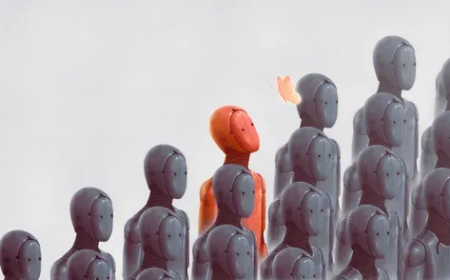
The country is no longer simply divided by class and by geography. It is now divided into four different kinds of society defined by education, language, migration, and access to power: expatriates, English-medium graduates, Bangla-medium graduates, and Madrasa-educated students.


In the lift of the Prava Health Center in Dhaka's upmarket area of Banani, a well-dressed and confident-looking couple was standing next to me, speaking fluent English.
For an instant, I thought they must be foreigners -- maybe some kind of professionals who have traveled here briefly.
However, it was only when the doors opened and an appropriate greeting was exchanged that it dawned on me my error: they were not foreigners, but indigenous Bangladeshi.
Bangladesh today more often comes to be represented as one story of progress, of resilience, of demographic potential. But one of the more fascinating stories, one of more lasting impact, that is hidden here, is the story of division.
The country is no longer simply divided by class and by geography. It is now divided into four different kinds of society defined by education, language, migration, and access to power.
Perhaps one way to think about Bangladesh is to see it as a country of four different kinds of society: expatriates, English-medium graduates, Bangla-medium graduates, and Madrasa-educated students. This last sector of society led the fight that toppled the Sheikh Hasina government.
The Four Societies
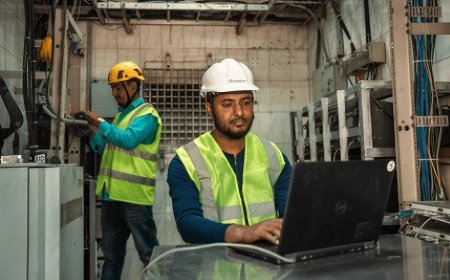
The first society is that of the expatriates, Bangladeshis residing and working abroad, especially across North America, Europe, the Middle East, and Australia. This society is heterogeneous, ranging from highly competent professionals to low-skilled workers.
However, at the higher echelons, it wields overwhelming power over the public spheres. These expatriate professionals are employed by international bodies, development agencies, think tanks, and global NGOs.
Their familiarity with universal standards, English proficiency, and global linkages confer epistemic status on development policy debates.
The second society refers to the English-language speaking university graduates, who are mostly concentrated in the English-language speaking enclaves of the major urban areas of Bangladesh.
A locality like Gulshan, Banani, or Baridhara is not merely a residential area but a cultural habitat where English is commonly spoken as a fluent language in the classroom, boardroom, café, or social setting.
A passport and armor are provided by English -- which not only ushers easy access to opportunities based upon tone, word, and voice, but also immunizes this section of society against the linguistic insecurities that the mass population experiences.
Those graduating in the Bangla medium form the third society, the statistical majority among the educated.
Even as they are educated in their native language, they lack access to the elite labor markets and policy arenas on account of systemic disadvantages.
Their exclusion is in no way due to a lack of intelligence and dedication but is instead a consequence of the depreciated status of the Bangla language as a language of power.
Finally, after all three societies above, comes yet another society with its own special economic system.
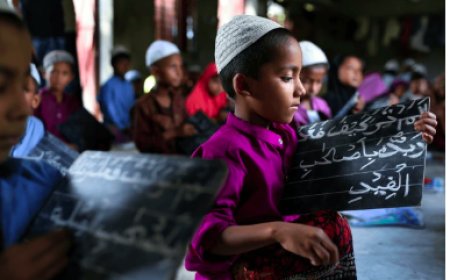
This comprises numerous individuals educated in madrasas, with some gradually penetrating areas that have, until now, been the domain of those who were educated in the Bangla medium.
They should be specifically thankful to the deposed leader, Sheikh Hasina, who made it possible for them to gradually rise in the society by integrating them in every way.
At the same time, there is another dimension, consisting of jobs that have remained rooted in more traditional religious roles.
More generally, the fourth economy also encompases informal sectors, rural economy, or precarious labor markets, where people lack access to higher education.
These people live in a world where survival, seasonality, morality, and means of supporting themselves in terms of income matter.
These people are affected by policies but not their makers, and interactions with other three societies occur in limited, one-way communication.
Four Economies, Four Worlds
These four societies overlap to form four different economies, each with its own set of opportunities, language, and power.
One is the globalized economy that is English-speaking, with access to opportunities in terms of flow of funds, thoughts, and reputation. It flourishes in air-conditioned offices, global summits, and foreign-sponsored initiatives.
The other economy is homegrown, Bangla-speaking, with stalled opportunities in terms of lack of good education, healthcare, and representation. The first economy discusses changes, while the second economy absorbs the expenses.
Over the years, these economies have started taking the form of more than one country within the same territory.
The upmarket dwellers have different national newspapers, networks of professionals in various sectors of the industry, and different visions of the future defined by their own moral and cultural landscapes.
Most of them have never set their foot beyond the boundaries of the affluent neighbourhood of the city like Gulshan and Banani, let alone interacting with a villager or rootless city slum dweller.
They live in a world especially set apart for them, estranged and alienated.
Similarly, the residents of the other three economies have their own world to live in, having hardly any idea about the lifestyle of the people of the upper echelon of the society. They can at best fathom about the upmarket area.
Expatriates and the Policy Advantage
The interim government has hired some expatriate Bangladeshis to work as technocrats to draw on their expertise to administer the sectors concerned.
It is alleged that this government is mostly administered by these technocrats primarily returned from living in other countries, some of whom even have dual citizenship.
The vast mass of Awami League, that got ousted, has also migrated to other countries, where they are trying to reorganize, albeit not so often noticed. So when they would make a comeback, the workings of the state and the society may remain the same.
In fact, almost all changes initiated by this government and some NGOs at various times have been more or less imported initiatives, not homegrown initiatives at all.
The initiatives of some NGOs seemed to adopt global models and not so much the local realities and contexts. This easily creates a sense of disconnect and reduces their ownership and, consequently, sustainability of change initiatives to some extent.
Therefore, almost all of them have made a crash landing and there is a certain stalemate for a long time, as the state seems to be captured by a class. The ruling class has to be blamed for this scenario too.
It is important to consider the increasing role of expatriates in understanding this phenomenon. The ideas and expertise brought by these expatriates are attested by the endorsement of global figures and institutions.
Although this adds value to the decision-making process, it also tends to devalue homegrown systems of knowledge.
Such global decision-making processes tend to neglect the realities of language, social culture, and informal institutions that fundamentally shape Bangladeshi society.
This scenario resonates with the previous worry also expressed by political scientist Rounaq Jahan during the Pakistani period.
Contributing to the discourse on national integration, Rounaq highlighted that an ignorance of diversity in language, culture, and regions, in addition to the domination of the elite through control from a far-off centre, was responsible for the lack of political cohesion.
According to her, administrative efficiency was not enough to promote national integration.
The similarities are striking.
As in the case of the failure of the rulers of West Pakistan to perceive the realities of social change in East Pakistan in the past, the failure of the globalized reformist elite to perceive the realities in Bangla-speaking cities may lead to their disconnection from the Bangla-speaking majority. Here, too, the outcome may not be violence but alienation.
Capabilities and the Cost of Division
The capability approach devised by Amartya Sen is a powerful perspective through which one can examine the implications, both positive and negative, that this divided society is experiencing.
According to Sen, development does not relate to mere income or economic growth, but it has to do with increasing people’s real freedoms or capabilities to live lives that they value.
When opportunity distribution depends on English-speaking proficiency and expatriate credentials, an unequal distribution of capabilities results.
Capable individuals with education in Bangla face restricted choice, not due to lack of effort but because their opportunity structure is discriminatory. Many people face a contracting horizon despite improvements in macroeconomic variables.
This is the true danger of social division: the problem is not inequality but the dissipation of collective potential. A society that fails to fully mobilize the talents of the masses will find it difficult to maintain its democratic dynamism.
The price will be paid by the excluded and even by the country as a whole.
To Reclaim Possibility
There is a war being fought in the world now. This is being fought between indigenous culture and rootless con men; however, they are not the same as people of the diaspora.
The line is often blurred, and that is in relation to intent, what one plans on doing.
"Indigenous culture" speaks to the people’s inherited way of living and thinking that expresses the people’s shared identity. The rootless, on the other hand, idealize dominant cultures for their own personal motives and to satisfy immature ego-projections.
Such English-speaking people, globally, impose their so-called ideological projects that systematically erode indigenous cultures -- not an isolated instance.
However, the Bangladesh perspective is not that it should deny global integration or exile professionals, but rather seek a balance.
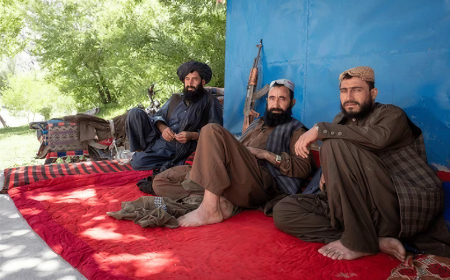
The open-ended approach is the best course, according to Rabindranath Tagore’s apt saying: “We shall unite, and keep uniting.” When a state locks its door to the outside world, ultimately, it is left in a state of tribal chaos, as seen in Afghanistan.
National integration -- echoing Bangladeshi political scientists Rounaq Jahan's observations -- calls for language respect, participatory policy-making, and institutional means of crediting knowledge in the Bangla medium.
Sen's approach would be to tear down the invisible walls that actually segregate these four societies.
Otherwise, the nation may solidify its silent divide into a permanent state of affairs: multiple economies, multiple nations, or a future in which options continue to narrow instead of broadening.
Two Economies to Four: Then and Now
The slogan "two economies, two nations" is not unknown to the Bengal delta. In the 1950s and 1960s, the "two economies, two nations" approach was used by Rehman Sobhan and other Bengali economists to delineate the political economy of Pakistan.
This approach forcibly presented a fact: West and East Pakistan were functioning as two different economies with one state apparatus -- a systematic pattern of favoring West Pakistan through fiscal policy, trade policy, industrial license allocation, and foreign exchange allocation contrasted with the re-exports of Eastern Pakistan, which began with jute exports.
What made this diagnosis so politically explosive was not the presence of inequality, but its persistence in the face of declared equality. Economic disparity led to political estrangement.
The idea of "two economies" gradually evolved to mean "two imagined communities" with divergent interests, grievances, and futures. As corrective democracy was obstructed, economic ideas led to the inexorability of politics.
This partition of Pakistan in 1971 was not an overnight event, but the manifestation of an unrecognized structural warning over the decades.
The historical irony is quite perturbing. Bangladesh emerged as a result of a critique of internal colonialism, linguistic marginalization, and elite rule.
Today, however, in the midst of an independent nation-state, a new divide is emerging -- an internal divide, which is less overt, but no less significant.
The divide is no longer between the two wings of the same nation but between the globalized and the localized, between those who speak English as the policy language and those who speak Bangla as the language of their lived experiences.
When Sobhan and his generation questioned where Pakistan was bracing two economies and one identity under one flag, the question comes back to haunt us in an even more pressing form: Where does Bangladesh go with four societies?
Unlike the days of Pakistan, the rifts are not defined by a geographical area in our day. Bangladesh now has rifts that traverse cities, institutions, and even houses. Hence, they are more difficult to detect and consequently to heal.
This is what history teaches: division does not necessarily mean secession, but prolonged lack of recognition destroys solidarity and weakens the ability to bargain democratically.
Societal segments will disengage from the state if they no longer view the latter as an enabler of their capability. It is a situation where development will be done unto people rather than with people.
In this respect, the problem with Bangladesh today is not another 1971 but something more muted -- but no less damaging: a seemingly stable state with limited social mobility, lack of trust, and dysfunctional human capital.
The challenge of the 1960s generation was that inattention to structural dualism would result in history going in. However, the challenge now is whether Bangladesh will learn this lesson in time -- or be forced to relearn it later with much steeper costs.
Protik Bardhan is a Senior Sub-Editor at Daily Prothom Alo.