


























![A Ledger of the Soul: Navigating the Allah-Bhagavant Nexus in a 19th-Century Puruṣākāra Jñāna Caupara [Gyan Chauper]](https://counterpointbd.com/uploads/images/202608/image_430x256_6a93baa3b09a7.jpg)


















The Unheard Song: How Abul Sarkar's Arrest Reveals Bangladesh's Fractured Soul
The arrest of Baul singer Abul Sarkar exposes a deeper struggle over who gets to define Bangladesh’s cultural and religious identity, portraying a growing state-backed exclusion of syncretic and minority traditions from the national narrative.

The Silence After the Song
It began with a boundary wall -- or perhaps it began centuries ago, in the quiet war over who gets to define a nation's soul.
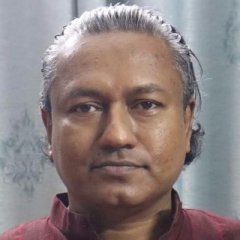
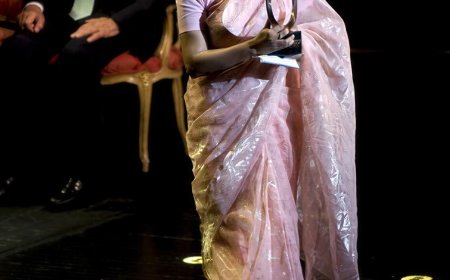
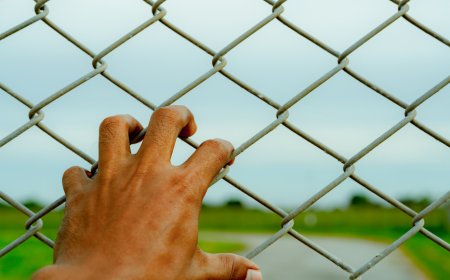
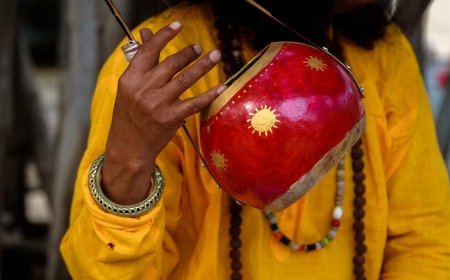
The recent image of renowned Baul singer Maharaj Abul Sarkar being sent to jail in Manikganj presents us with more than a legal case; it offers a portal into the deeper maladies afflicting our body politic.
He was arrested for hurting religious sentiments, but his real crime was more subversive: he embodied a different Bangladesh, one that doesn't fit neatly into the majoritarian narrative now being woven.
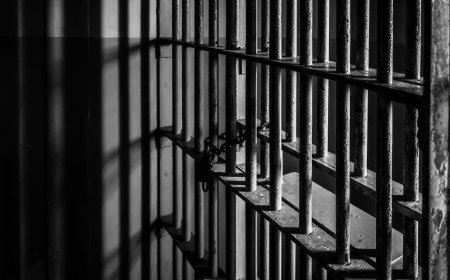
As the iron gates closed behind him, one couldn't help but wonder whose silence his voice had threatened.
The French philosopher Jacques Rancière helps us understand this moment not as a simple law-and-order issue, but as what he would call the enforcement of the police order -- the entire system that determines what is visible, sayable, and even thinkable in our society.
In this order, certain lives and voices simply don't count as part of the legitimate political community.
The Silent Scream
Rancière teaches us that true politics begins not with power, but with a simple, radical claim: we count, we are here. When Abul Sarkar and his followers protested the wall around Sultan Mahmud Shah Suri's shrine, they were making precisely this claim.
They were asserting that their syncretic, folk-Islamic tradition belongs to Bangladesh as much as any other interpretation of faith. The state's response -- arresting the protester rather than protecting him -- revealed which voices it considers legitimate and which it deems disposable.
This is what Rancière calls the process of determining who has a part in society and who constitutes the part of no part.
The Bauls, with their spiritual rebellion against institutional religion, have become Bangladesh's part of no part -- their mystical songs celebrated in cultural festivals, but their actual presence in public space increasingly contested.
The Digital Security Act criminalizes "hurting religious sentiments," but who determines which religious sentiments merit protection? The law becomes a weapon to enforce one version of religious authenticity while excluding others.
The Fractured National Identity
Bangladesh today stands as a nation deeply conflicted about its own identity. Our constitution designates Islam as the state religion while upholding secularism -- a philosophical contradiction that plays out daily in our streets and courtrooms.
This isn't merely legal ambiguity; it represents what Rancière would call a fundamental disagreement -- not just competing interests, but competing worlds, competing realities about who we are as a people.
The interim government under Dr. Muhammad Yunus faces what analysts term severe political instability, religious radicalism, polarization and a breakdown of law and order. In this fragile context, the treatment of cultural figures like Abul Sarkar becomes a strategic battleground.
The government's alignment with conservative forces represents not just political pragmatism, but what Rancière would identify as the partition of the sensible -- the drawing of lines between what versions of Bangladeshi identity are visible and legitimate in the public sphere.
The violence against religious minorities continues to escalate, with the Bangladesh Hindu Buddhist-Christian Unity Council reporting hundreds of attacks against Hindus and other religious minorities in recent times.
These aren't isolated incidents of chaos, but what Rancière would recognize as performances -- choreographed demonstrations meant to reinforce a particular distribution of the sensible, one where religious minorities know their place and folk syncretism is pushed to the margins.
The Theatre of the Absurd
Consider the brutal irony: a Sufi follower was stalked and killed outside a Sufi shrine in Gazipur, while elsewhere, a crowd exhumed the body of an Ahmadi Muslim infant from an Islamic cemetery.
These acts of violence are not merely crimes; they are what Rancière would call speech acts -- performances that redefine the boundaries of community through exclusion. They shout a clear message: certain interpretations of faith, certain ways of being Muslim, certain ways of being Bangladeshi, will not be tolerated.
In what Rancière would identify as classic post-democratic governance, the state increasingly responds to this cultural warfare by managing the conflict -- arresting the controversial singer here, deploying law enforcement at religious festivals there, but never fundamentally challenging the terms of the conflict itself.
The state becomes a stage manager rather than a defender of principles, more concerned with the appearance of order than with justice.
Towards a Democratic Dawn
Rancière offers us a way out of this suffocating theatre. He reminds us that politics in its truest form occurs when the part of no part speaks, when those excluded from the official distribution of roles and voices disrupt the performance by insisting: we too are the community.
Abul Sarkar's voice from jail, the continued resilience of Baul traditions despite persecution, the quiet resistance of minorities -- these aren't just protests; they are what Rancière would call the verification of equality. They are moments when politics breaks through the police order.
The way forward begins with recognizing that our current distribution of the sensible is neither natural nor inevitable. We have constructed a Bangladesh where some cultural expressions are celebrated as heritage while their living practitioners are jailed.
This arrangement serves certain political interests -- it allows the interim government to navigate complex alliances -- but it betrays the vibrant, messy, beautiful complexity of who we actually are as a people.
If we want to reclaim our democracy from the current legitimation crisis, we must create spaces where multiple Bangladeshs can coexist without seeking to eliminate one another.
We need what Rancière would call a redistribution of the sensible -- a reorganization of our shared world so that the Baul's song and the conservatives prayer, the Hindu's festival and the Buddhist's meditation, can all find room without fear.
This isn't merely tolerance; it is the recognition that equality isn't the result of political process -- it is the foundation upon which true politics must be built.
The wall that sparked Abul Sarkar's protest was more than concrete; it was a metaphor for the barriers were building around our national soul.
The question before us is whether we will be the architects of walls or the gardeners of a more expansive, more generous Bangladesh -- one where many songs can be sung without fear, and where no one faces prison for giving voice to their truth.
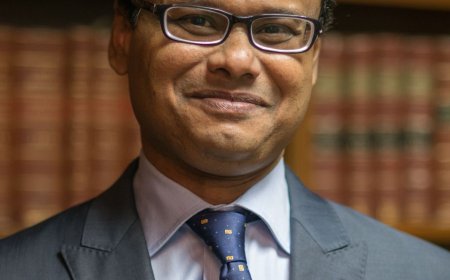
Zakir Kibria is a Bangladeshi writer, policy analyst and entrepreneur based in Kathmandu, Nepal. He can be reached at [email protected].