




























































What is Fascism? Who is a Fascist? Why Fascism?
We must view with suspicion any party that risks becoming fascist through excessive internal control or by bypassing state institutions and encouraging mob rule -- especially parties that obstruct elections and make the path to sustainable democracy thorny.

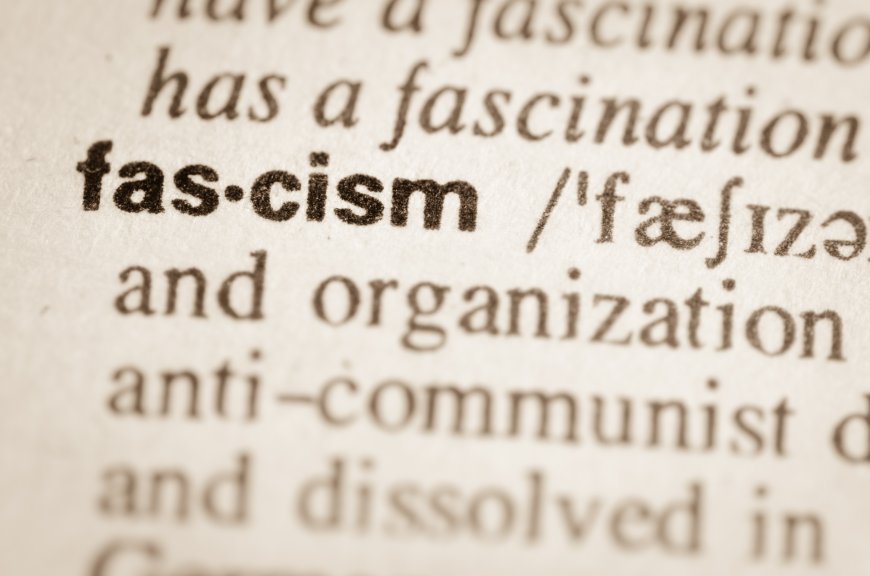
Since the mass uprising of 2024, almost everyone in Bangladesh has become familiar with the word “fascism.”
The Awami League has been widely labelled a fascist party. This has created one problem: people have started equating everything the Awami League did -- corruption, extortion, money-laundering, vote-rigging -- with fascism.
As a result, many now casually say: “Other parties did these things too in the past, so they are fascists as well.”
But are these acts really fascism? What exactly does fascism mean?
In our country we have heard the word “fascism” most often from left-wing politicians, because historically and philosophically, the deepest conflict with fascism has been that of the Left.
Yet, ironically, a large section of the Left in Bangladesh ended up becoming accomplices of fascism.
Communism is essentially an internationalist ideology that seeks to transcend national borders and establish the dictatorship of the proletariat worldwide.
Fascism, on the other hand, is an ultra-nationalist ideology. Because Bangladesh’s founding was intimately tied to nationalism, and because a significant portion of Moscow-aligned leftists participated in that nationalist project, even after independence a large part of them became partners in the very fascism they once opposed.
The word “fascism” originated primarily in Italy. After the First World War, in 1919, Benito Mussolini formed a political organization called “Fasci di Combattimento,” which by 1922 turned into the fascist movement and established the National Fascist Party (Partito Nazionale Fascista). Mussolini was the first fascist ruler.
It was his regime’s ideology and influence that later spread to Adolf Hitler’s Nazi Party in Germany, Franco’s regime in Spain, and elsewhere.
The term “fascism” comes from the Latin word “fasces” -- a bundle of rods with an axe bound in the middle that was a symbol of power, unity, and authority in ancient Rome.
Mussolini adopted this symbol to signify that collective unity and authority must supersede the individual. That is the origin of the word “fascism.”
Fascism primarily refers to a political ideology in which:
- The party’s ideology is placed above individual liberty
- There is dictatorial leadership
- There is extreme nationalism
- Individual freedoms and opposition are violently suppressed
- There is strict control over any social or political dissent
- Ethnic or racial identity is usually emphasized
- Democratic values and political pluralism are rejected
If we look at the characteristics listed above, we immediately find strong parallels with the Awami League. This is not coincidental; it is linked to the historical evolution of the Awami League itself.
When Pakistan was created, the people of this region celebrated it with hope and enthusiasm.
A section of the Awami League and left-wing parties opposed that emotion and instead cultivated a Bengali nationalist sentiment in the public mind, skilfully using writers, artists, and cultural figures.
Once that sentiment took root, people had to be initiated into a militant, war-ready ideology -- because that was the only way to create an independent country. And a militant ideology fused with nationalism can only be fascism.
That is why the connection between the Awami League’s history and fascist ideology is as inseparable as milk and water.
However, not everything the Awami League did was fascist. Many of its actions were utterly reprehensible, yet they were not fascism. Corruption, extortion, money-laundering, acting as agents of foreign powers -- these are gravely harmful, but they are not directly fascism.
The party carried out these acts by exploiting the weaknesses of the state.
Fascism’s defining traits, on the other hand, are monopolizing power, crushing dissent in the name of the party’s ideology, stripping away individual liberty and placing the party above the nation, and using systematic violence and coercion.
The Awami League’s rigged elections, partisan control of institutions, disappearances, torture of opposition activists, gagging the press -- these are the actions that can properly be called fascist.
Before the Awami League came to power in 2008, many other parties governed the country. Because of flaws in the state and social structure, none of them delivered perfect governance either.
But we cannot label all of them fascist. Certainly not for their corruption and misrule alone.
Take the BNP as an example. At various times, especially after 1990, it too exploited the weaknesses of the existing fragile state structure and played dirty politics with the electoral system.
Yet there is no evidence that it ever developed the instinct to cling to power by killing tens of thousands if necessary.
On the contrary, fearing loss of life and property, it hastily handed over power and itself suffered massive losses.
The fundamental reason is that, despite all its flaws, the BNP never acquired the fascist character that the Awami League did.
Now let us examine which contemporary parties in Bangladesh display fascist tendencies today. Let us match their behaviour against the characteristics described above.
Which parties exhibit excessive “collective unity” that overrides everything else? Party unity may be good for the party, but when it weakens the foundations of the state, it becomes dangerous.
For example, creating jobs is the state’s duty, and the most qualified citizens should get them. If a political party deliberately creates jobs and gives priority to its own members, it may look good on the surface, but it hollows out the state.
A party that becomes stronger than the state risks turning into a cult.
Such a party, no matter how benign it appears outwardly, can legitimately be suspected of being a democracy-wearing fascist party -- or at the very least a party with a high risk of becoming one.
Which parties have mob culture embedded in their DNA?
Parties that romanticize street violence also carry a strong risk of sliding into fascism. They remain close to power yet fail to free the country from terror and extortion, while expecting some other party to control criminals beyond its own jurisdiction.
Such expectations are possible only because their mindset normalizes the idea of the party transcending the state. Genetic mutations sometimes produce astonishing results.
A party born out of mass aspiration can also undergo such a mutation -- it is undesirable, but not impossible.
Parties that engage in identity politics (whether ethnic like the Awami League or religious) find it easiest to slide into fascism.
The Bharatiya Janata Party (BJP) in India is a contemporary example of identity politics leading toward fascist ideology.
Ask yourself: which parties in Bangladesh are currently practising identity politics? You will realize that they are the ones with the brightest prospects of turning fascist.
In today’s world, populist politics is also increasingly seen as a precursor to fascism.
Giorgia Meloni in Italy, Viktor Orbán in Hungary, Jair Bolsonaro in Brazil, Marine Le Pen in France, and even Donald Trump in the United States have all been accused of harbouring or encouraging fascism through populist politics.
We see anti-immigrant, ultra-nationalist (religious or ethnic), anti-establishment, minority-hating (compare attacks on Hindus and shrine-worshippers in Bangladesh), cult-of-personality instead of democracy (compare the desire in Bangladesh to see Professor Yunus in state power for five years without elections, or opposition to elections).
All these positions match fascism’s characteristics exactly. Therefore, as conscious citizens we must keep a close watch on which parties show tendencies toward identity politics or populist politics. These are the parties most likely to turn fascist over time.
Someone may ask: “Are we then supposed to tolerate parties with histories of corruption, extortion, and terrorism? Should we support parties that cannot even control their own workers?”
The answer is: controlling corruption, extortion, and terrorism is not the job of political parties -- nor is providing jobs for their members or taking the law into their own hands through mob violence.
A political party is a social and political institution where people from diverse backgrounds come together to seek power. It is neither a congregation of saints nor a criminal gang.
In a healthy society, the membership of a healthy political party follows the normal distribution curve -- just like society itself, it contains both good and bad in natural proportions.
It is worth clarifying what a political party’s responsibility actually is and where the line between party and state lies.
Think of a party as a CEO and its loyal cadre as the management team that trusts and follows that CEO. The state has a permanent, non-political civil administration.
The party that wins an election gives policy direction to that administration through the executive branch (President, Prime Minister, Cabinet).
In a Westminster-style democracy like Bangladesh, the Prime Minister is effectively that CEO, backed by a loyal party structure.
When that structure assumes the responsibility of running the state, it is supposed to rise above party interest and work for the nation’s welfare.
Fascist parties, however, love their party so much that they place it above the country. That is how structures like the Awami League are built -- structures that become almost impossible to remove without a mass uprising.
Ask yourself honestly: which other party demands unquestioning loyalty from its members and receives near-militant, life-or-death oaths in return?
Such militant loyalty is necessary in an occupied country to wage an armed liberation struggle.
But in an independent country, the existence of such a party destroys democracy, ruins the nation’s future, and makes peaceful transfer of power impossible. That is what we call fascist rule.
Unquestioning loyalty robs people of their moral judgment. They surrender their personal agency not to the state but to the party. Whatever the party says becomes “right” to them; ordinary human morality becomes irrelevant.
That is why, even after more than a decade and a half of fascist rule -- after disappearing and killing over five thousand people and murdering nearly 1,500 in a single month -- Awami League supporters feel no remorse.
Why would they? They have handed their conscience over to the party.
Which other party in Bangladesh displays such absence of remorse? Has Jamaat-e-Islami ever shown regret or asked forgiveness for its actions in 1971?
The state’s duty is to protect the weak from the tyranny of the strong. Rousseau explained in The Social Contract that we surrender a portion of our natural freedom to the state with the expectation that the state will protect us from the strong.
The state provides public goods that no one else can -- basic healthcare, primary education, clean environment, security. That is why citizens pay taxes and obey laws instead of taking the law into their own hands.
When a party or individual starts providing those services, the state is hollowed out from within.
A weakened state is fascism’s prime target. We must never tolerate corrupt, extortionist, or terrorist elements -- but we must also ensure that it is a democratically-elected government, not a political party, that controls them.
We must view with suspicion any party that risks becoming fascist through excessive internal control or by bypassing state institutions and encouraging mob rule -- especially parties that obstruct elections and make the path to sustainable democracy thorny, or individuals and groups that want to establish the supremacy of one person over the system and keep an unelected figure in power indefinitely.
These are the new peddlers of fascism -- the wolves in sheep’s clothing from Aesop’s fable.