



































![A Ledger of the Soul: Navigating the Allah-Bhagavant Nexus in a 19th-Century Puruṣākāra Jñāna Caupara [Gyan Chauper]](https://counterpointbd.com/uploads/images/202608/image_430x256_6a93baa3b09a7.jpg)




















Minneapolis, ICE, and the Drift Toward Immigration Policing by Force
The constitutional stakes are plain. The Bill of Rights protects speech, press, and the right “peaceably to assemble,” and it does not contain an immigration exception. International law says the same with sharper vocabulary.
The fatal shootings of two United States citizens in Minneapolis, Renée Nicole Good and Alex Pretti, during “Operation Metro Surge” have ignited outrage inside the United States and beyond.
What makes these cases especially destabilizing is not only the deaths, but the way bystander videos and later reconstructions appear to clash with early official narratives.
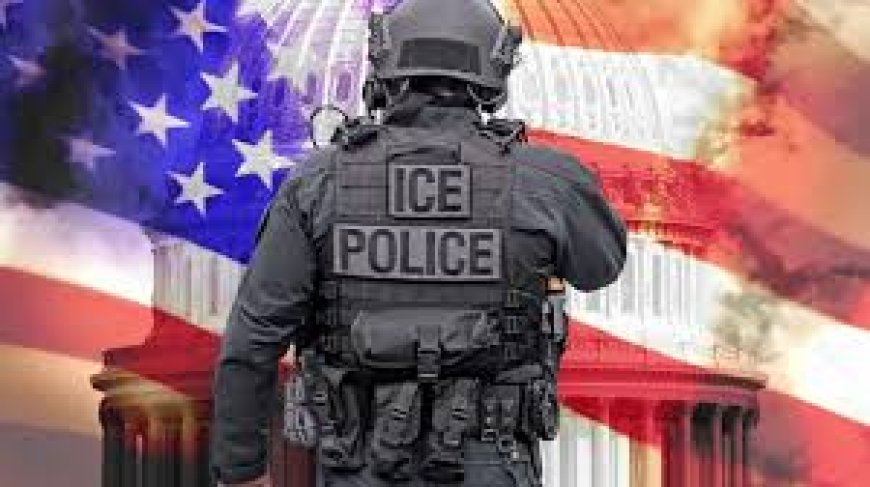
ICE, or US Immigration and Customs Enforcement, is a federal law enforcement agency under the Department of Homeland Security, tasked with enforcing immigration laws and conducting related investigations.
Its enforcement mission is laid out in ICE’s own description. US Customs and Border Protection, also under DHS, is usually associated with borders and ports.
Yet the Associated Press reports that Pretti was killed by US Border Patrol officers, a CBP component, during protest related unrest in Minneapolis. That is the point of Metro Surge. Roughly 2,000 federal officers were deployed into the Minneapolis area, an unmistakable shift from targeted enforcement toward high visibility saturation.
The Trump administration’s goal with ICE, in this frame, is deterrence by spectacle: Demonstrate power, induce fear of contact with authorities, and claim measurable results on television and social media.
But a government that chooses spectacle also chooses risk, because it places armed agents into volatile encounters and then asks the public to accept casualties as collateral.
The most urgent question is why agents seem to have a broad licence to shoot, even near protests. Formally, they do not. DHS’s deadly force standard allows lethal force only when an officer reasonably believes there is imminent danger of death or serious physical injury.
Constitutional doctrine is similarly strict. In Tennessee v. Garner, the Supreme Court of the United States limited deadly force against fleeing suspects absent a significant threat, and in Graham v. Connor it held that excessive force claims are judged under the Fourth Amendment’s objective reasonableness standard.
Peaceful protest is not, by itself, a lawful trigger for lethal force. The “licence” that people are describing is something else: The gap between policy on paper and practice on the street.
That gap widens when institutions are strained. ICE shortened training for new officers from five months to 47 days to accelerate hiring, and that DHS oversight capacity was weakened by staffing cuts. Combine rapid expansion, reduced preparation, and a political mandate to be aggressive, and deadly mistakes become predictable rather than surprising.
The videos from Minneapolis sharpen that warning.
Reuters published a frame by frame reconstruction of Good’s shooting that indicates the agent stepped aside as her vehicle moved forward, undercutting claims that he was trapped directly in its path.
In Pretti’s case, the footage showed that he was holding a cellphone when tackled, and a firearm was removed from his waistband, contradicting initial statements that he had brandished a weapon.
When official accounts wobble, legitimacy collapses with them, and the right to protest is chilled by the fear that any encounter can end in death.
This is why politicians far from Minnesota, including Maura Healey of Massachusetts, have entered the debate with unusually direct language about constitutional limits and civil liberties. The viral clip of Healey’s remarks reflects a widening belief that Metro Surge has drifted into something incompatible with democratic policing.
The constitutional stakes are plain. The Bill of Rights protects speech, press, and the right “peaceably to assemble,” and it does not contain an immigration exception.
International law says the same with sharper vocabulary. The United States has ratified the International Covenant on Civil and Political Rights, which protects the inherent right to life and recognizes peaceful assembly.
The UN Basic Principles on the Use of Force and Firearms demand that law enforcement apply non-violent means as far as possible, and that force be necessary and proportionate, with independent review when deaths occur.
How is the Trump administration dealing with criticism and protest? Inconsistently, and often politically.
Tom Homan has discussed shifting away from broad public sweeps toward more targeted operations, a tacit admission that the surge has become combustible.
The Justice Department opened a federal civil rights investigation into Pretti’s killing, led by the FBI, while officials have said a similar probe is not warranted in Good’s case.
Senate Democrats have been pressing for reforms such as body cameras and limits on masked enforcement, using DHS funding as leverage.
Solutions are available, but they require abandoning the theatre.
End mass street saturation and return to targeted operations with clear, public standards, judicially supervised warrants, and strict limits on how immigration agents interact with protests.
Make transparency non- negotiable: Visible identification, body worn cameras, prompt evidence preservation, and public reporting of every shooting and its outcome.
Rebuild training and restore independent oversight so rapid hiring does not mean lowered competence, and ensure that every death triggers an independent investigation with real consequences for unlawful force.
Minneapolis is already reshaping global perceptions of US conduct. Italy has already faced backlash over the possibility of ICE providing security support for the 2026 Winter Olympics, with critics explicitly linking the opposition to the agency’s tarnished reputation after the Minnesota shootings.
Rights abuse does not stay “domestic.” It travels, it legitimizes other governments’ abuses, and it corrodes the credibility of any country that claims to lead on human rights.
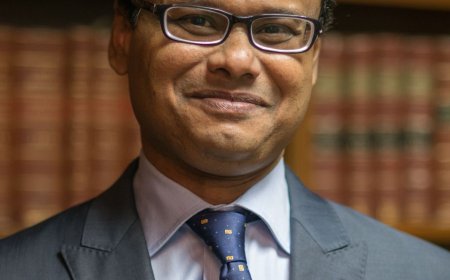
Barrister Khan Khalid Adnan is advocate of the Supreme Court of Bangladesh, fellow at the Chartered Institute of Arbitrators, and head of the chamber at Khan Saifur Rahman and Associates in Dhaka.