
































































What Can We Learn From Vietnam?
Keeping India and Pakistan as the main mirrors will always make Bangladesh look respectable. but adding Vietnam to the frame as a benchmark is more meaningful.

When nations sit down to judge their own progress, the choice of mirror matters profoundly. For half a century Bangladesh has held up the familiar reflections of South Asia -- India, Pakistan, sometimes Sri Lanka -- and asked: how do we measure up?
The exercise is natural, comforting, and, increasingly, misleading. Size distorts everything. India’s trillion-dollar digital economy and nuclear submarines sit alongside pockets of poverty far deeper than Bangladesh’s worst districts.
Pakistan’s chronic instability makes Dhaka look like a model of governance. Sri Lanka’s recent collapse flatters everyone else in the neighbourhood. These are not useless comparisons, but they are limited ones -- comparisons of circumstance more than of choice.
There is another country, far beyond the Bay of Bengal, that started from the same scorched earth in the mid-1970s, faced the same inheritance of war, famine and isolation, and yet, by deliberate policy design, pulled decisively ahead.
That country is Vietnam.
My interest in that country is not new. My closest friend in college in the mid-1980s was Vietnamese. Part of the educated upper middle class, his family was forced to vacate from South Vietnam in rickety boats, eventually settling in the US. There was no love lost between him and the Communist regime that finally united the two halves.
I accompanied him to various student rallies denouncing communism and the regime there. However, to my utter amusement and shock, I found out that he is a regular visitor to Vietnam, albeit attracted by the bon homme between the two former enemies and the ease and comfort the country provides for tourism and for doing business.
Over the past three decades its per-capita income has grown from roughly the same starting line to almost double of Bangladesh’s today. Its factories now assemble Samsung smartphones and Intel chips alongside garments. Its poverty rate has fallen below 4% while Bangladesh’s, after years of heroic decline, has begun to rise again.
Vietnam is not a perfect twin -- its politics are authoritarian, its land less flood-prone, its population smaller -- but it is the closest thing to a controlled experiment in what happens when a war-ravaged agrarian society chooses a different sequence of reforms.
The blunt numbers tell the story first.
|
Indicator (2025 estimates) |
Bangladesh |
Vietnam |
Notes |
|
GDP per capita (nominal USD) |
$2,850 |
$4,850 |
Vietnam now ~70% higher |
|
Average real GDP growth 2010–2025 |
5.9% |
6.8% |
Vietnam never dipped below 5% even during Covid |
|
Exports as % of GDP |
15% |
85% |
Vietnam is one of the most trade-open economies on Earth |
|
FDI inflows (annual average 2020–25) |
$1.3bn |
$19.5bn |
15 times more capital chasing |
|
Poverty headcount ($2.15/day) |
27.9% |
3.6% |
Bangladesh’s rate spiked after 2022 |
|
Adult literacy rate |
78% |
96% |
Gap explains much of the productivity difference |
|
Logistics Performance Index (1–5) |
2.9 |
3.3 |
Ports, power and roads decide where the next factory goes |
|
Share of manufacturing in GDP |
21% |
25% (and rising) |
Bangladesh’s figure has barely moved in a decade |
These are not marginal differences; they are the compound interest of three decades of divergent policy choices.
Two nations, two wars, two recoveries
The parallels at the starting gate are uncanny. Bangladesh was born in the blood and fire of 1971: countless dead, infrastructure obliterated, GDP per capita $130, more than 80% of the population in absolute poverty. Vietnam limped out of its own thirty-year war in 1975 with dioxin-scarred soil, a shattered south, and an economy cut off from the West by American sanctions. By the early 1980s both were basket cases dependent on food aid, both overwhelmingly rural, both saddled with illiteracy rates above 70 per cent.
Yet within a decade their paths began to fork -- not because of geography or natural resources (neither country has much oil or minerals), but because of the timing, sequencing, and ruthlessness with which they dismantled the failed economic models they had inherited.
Đổi Mới in detail: the reform package that changed everything
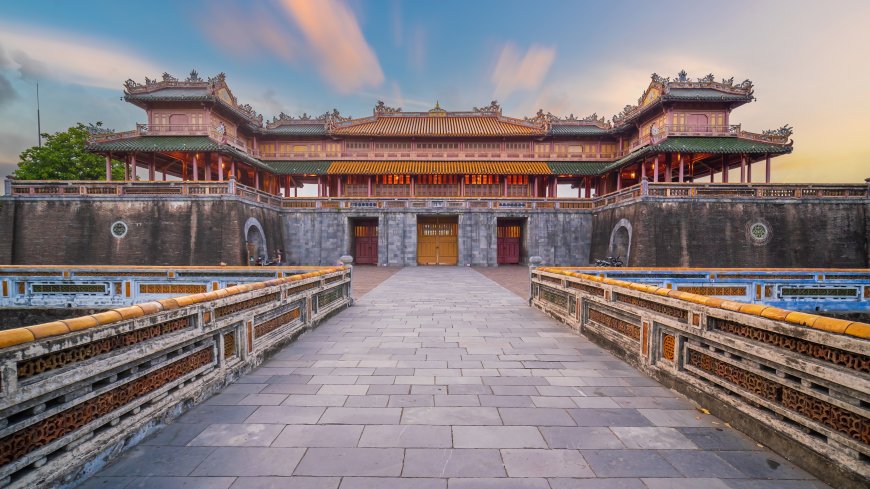
Vietnam’s transformation begins with a single Vietnamese phrase: Đổi Mới -- Renovation. Announced at the Communist Party’s Sixth Congress in December 1986 and deepened through a cascade of laws and resolutions over the next 15 years, it remains one of the most successful examples of state-orchestrated market transition in history.
Đổi Mới in eight key moves (summarized)
• Agricultural decollectivization (1988-1993): Resolution 10 and the 1993 Land Law gave households long-term, transferable land-use rights and freedom to sell surplus. Rice output tripled in five years; Vietnam flipped from importing 2 million tons of rice to the world’s second-largest exporter by 1997.
• Price liberalization & macro stabilization (1986-1991): Scrapped price controls, unified exchange rates, slashed subsidies. Hyperinflation (700%+ in 1986) fell below 20% by 1992, restoring market signals.
• Opening to foreign capital (1987 onwards): Landmark 1987 Foreign Investment Law allowed 100% foreign ownership, no nationalisation, long tax holidays. Industrial zones offered plug-and-play factories with reliable power and one-stop administration; attracted Samsung, Intel, LG and thousands more.
• Trade integration: Joined ASEAN (1995), US bilateral deal (2000), WTO (2007), then CPTPP, EVFTA, RCEP and others. By 2025 Vietnam has more FTA's than any other developing nation; tariffs collapsed, export procedures fully digitised.
• Building local supplier ecosystems: Used local-content rules, cheap loans and technology-transfer requirements to force foreign firms to source locally. Result: thousands of Vietnamese SMEs now supply Samsung and Apple directly.
• Human capital as industrial policy: Massive investment in free universal primary/lower secondary schooling, industry-linked vocational colleges and overseas engineering scholarships. By the early 2000's Vietnam produced more engineers per capita than India.
• Infrastructure ahead of demand: Power plants, deep-water ports (Cái Lái, Cái Mép - Thị Vải) and expressways built years in advance, often with Japanese/Korean ODA. Reliable 24/7 electricity repeatedly cited as the top reason firms chose Vietnam over Bangladesh.
• Political continuity as competitive advantage: One-party system delivered decades-long policy predictability; investors could plan 20 - 30 year horizons without fear of sudden reversals or nationalisation.
By 2025 Vietnam is in the middle of what officials now call “Đổi Mới 2.0” -- an ambitious upgrade that includes merging provinces from 63 to 34, slashing the number of ministries, declaring the private sector the “most important driving force” of the economy, and aiming for a 50 per cent digital economy by 2045. The original Đổi Mới is not a historical footnote; it is a living, evolving framework.
Our garment miracle and its limits
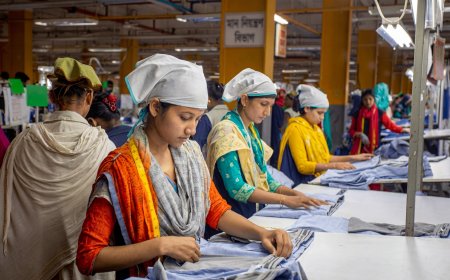
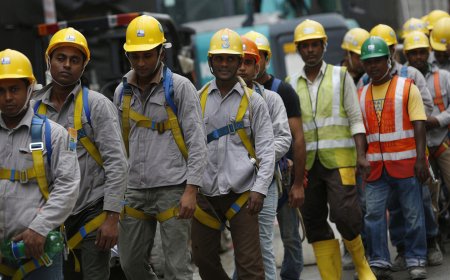
No one should belittle what Bangladesh has achieved. The ready-made garment (RMG) sector, born almost by accident in the late 1970s when Daewoo of Korea set up a joint venture under the Multi-Fibre Arrangement quotas, is one of the greatest poverty-reduction machines in history. It employs four million people -- 80 per cent of them women -- and turned Bangladesh into the world’s second-largest apparel exporter after China. Female labour-force participation leapt from under 10 per cent in the 1980s to 36 per cent today. Primary school enrolment is near universal, child mortality has plummeted, and a dense network of NGOs and microfinance institutions has delivered services where the state could not.
Yet the very success of garments has become a trap. Eighty-two per cent of export earnings still come from apparel and related textiles. When global buyers look for the next product -- smartphones, automotive parts, medical devices -- they fly over Dhaka and land in Hanoi or Ho Chi Minh City.
Attempts to diversify have repeatedly foundered on five recurring obstacles:
• Incentives without infrastructure: Bangladesh has announced multiple special economic zones; most remain patches of empty land without reliable power or road access.
• Energy shortages: Factories routinely run diesel generators at a cost of 18-22 US cents per kWh -- double Vietnam’s industrial tariff.
• Shallow supplier bases: A foreign electronics firm arriving in Bangladesh must import almost every screw and capacitor. In Vietnam it can source 60-70 per cent locally within a year.
• Skills bottlenecks: Bangladesh produces plenty of garment workers but far too few technicians, quality-control supervisors or industrial engineers.
• Policy volatility: Changes of government, bureaucratic turf wars, and frequent reversals of tax incentives have made long-term investors wary.
The result is stark. In 2024-25 Vietnam attracted roughly $20 billion in FDI; Bangladesh managed barely $1.2 billion.
Lessons from the neighbourhood
South Asia offers its own cautionary tales. India grew fast but created too few manufacturing jobs. Pakistan never achieved macro stability. Sri Lanka diversified into tourism and light industry yet, collapsed under debt and mismanagement. None of these neighbours offers the clean, replicable sequence that Vietnam does.
A roadmap in five moves
None of this is to suggest that Bangladesh must copy Vietnam’s political system -- only its method. Five concrete, sequenced steps would dramatically narrow the gap:
1. Build three or four world-class industrial corridors (Matlab-Meghna, Mongla-Khulna, and an extension of the Dhaka-Chittagong axis) with guaranteed 24/7 power, deep-water access, and genuine one-stop shops run by independent authorities shielded from routine political interference.
2. Replace blanket tax holidays with performance-based incentives tied to local value addition, skills training, and R&D spending -- the Vietnamese model.
3. Launch a national supplier-development programme with subsidized credit and technical assistance to turn thousands of small firms into Tier-2 and Tier-3 suppliers for global giants.
4. Triple the budget for technical and vocational education, making industry co-design and co-funding mandatory, and tie SEZ incentives to apprenticeship quotas.
5. Depoliticize infrastructure planning: give a strengthened Planning Commission or a new National Infrastructure Authority a 15-20 year mandate protected by cross-party agreement.
And Finally ...
Bangladesh has every right to remain proud of its South Asian journey -- few countries have lifted so many people out of poverty so quickly. But pride must not blind it to possibility. Vietnam is not a richer cousin next door; it is a country that stood in the same ruins fifty years ago and chose a different ladder out.
Keeping India and Pakistan as the main mirrors will always make Bangladesh look respectable. Adding Vietnam to the frame will make it look restless -- and that is exactly the sentiment a country still young needs if it is ever to reach the factory floor of the twenty-first century.
MK Aref is the co-founder of AniMedCare.