


































































Rivers as Sovereignty: Bangladesh Must Reclaim Its Water Future
We cannot build the Bangladesh we envision -- democratic, just, climate-resilient -- while accepting manufactured water scarcity as inevitable. The rivers that created Bengal sustain us still -- but only if we fight to reclaim them.


The rivers that have sustained Bengal for millennia are slowly dying -- not from natural causes, but from decades of upstream manipulation and diplomatic subordination.
As Bangladesh navigates its post-revolution political landscape, one question demands urgent attention: Will we continue accepting manufactured water scarcity as inevitable, or will we finally assert our rights to the rivers that define our existence?
The timing of this question is not accidental. The 1996 Ganges Water Sharing Treaty expires in 2026. The Teesta agreement remains blocked for over a decade.
The Brahmaputra faces escalating upstream interventions from both India and China. And for the first time in sixteen years, Bangladesh has a government not beholden to Indian patronage networks, with growing political consciousness among the people.
These convergences create both possibilities and challenges.
The Weight of Hydro-Coercion
What India practices over Bangladesh’s rivers extends beyond typical upstream advantage -- it constitutes what I call systematic hydro-coercion.
The Farakka Barrage, operational since 1975 without meaningful Bangladeshi consent, diverts crucial dry season flows at the border.
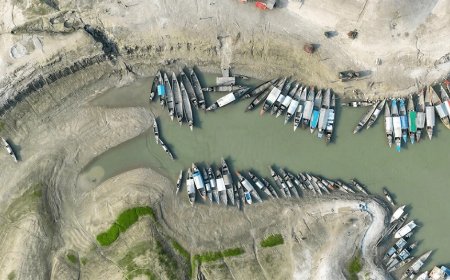
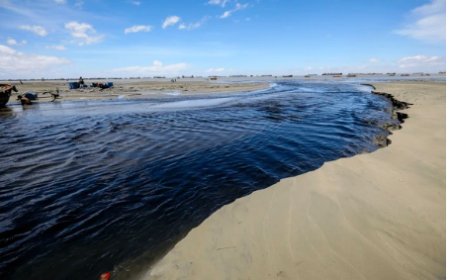
Its impacts cascade through our southwest: salinity intrusion devastates agriculture, groundwater sources turn brackish, the Sundarbans ecosystem deteriorates, and millions face drinking water crises.
This infrastructure was never just about Kolkata Port’s navigability. It became an instrument of geopolitical leverage, transforming what India presented as technical necessity into enduring control and material coercion.
The Teesta dispute reveals another dimension of this coercion -- institutional stalling as strategy. Despite near-finalization in 2011, a single Indian state’s chief minister has blocked the agreement for over a decade while northern Bangladesh suffers severe dry-season shortages.
This isn’t bureaucratic inefficiency; it’s deliberate. The prolonged impasse forces Bangladesh into a position of perpetual supplication, unable to plan water infrastructure or agricultural cycles with any certainty.
Water becomes diplomatic pressure without India’s federal government bearing accountability for the stalemate.
More recently, ideational coercion has emerged. Following Bangladesh’s July 2024 uprising, Indian politicians explicitly suggested the 1996 Ganges Treaty could be ‘reconsidered’ if our foreign policy diverged from Indian interests.
This transforms water from shared resource into foreign policy weapon -- access to our rivers contingent on diplomatic subservience.
When India suspended aspects of the Indus Waters Treaty with Pakistan in April 2025, the message to Bangladesh was unmistakable: water treaties are revocable leverage, not binding commitments.
The Colonial Logic That Persists
These practices reflect a continuation of colonial extraction patterns through contemporary environmental governance.
Just as colonial powers appropriated resources while externalizing consequences to colonized territories, India’s upstream dominance imposes ecological degradation and human vulnerability downstream while framing this as sovereign prerogative.
The 1996 Ganges Treaty, negotiated when Bangladesh desperately needed diplomatic success, exemplifies capitulation masquerading as cooperation.
It treats water as divisible commodity rather than interconnected ecological system, locks in static allocations despite hydrological variability, ignores climate adaptation requirements, and lacks enforceable dispute resolution mechanisms.
Bangladesh’s previous government enabled this arrangement. The Hasina regime’s political subservience to Indian interests created a feedback loop where confronting treaty violations or unilateral actions risked jeopardizing broader bilateral relations.
Water injustice was traded for Indian diplomatic and economic support, with domestic legitimacy sacrificed for external patronage.
The July 2024 uprising represented, in part, popular rejection of this subordination -- water often serving as symbol of sovereignty surrendered.
Climate Change as Threat Multiplier
These structural injustices intensify under climate breakdown. Himalayan glacial melt patterns grow increasingly erratic. Monsoon variability accelerates. Dry season flows diminish while flood risks escalate.
For Bangladesh -- ultimate downstream delta of the Ganges-Brahmaputra system, with over 70% of surface water originating externally -- climate change doesn’t just add complexity. It transforms every upstream dam, every treaty breach, into survival threat.
Yet neither the 1996 Treaty nor the Joint Rivers Commission addresses this reality. The JRC, operational since 1972, meets irregularly, lacks enforcement power, and has failed to mediate even the Teesta dispute.
Without adaptive treaties responding to rapid hydrological change, without robust data-sharing mechanisms, Bangladesh faces disproportionate risks of both catastrophic flooding and acute scarcity.
Climate-induced hydro-variability renders static treaty allocations obsolete -- but India shows little interest in renegotiation that might reduce its control. China’s aggressive dam construction on the upper Brahmaputra compounds this precarity.
As downstream riparian to China, India experiences what it inflicts on Bangladesh. Yet rather than fostering cooperative frameworks, India’s anxiety about Chinese control leads to more appropriation of Brahmaputra flows before they reach Bangladesh.
We face cascading hydro-hegemony: China dominates India; India dominates Bangladesh. The absence of multilateral governance for the entire basin magnifies our vulnerability exponentially.
A Strategic Inflection Point
But the post-July 2024 political landscape creates unprecedented opening. Bangladesh’s June 2025 accession to the UNECE Water Convention signals strategic pivot from bilateral vulnerability toward multilateral legal frameworks.
This UN convention establishes principles of equitable utilization, ecological sustainability, and cooperative governance.
While enforcement against powerful riparians remains challenging, it provides normative basis to challenge unilateral actions and assert downstream rights.
The approaching Ganges Treaty expiration presents critical juncture.
Rather than accepting renewal on India’s terms, Bangladesh must demand fundamental restructuring: Multilateral basin governance involving all riparian states; enforceable ecological flow requirements based on scientific assessment; mandatory real-time data sharing across all riparians; recognition of downstream water access as fundamental right, not upstream concession; and independent, binding dispute resolution mechanisms.
This isn’t naive idealism. From purely strategic perspective, hydro-coercion is self-defeating for India. Climate variability makes rigid control impossible.
Bangladesh’s political shift shows coercion breeds instability. China’s upstream position means India needs cooperative precedents. Yet transformation requires Bangladesh asserting agency, not waiting for upstream goodwill.
What Must Be Done
Public consciousness about our rivers must intensify now. The 2026 Ganges Treaty deadline approaches while most Bangladeshis remain unaware of what’s at stake.
Civil society must mobilize -- not just environmental organizations but farmers’ associations, fishing communities, climate activists, youth movements.
Parliamentary oversight must strengthen, with dedicated committees monitoring transboundary water issues. Media coverage must move beyond episodic crisis reporting to sustained investigation of water governance failures.
Diplomatically, Bangladesh should leverage multilateral forums -- not just UNECE but SAARC, BIMSTEC, even UN mechanisms -- to build regional consensus for cooperative management.
Scientific cooperation with Nepal, Bhutan, and international research institutions can strengthen evidence-based arguments. Transparency about India’s treaty violations, documented through rigorous data collection, builds international support.
Domestically, we must invest in water governance capacity, including robust monitoring systems, climate impact research, legal expertise in international water law. Engaging nonstate actors in advocacy campaigns, both nationally and internationally, creates additional pressure.
Most critically, we must recognize that water security is inseparable from national sovereignty.
Rivers aren’t just environmental issues; they’re questions of whether Bangladesh can exist as truly independent nation or remains perpetually vulnerable to upstream coercion.
The July-August revolution demonstrated Bangladeshis’ willingness to fight for dignity and autonomy. Our rivers demand the same commitment.
We cannot build the Bangladesh we envision -- democratic, just, climate-resilient -- while accepting manufactured water scarcity as inevitable.
The coming years will determine whether our rivers become instruments of renewed cooperation or intensified conflict. That outcome depends significantly on whether we, as citizens, demand our government treat water sovereignty with the urgency it deserves.
The rivers that created Bengal sustain us still -- but only if we fight to reclaim them.
Farhana Sultana, Ph.D. is Professor of Geography and the Environment at the Maxwell School of Citizenship and Public Affairs of Syracuse University. www.farhanasultana.com