



























![A Ledger of the Soul: Navigating the Allah-Bhagavant Nexus in a 19th-Century Puruṣākāra Jñāna Caupara [Gyan Chauper]](https://counterpointbd.com/uploads/images/202608/image_430x256_6a93baa3b09a7.jpg)




















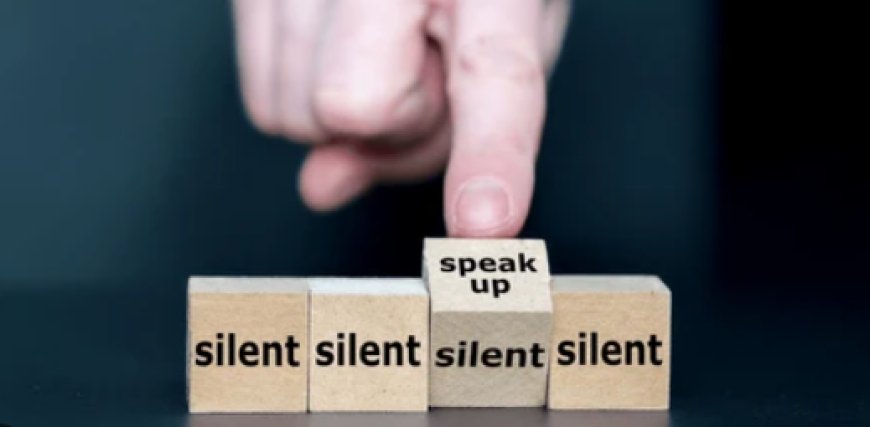
How Moral Policing Is Teaching Us to Stay Silent
The moment you raise your voice, people come rushing -- not to listen, but to remind you of your past silences. It doesn’t matter if the incident they cite happened months ago, years ago, or even decades ago.
I didn’t write anything from my personal social media handles when Sharif Osman Hadi was first shot. I didn’t write anything when he finally breathed his last.
I stayed silent when Prothom Alo and The Daily Star came under attack by mobs. I said nothing when Chhayanat and Udichi were vandalised. I kept mum even when a Hindu man in Mymensingh was beaten to death and then set on fire.
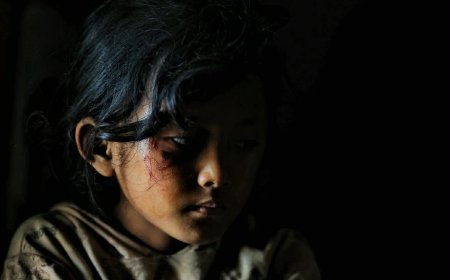
Hell, I didn’t utter a single word when a little girl among others -- was burned alive, locked inside her own home.
All these incidents took place within the last week or so, and I did not say anything on my Facebook. Each of these moments has shaken me enough to speak. Each has demanded words, outrage, or at least grief.
And yet, I chose silence every single time. Why am I doing this -- or rather, why am I not doing anything at all? Am I becoming emotionally numb? Have I grown indifferent to violence, injustice, and loss?
Does anything still matter to me anymore? Can I still claim to be human -- someone who possesses even the bare minimum of feeling?
These questions have been circling my mind non-stop for the past few days. And I am certain I am not alone in this unease.
There are many others like me -- people who read the news, feel the weight of it pressing down on their chests, and yet say nothing. I don’t know what stops others. But I know what stops me.
To be brutally honest, I am tired. Tired of endlessly venting my feelings online, laying myself bare on social media, only to realize that nothing truly changes.
Outrage fades. Hashtags die. The algorithm moves on. What remains is exhaustion -- the sense that screaming into the void only leaves you hoarse, not heard. But exhaustion isn’t the only reason. I am also afraid.
Afraid of what? Afraid of being interrogated. Afraid of being ridiculed. Afraid of being asked: “Why are you talking about this now? I didn’t see you say anything when that other incident happened.”
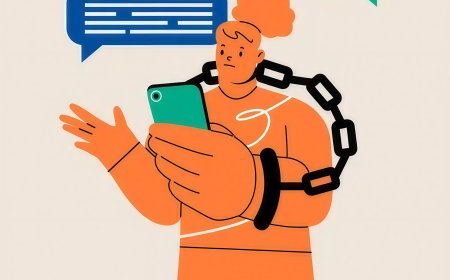
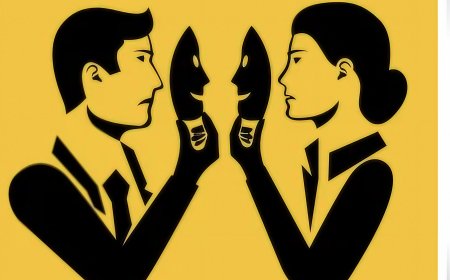
Yes, just like that, social media has quietly transformed itself into the biggest court of conscience of our time.
Here, solitary grief is not allowed to exist on its own. Every expression of pain must come with a complete archive of past reactions. You can no longer mourn one tragedy without being accused of ignoring another.
You cannot speak about one injustice unless you can prove that you have spoken about all injustices -- consistently, publicly, and without interruption.
The moment you raise your voice, people come rushing -- not to listen, but to remind you of your past silences. It doesn’t matter if the incident they cite happened months ago, years ago, or even decades ago.
It doesn’t matter if, that previous time, you were not in a position to say anything, you were too busy to say anything, or simply, you didn’t feel like saying anything (which should be a very human tendency).
Silence, once noticed, becomes a permanent stain. Context no longer matters. Nothing is accepted as an excuse.
It increasingly feels as though the only people “allowed” to speak on social media are those who have been vocal about every national tragedy since time immemorial.
Miss one moment, skip one post, choose quiet once -- and you automatically lose the license to speak ever again.
And thus is born a spiral of silence. But trust me, and listen to me very carefully -- this should not be the norm. Silence should not disqualify a person from speaking later. Inconsistency should not be treated as moral failure.
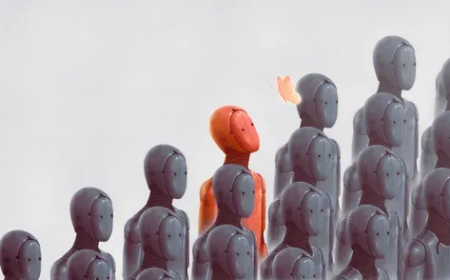
Human beings are not machines programmed for round-the-clock outrage. We feel in waves. We break. We retreat. We gather ourselves. And sometimes, we speak only when we can find the strength, the clarity, or the words.
Moral expression cannot be governed by attendance sheets. There should be no checklist that determines who is allowed to grieve, who is permitted to protest, and who has earned the right to be angry.
Empathy does not expire because it was not publicly displayed at every previous moment of horror.
What we have created instead is a culture of gatekeeping compassion. A space where people are more interested in policing who speaks than in addressing what is being spoken about.
Where the focus shifts from the crime itself to the perceived moral consistency of the person reacting to it. In that process, the actual victims -- dead bodies, broken families, burnt homes -- quietly slip out of the frame.
This culture does not encourage accountability. It encourages fear. It does not deepen solidarity. It fractures it.
It trains people to stay silent, to observe suffering privately, to grieve in isolation -- because speaking imperfectly has become riskier than not speaking at all.
And let us be honest: this selective moral auditing is rarely applied equally. Some are forgiven their silences. Others are hounded for them.
The rules are fluid, often shaped by personal grudges, ideological camps, or the thrill of public shaming. What is presented as moral rigor is, more often than not, a performance of superiority.
But real conscience does not work this way. A society that truly values justice should welcome voices whenever they arrive. Late outrage is still outrage. Delayed grief is still grief.
Speaking now does not invalidate past silence; it challenges present injustice. The urgency should be to stop the harm, not to score points in an argument about who spoke first or loudest.
If we continue down this path, we will be left with a public sphere dominated by a few relentlessly loud voices and surrounded by a vast, exhausted silence -- not because people don’t care, but because they have been taught that caring comes with impossible conditions.
In a real democratic world, we cannot afford to accept that standard.
We should refuse to believe that anyone’s humanity must be proven through a flawless record of online reactions. We should refuse to accept that silence, in one moment, permanently cancels the right to speak in another.
Because if that becomes the rule, then social media will not be a space for conscience at all. It will be a space where empathy goes to die. And that, perhaps, would be the quietest tragedy of all.
Jannatul Naym Pieal is a journalist.