


























![A Ledger of the Soul: Navigating the Allah-Bhagavant Nexus in a 19th-Century Puruṣākāra Jñāna Caupara [Gyan Chauper]](https://counterpointbd.com/uploads/images/202608/image_430x256_6a93baa3b09a7.jpg)



















A Promise Kept
Prof Yunus had pledged to hold elections before Ramadan in 2026 and looks to have delivered. There is many a slip twixt cup and lip, but we are on course for our free, fair and festive elections on February 12.


Drawing the curtain on months of speculation, conspiratorial theories, and a chorus of headless punditry -- both domestic and foreign -- the nation has finally breathed a sigh of relief. Bangladesh has now irreversibly entered election mode.
With the Election Commission’s announcement of the national election date for February 12, 2026, to be held concurrently with the referendum on the July Charter, all major preparatory tasks -- voting schedules, redrawing of constituency maps, arrangements for transparent ballot boxes, and postal voting for expatriates -- have been completed.
Despite formidable opposition, particularly from abroad, the BAL has been effectively barred from contesting the election, though its supporters with clean reputations and no criminal records may run as independent candidates. What is politically fascinating is that, despite condemning the BAL, many parties are quietly trying to attract its traditional supporters to boost their vote counts. The votes of the silent Awami Leaguers, numbering in the millions, will undoubtedly play a decisive role.
Most major political parties have fully activated their election machinery -- forming alliances, announcing candidates, and creating an atmosphere both celebratory and combustible. Intra-and inter-party conflicts have already surfaced, including a few fatal incidents. As the election draws nearer, such occurrences may sadly rise.
The restoration of magistracy powers to the armed forces during the election -- powers earlier usurped by the BAL for partisan advantage -- is unquestionably the right decision. The presence of composite security forces, operating without bias as opposed to the Hasina-era election model, is expected to ensure a free, fair, and transparent voting environment.
Yet the threat of treasonous elements attempting to derail the election persists. Despite mounting challenges, impediments, conspiracies, and personal attacks, Dr. Yunus has remained steadfast. Guided by his calm temperament and intellectual depth, he has successfully achieved two historic milestones:
- Returning Bangladesh to the path of genuine democracy, and
- Initiating reforms in critical democratic, economic, and infrastructural sectors that future governments can consolidate to realise the nation’s full potential.
From the very first day -- August 8, 2024 -- Dr. Yunus was not allowed a moment of peace, particularly due to relentless pressure from India. Attempts were made to undermine the government through disinformation, fabricated reports, and lobbying abroad. India’s decision to provide safe haven to Sheikh Hasina and her cohorts belies the image of a principled democratic neighbour and friend. Yet, undeterred, Dr. Yunus kept his focus, steering the country forward and elevating Bangladesh’s global image.
The success of the 36th July Revolution has resonated far beyond our borders. It has been studied in global political circles and even replicated -- reflected in, for example, the Mamdani election in New York and the historic election of a young Palestinian woman as President of the Oxford Union. These developments signal the rising power of youth and ordinary citizens across the world.
However, one challenge remains beyond the capacity of any leader: the destructive mindset of segments of our own people. Too often we sacrifice collective good for narrow personal interests -- even at the cost of the nation’s dignity. The mass flight of political leaders, military officers, civil servants, police personnel, business figures, journalists, and even the former prime minister to a country widely seen as an adversary raises profound questions.
Given the geo-political, geo-economic, and geo-strategic stakes of this election, the administration’s immediate priority must be national security. This includes securing borders against all intrusion, conducting nationwide combing operations to recover illegal arms, ensuring full surveillance of hotels and guesthouses across the country, strengthening security forces, and temporarily reinstating capable retired personnel.
As election fever grips the nation, public discussion now centres on which party will ultimately prevail -- with eyes fixed primarily on the BNP and Jamaat. Jamaat has experienced an unexpected resurgence since the revolution, energised by the impressive performance of its student wing in university elections, including Dhaka University -- the cradle of democratic movements.
Yet, Jamaat’s controversial role since its inception needs serious examination. Historically, since its founding in 1941, the party often stood against public sentiment. It opposed the creation of Pakistan. In 1952, it opposed the language movement. Most notably, its role in collaborating with the Pakistan army in committing genocide in this country still haunts the people’s mind -- a crime for which they never apologized to the people.
In the post-1975 political dynamics of the country, the party was given a new lease of life by Ziaur Rahman. Following the 2001 election, Jamaat joined the government under Khaleda Zia. Today, ironically, it stands in opposition to the BNP, the party that granted them a space and political rehabilitation. The Jamaat’s past -- marked by allegations such as the infamous heel-tendon slashing by Shibir in the 1990s -- still evokes fear. Underestimating its renewed influence would be unwise, but its character in power remains uncertain.
Despite all the known and unknown challenges, I continue to believe that the BNP is poised to form the next government, possibly in coalition with smaller allies. BNP’s greatest moral asset is its matriarch, the venerable Begum Khaleda Zia, who stands unchallenged at the pinnacle of Bangladesh’s political heritage. Her regal composure, dignified conduct, and unwavering commitment to principles have earned her the enduring love of millions. Even under extreme persecution, she never fled the country; instead, she stood by her people. Hasina’s vindictive act of evicting her from her residence of 40 years was meant to humiliate her. Yet, in a striking twist of fate, it is Hasina who has fled her home and country -- a powerful display of divine justice.
Tarique Rahman, too, endured unimaginable torment at the hands of those who once used his family as a ladder to power -- an exemplification of the adage “fouling the very plate that nourishes you.” Forced out during the events of 1/11 and later exiled by Hasina’s regime, he assumed leadership of the BNP from afar. Despite obstacles, he kept the party intact throughout the most difficult years. It is therefore no surprise that, once conditions improved, he swiftly reorganized the party for election -- leading from thousands of miles away.
During nearly 18 years of exile, Tarique never allowed himself to fade from public memory. He remained virtually present in national discourse and has undergone a remarkable transformation -- appearing more mature, composed, polite, and statesmanlike. His recent address to retired armed forces officers was notable for its humility, absence of bitterness, and forward-looking message. His public apology for a past personal lapse reflects genuine moral growth.
His inability to return home at this critical moment has fueled speculation, but only he knows the depth of his anguish -- both for his nation and his gravely ill mother. When he says his return depends on factors beyond his control, we must take him at his word. His determination to return at the earliest opportunity is clear. As a well-wisher of the BNP and the Zia family, I hope and pray that he soon reunites with the millions waiting anxiously for him.
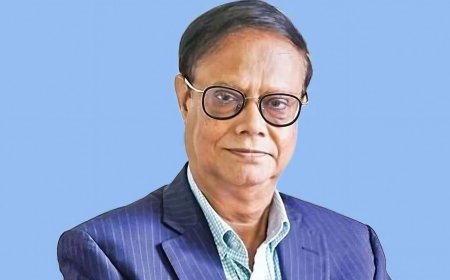
Ashraf Ud Doula is a freedom fighter, retired Major, former Secretary to the Government, and a former Ambassador/High Commissioner to several countries.