





























































Why Jamaat Wins When Others Stay Home
For all its organizational strength (its cradle-to-grave welfare systems, disciplined cadres, and efficient disaster response), Jamaat serves a problematic end: It is in the service of creating a theocracy from the bottom up.

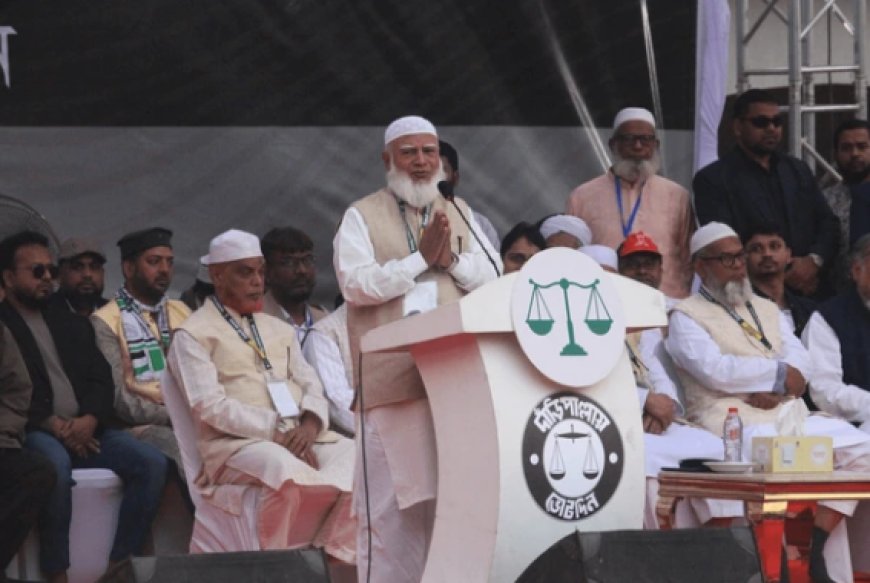
The Jamaat-e-Islami has been away from public view for more than a decade, their popular view tainted by their role as collaborators of the Pakistani military during Bangladesh’s War of Independence.
With the Awami League banned from participating in elections, it has emerged as one of the main contenders. While this vacuum has artificially boosted its popularity, I suggest that popularity in the 2026 election season is also a function of the organizational strength they have built over the years.
Jamaat operates as a disciplined, vertically integrated organization in a political landscape dominated by loose patronage networks -- that sets them apart. This organizational form becomes particularly consequential in low-turnout elections, where commitment matters the most.
This political strategy sets them apart from mainstream parties like the Awami League and BNP. While their organizing capabilities are commendable even inspirational, their end goals are, however, incompatible with democracy.
Beyond Patronage Networks
The Awami League and BNP function as patronage machines, relying on local strongmen who can be bought, intimidated, or co-opted. These parties mobilize voters through transactional exchanges -- jobs, contracts, protection -- that depend on holding state power.
This is why corruption becomes necessary to maintain patronage networks. Jamaat, by contrast, has built a cadre-based structure closer to that of communist parties, substituting Islamic ideology for Marxist doctrine. This allows them to govern constituencies they do not formally control.
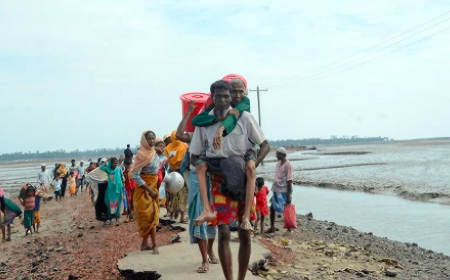
The difference is not rhetorical. When a rickshaw puller dies in a neighborhood where Jamaat has presence, the local unit provides burial costs and food for the family within hours. Few government agencies move that fast. Secular NGOs frame assistance as communal obligation rather than bureaucratic charity.
This "micro-welfare" model then helps generate loyalty independent of electoral outcomes. Voters do not support Jamaat because they won last time; they support Jamaat because the party has already embedded itself in their everyday struggles.
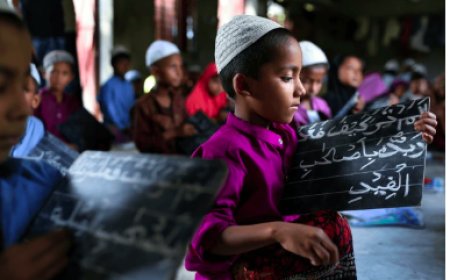
This welfare apparatus extends into education and healthcare through networks of kindergartens, coaching centers, and charitable clinics. Unlike BRAC or Grameen Bank, which operate on corporate-NGO principles, Jamaat-affiliated institutions function on a community-religious model.
Parents send children to Jamaat schools not only because they are affordable but because they are branded as morally superior -- "Islamic service" rather than development intervention. By the time these children reach voting age, they have been socialized into viewing Jamaat as the natural provider of public goods.
The Rukon System
What distinguishes Jamaat organizationally is its recruitment process. One cannot simply join Jamaat; they must qualify for membership through a multi-year vetting system. Supporters progress to Workers and then, after proving their commitment, to Rukons -- full members who form the party's core.
Becoming a Rukon requires paying a percentage of one's income to the party, attending weekly study circles (usrah), and demonstrating discipline over years. This creates both financial and ideological investment.
The result is a cadre whose commitment is much higher than hired activists or casual supporters. On election day, one Jamaat Rukon is worth ten BNP operatives because the Rukon has been trained and is bound to the organization through material and spiritual ties.
While the BNP and Awami League mobilize through numbers -- flooding polling stations with bodies -- Jamaat mobilizes through precision. Their activists know their assigned voters personally, can track turnout in real time, and possess the discipline to hold positions when others flee. In a chaotic or violent election, this becomes a tactical advantage. In a low-turnout election, it becomes decisive.
The Shibir Pipeline
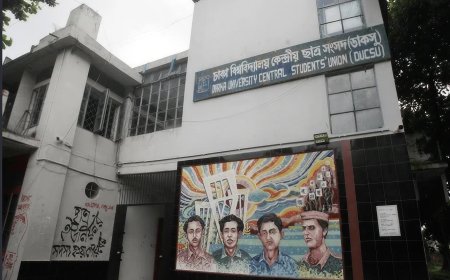
Islami Chhatra Shibir, Jamaat's student wing, functions as a leadership factory targeting rural students arriving in Dhaka or other cities. Shibir provides housing in shared accommodations (messes), coaching for university admissions, and study materials -- hard resources that matter more than ideology to students struggling with the transition to urban life.
The exchange is subtle but helps create lasting bonds. In return for material support, students attend prayers and study sessions. By the time they graduate and enter the civil service, military, or private sector, many have become donors or sympathizers embedded in institutions Jamaat does not formally control.
This creates an embeddedness regardless of who holds formal power. Even when Jamaat is excluded from coalitions or banned from contesting elections, their institutional footprint persists through former Shibir members now occupying positions across Bangladesh's bureaucratic and economic infrastructure.
This pipeline also solves a long-term problem for Jamaat: How to maintain relevance when excluded from government. While the BNP and Awami League lose supporters when out of power -- because patronage dries up -- Jamaat retains its base because it could on state resources. Their organizational reproduction happens outside the electoral cycle.
Honesty as Comparative Advantage
In a political system where the BNP and Awami League are synonymous with corruption and dynastic succession, Jamaat presents itself as "God-fearing managers" rather than politicians. This narrative works because Jamaat has rarely held primary power and therefore has fewer corruption scandals attached to its record.
More importantly, Jamaat polices its own cadres in ways the major parties do not. When a local Jamaat leader is caught taking bribes, expulsion often follows immediately. This is their branding strategy. Jamaat cannot afford to lose its reputation for discipline because that reputation is what differentiates it from competitors.
The BNP and Awami League can survive corruption scandals because they offer patronage and protection. Jamaat offers rectitude and efficiency. Losing that narrative would collapse their entire value proposition.
The Talim Network and the Female Vote
Jamaat's recruitment of female voters happens through mechanisms invisible to most secular analysts. Since male Jamaat activists cannot easily campaign to women in conservative households, the party uses a female wing that organizes Talim -- religious study sessions -- in private homes, recent studies show.
These gatherings are framed as devotional meetings, not political events. Yet the political message is embedded: Vote for the party that protects your faith and modesty. This allows Jamaat to bypass the male head of household's political preferences.
A woman whose husband supports the BNP may still vote Jamaat if she attends Talim sessions regularly. The husband never sees the campaigning happen because it occurs in spaces he does not enter.
This also explains why polling often underestimates Jamaat's support. Surveyors ask the male head of household which party the family supports. He answers BNP or Awami League.
But inside the voting booth, his wife and daughters may vote differently based on networks he knows nothing about. Jamaat has turned the gender segregation of conservative households into an organizational advantage.
Why Low Turnouts Favor Jamaat
Jamaat's organizational structure produces a specific electoral advantage: High turnout among their own supporters regardless of overall participation rates. The Rukon system ensures that committed members vote at near 100% rates.
They are tracked, reminded, and transported to polling stations if necessary. By contrast, BNP and Awami League voters are "casual" supporters who vote when mobilized but stay home when enthusiasm is low.
In a low-turnout election, this gap becomes a game-changer. If only 40% of registered voters participate, Jamaat's disciplined base represents a much larger share of actual votes cast. The major parties rely on flooding polling stations with bodies; Jamaat relies on ensuring their bodies show up.
What’s the Problem?
The problem is that when turnout is suppressed -- whether through apathy, intimidation, or logistical barriers -- the advantage shifts to the party with the most committed cadre.
This means that chaotic or violent elections favor Jamaat. When polling stations are attacked or agents are intimidated, BNP and Awami League operatives often flee.
Jamaat Rukons can be counted on to hold their positions because they have been trained for such scenarios. Retreating would violate their ideological commitment. Then, Jamaat wins by default. That kind of a win says very little about what people really want.
There are already some anxieties surrounding voter turnout. Many Awami League supporters plan on boycotting the elections -- under a campaign called No Boat, No Vote.
There are also allegations that Jamaat is using intimidation tactics and fear to keep non-Jamaat voters home -- Zonayed Saki in Brahmanbaria-6, for example, complained that the Jamaat was piling bamboo sticks at voting centers, clearly spoiling for a fight.
These would all favor Jamaat because Jamaat’s performance will depend on turnout rates, electoral violence, and the degree of chaos at polling stations.
But the problem about Jamaat is not only that they will try to suppress the vote, but that their political stance is ultimately anti-democratic. For all its organizational strength (its cradle-to-grave welfare systems, disciplined cadres, and efficient disaster response), it serves a problematic end: It is in the service of creating a theocracy from the bottom up.
This world view is strictly patriarchal and misogynistic, offering women social services only to confine them within regressive gender roles in the guise of protection.
They are not “against Bangladesh” as many claim -- in fact, despite their rhetoric about the Ummah and universal brotherhood, their project is actually nationalist, seeking not to transcend the nation-state but to redefine Bangladeshi identity in their own exclusionary image.
Navine Murshid is Associate Professor of Political Science at Colgate University, USA.