


























































Ten Tasks for Future Bangladesh
Bangladesh has turned a page in its political history and a new phase of political governments is about to start. This may therefore be a good time to think about the future socio-economic tasks.


ONE: Reducing Inequality
The first task is to reduce economic inequality. This has been the main goal of the 2024 mass-uprising. Income inequality in Bangladesh, as measured by the Gini Coefficient, increased from 0.388 to 0.570, during 1991-2022.
Income inequality led to the capture of political institutions by the rich, resulting in further increase in income inequality, and leading to the Inequality Trap.
Policies are needed first to reduce inequality of primary income, which include wages, profits, capital gains, rent, etc. that people obtain by using their labor and capital in the market (hence also called market-income).
Achieving this goal requires adequate wage growth and diffusion of capital income among common people through expansion of cooperative ownership of assets enterprises and sharing of profits with workers of private enterprises.
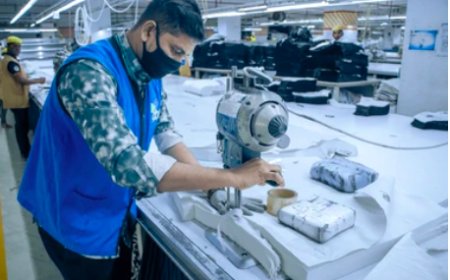
Unfortunately, wages in Bangladesh grew by only 1.15 percent per year during 2011-15 while per capita income rose by 4.9 percent annually during roughly the same period.
Policies are also necessary to reduce inequality in disposable income, which is what the people have after paying taxes on their primary income and receiving transfers. For this purpose, the tax schedule has to be progressive and honestly implemented.
Transfers can take two forms: cash and non-cash. Examples of non-cash transfers include public provision of education and healthcare. If designed properly and implemented honestly, both cash and non-cash transfers can be effective.
Non-cash transfers can also help to increase social cohesion and reap benefits of positive externalities (for example, when one person gets educated others benefit too.)
TWO: Achieving Good Governance
The second important task is achieving good governance. As per the six World Governance Indicators (WGI), Bangladesh ranks the lowest even among South Asian countries. There are two sides of governance: political leadership and bureaucracy.
They influence each other, but the primacy in this interrelationship belongs to the political leadership. A major cause as well as consequence of Bangladesh’s poor governance is the Leakage Model of economic growth that the country followed in the past years.
Under this model, large sums of public money (from government budgets and the banking system) leaks to the private sector through improper and illegal ways. This leads to capital flight, Debt Trap, and ultimately to the Middle-Income Trap.
This corruption within the government saps the morality at all levels of the society and ultimately makes the society dysfunctional. An urgent task therefore is to move away from the Leakage Model through necessary political and administrative reforms, as discussed below.
THREE: Proportional Representation and Shorter Government-term
A slew of political reforms was considered recently by the reform commission.
However, as I showed in my recent book Unnayaner Jonno Shushason [Good Governance for Development] (UPL 2025), the essential necessary political reform is the switch from the current constituency-based election to proportional representation.
The 2024 mass-uprising forced the option of proportional representation into the national agenda and the upcoming referendum is to include the proposal of creating an upper house of the parliament based on the proportion of votes received.
However, the party anticipating simple majority among the voters did not agree to this proposal. Anticipating this problem, I suggested earlier making use of the “Veil of Ignorance” construct of John Rawls, the eminent philosopher, to overcome this hurdle.
Under this construct, proportional representation should have been proposed not for the 13th parliament but for future parliaments, beginning with the 14th.
Chances for acceptance of this proposal would have been greater because it would be difficult for the parties to be sure about enjoying a simple majority of voters so far into the future.
Another important political reform is shortening of the government term. This proposal too faced dissent arising from the same anticipation of simple majority. The Veil of Ignorance construct could be applied to this proposal too.
Going forward, popularizing proportional representation and shorter government-term will therefore remain an important task.
FOUR: Protection of the Environment
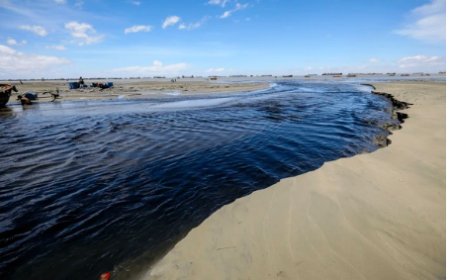
Protection of the environment has to be taken much more seriously in the coming years, if the country is to avoid an environmental collapse.
A complete change of direction of policies is necessary for this purpose in water development (rivers), energy and power, industries to be promoted, transportation and communication, spatial planning and urbanization, construction, agriculture, forests, waste generation and disposal, etc.
Population planning efforts need to be revived. Bangladesh Poribesh Andolon (BAPA) and Bangladesh Environment Network (BEN) have well-developed policy proposals in each of the above areas and future governments can benefit from them.
FIVE: Village Councils
The local government structure needs to be extended to the grass-root level by forming Village Councils.
As of now, it ends with Union Parishads. Apart from performing appropriate administrative functions, the village councils can play a crucial role in facilitating collective endeavors, necessary for optimal utilization of land, water, and labor resources of villages.
Climate change is making such collective endeavors more imperative. Countries such as China and India are making efficient use of village governments. Bangladesh too had a long tradition of Gram Panchayaet.
However, the British colonial rule led to its decay. After the independence, almost all major governments made attempts to rebuild village-level government, but couldn’t complete the task for various reasons. Now is the time to do so.
SIX: Decentralization of Development and Reduction of Regional Disparity
Development needs to be decentralized and regional disparity has to be eliminated. Currently, of the 10 million extreme poor, more than half are concentrated in only 16 (out of 64) districts.
The bottom 50 districts contribute only 17 percent of the industrial output. Dhaka City alone accounts for about 35 percent to total urban population and is now suffering from negative effects of agglomeration.
Differences in endowments are certainly a cause for the above. However, policies are needed to ameliorate the effects of endowment differences, instead of aggravating them.
The “hub-and-spoke” model of in-situ urbanization should be adopted with the 64 district towns as the hubs and aligned with the proposed economic zones.
SEVEN: Strengthening Social Cohesion
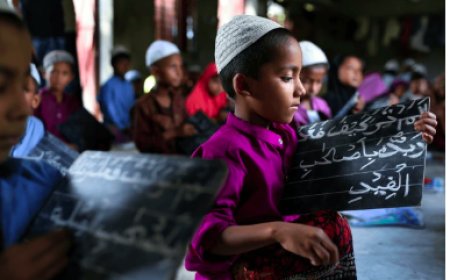
Social cohesion needs to be strengthened. The rise in income inequality has aggravated social divisions. Both the education and the health systems have trifurcated. This is harming for both social cohesion and the overall state of education and health of the nation.
Similarly, divisions along religions are reignited. The plainland Bangali people have been counter-posed to the hill people. Vigorous efforts are needed to counter these trends.
Education and health systems have to be unified while allowing roles for both public and private sectors in them, as we find in Japan or the US.
Mixing politics with religion should be avoided, and ethnic amity should be re-established through fair protection of the rights of the hilly people and other minorities.
EIGHT: Special Attention to the Needs of Women, Children, Youth, and the Elderly
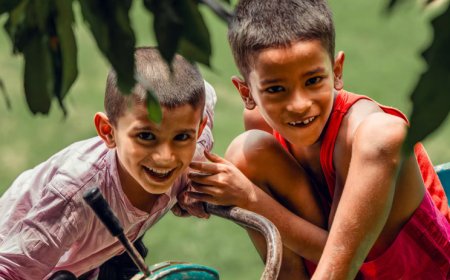
Special needs of the women have to be met to ensure realization of their full potential. Children have to be treated as the future resource of the country. The country has so far allowed the Demographic Dividend go by within making good use of it.
Unfortunately, it is going to end soon. Urgent policies directed at the youth are needed to rectify this failure. Policies are needed to both take care of the elderly and make the best utilization of their potential.
NINE: Compulsory Military Education
Compulsory military education for the youth should be gradually introduced. This will help to improve the physical and mental constitution of our youth, converting them into high quality human capital.
It will also increase social cohesion, strengthen patriotism, increase discipline in the population at large, create a very productive role for the military in the nation’s life, improve the bond between the military and the civilian population, and increase the country’s defense capability.
The duration of the training may be nine months (as was the Liberation War) and start at the age of eighteen, after students complete their higher secondary education. Based on the current population size, about seven lakh youth will be eligible each year.
On average, each of the current thirty cantonments will have to accommodate about 23,333 young men. Additional infrastructure has to be built inside them for this purpose.
Some initial capital costs will be required. The recurrent cost of the program will comprise about 1.5 percent of the budget, which is modest.
This will be the best investment that the nation can make. Until the full capacity is achieved, the number of trainees can be limited through a lottery system.
Also, initially the program can start with males only and a customized and voluntary program for females can be initiated later.
TEN: Protection of National Resources and Pursuit of Independent Foreign Policy
The country has to pursue an independent foreign policy, avoid dependence on any particular country, and aim at rapid development of the country through the best utilization of the nation’s resources by optimal participation in the international division of labor.
[I have discussed these ten tasks in great detail in my recent book Agami Bangladesher Dosh Koroniao [Ten Tasks for Future Bangladesh] (Dharitree 2025). Interested reader can consult it for more information on each of the tasks.]
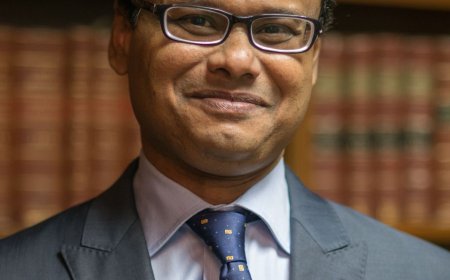
Dr. Nazrul Islam is a Professor in Asian Growth Research Institute and Former Chief of Development Research, United Nations.