




































![A Ledger of the Soul: Navigating the Allah-Bhagavant Nexus in a 19th-Century Puruṣākāra Jñāna Caupara [Gyan Chauper]](https://counterpointbd.com/uploads/images/202608/image_430x256_6a93baa3b09a7.jpg)




















How Jamaat is Still Maududi's Party When it Comes to Women
The problem here is not Islam. The problem is the elevation of one man’s subjective, historically contingent interpretation to the status of immutable religious truth. To present such views as 'Islamic policy' is intellectually dishonest and politically dangerous.
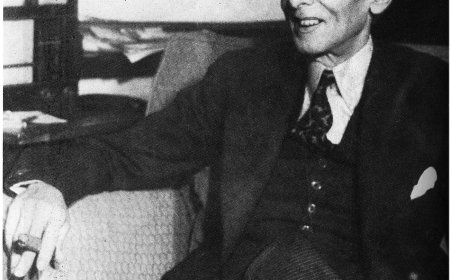
Abul A’la Maududi remains one of the most influential figures in modern Islamist political thought.
His book Purdah and the Status of Woman in Islam was written between 1939 and 1940, in the social and cultural context of colonial British India.
Nearly eighty-five years later, this text continues to exert a decisive influence over the ideology, rhetoric, and policy positions of Bangladesh Jamaat-e-Islami with regard to women.
This continuity itself demands scrutiny. The book was produced in a radically different historical moment -- long before women’s mass participation in education, formal employment, electoral politics, and state administration in Bangladesh.
Yet despite profound social, economic, and political transformations, Maududi’s gender framework remains largely intact within Jamaat-e-Islami’s contemporary worldview.
Women, Domesticity, and Moral Panic
In Purdah and the Status of Woman in Islam, Maududi defines a woman’s primary role as domestic: Motherhood, household management, and moral supervision within the private sphere.
He repeatedly warns that women’s participation in public life -- especially employment involving interaction with unrelated men -- inevitably produces sexual disorder, moral chaos, and social decay.
At one point, Maududi argues that when women leave the domestic sphere and freely mix in public, they become “slaves to every lewd eye.”
From this premise, he develops the idea that such women effectively turn into “public property.”
This formulation is critical -- not because it appears in Islamic scripture, but precisely because it does not. Neither the Qur’an nor any authenticated hadith employs such language.
While Maududi cites a hadith cautioning against ostentatious display and unrestricted social mixing, the extreme terminology and sweeping conclusions he draws are his own.
The notion that women’s public presence transforms them into objects of collective sexual access is not a scriptural command but a subjective extrapolation, elevated into a comprehensive social doctrine.
Rejection of Female Leadership
Maududi’s opposition to women’s political leadership follows the same logic. He categorically rejects the idea that women may hold positions of political authority, framing male leadership as a divinely ordained social order rather than a contested jurisprudential question.
In his writings, women’s leadership is not debated; it is dismissed as inherently incompatible with an Islamic society.
To reinforce this position, Maududi launches an extensive critique of Western feminism and women’s economic participation. He argues that women’s “emancipation” in the West has reduced them to cheap labor and sexual commodities, asserting that liberation has turned women into “prostitutes in all but name.”
Crucially, these arguments rely very little on Qur’anic injunctions or authenticated hadith. Instead, Maududi draws heavily on Western conservative and reactionary social critics.
Large portions of Purdah and the Status of Woman in Islam consist of lengthy quotations from figures such as the French Catholic sociologist Paul Bureau, whose writings lament what he perceived as the moral bankruptcy of Western modernity.
What emerges, therefore, is not a theology derived from Islamic primary sources, but a hybrid moral panic -- a fusion of Maududi’s personal anxieties and European conservative critiques, repackaged as Islamic doctrine.
Ideological Continuity in Bangladesh Jamaat-e-Islami
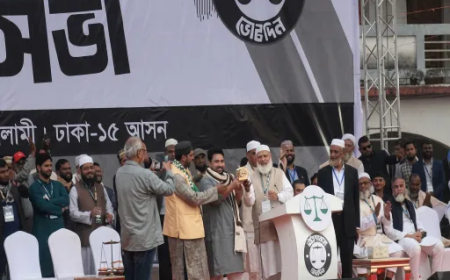
This intellectual inheritance is clearly visible in Bangladesh Jamaat-e-Islami today. In the next national election to be held on February 12 the party did not nominate a single woman candidate for any general parliamentary seat.
Senior leaders have publicly stated that a woman cannot serve as the party’s amir, arguing that men have been divinely appointed as women’s guardians or managers.
These positions closely mirror Maududi’s framework. Although party leaders occasionally reaffirm their support for women’s education, economic participation, or involvement in local governance, such statements rarely translate into institutional practice.
Even female leaders within Jamaat’s women’s wing often justify the exclusion of women from top leadership by invoking men’s “responsibility” over women -- effectively reproducing Maududi’s paternalistic logic.
Working Women and 'Compassionate' Control
The same worldview shapes Jamaat’s approach to working women. Recent proposals suggesting reduced working hours for mothers -- while framed as compassionate accommodations -- rest on a deeper assumption: that a woman’s primary identity is domestic rather than professional.
Employment is treated as secondary and conditional, permissible only insofar as it does not disrupt maternal and household duties.
More troubling is the recurring use of derogatory moral language in discussions of working women.
While the party has at times attempted to distance itself from such rhetoric, the underlying association between women’s public employment and moral degradation closely resembles Maududi’s own formulations.
This is not an isolated aberration, but a predictable outcome of a long-standing ideological structure that equates female visibility with sexual disorder.
A Matter of Shame
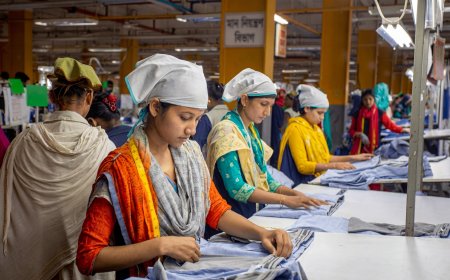
In contemporary Bangladesh -- where women play indispensable roles in industry, administration, education, and politics -- it is deeply troubling that a book written in 1939-40 continues to dictate the women’s policy of a present-day political party.
This is not merely ideological inertia; it is a deliberate refusal to engage with current social realities.
The problem here is not Islam. The problem is the elevation of one man’s subjective, historically contingent interpretation to the status of immutable religious truth.
To present such views as “Islamic policy” despite their limited grounding in the Qur’an and authenticated hadith is intellectually dishonest and politically dangerous.
If, eighty-five years later, a political party still determines women’s leadership, employment, and political participation based on the social fears and personal conclusions of a conservative man writing under colonial conditions, this is more than regression.
It is a shame.
And that shame is compounded when this interpretation is promoted as “true Islam,” posing a direct threat to women’s rights, social progress, and Bangladesh’s democratic future.
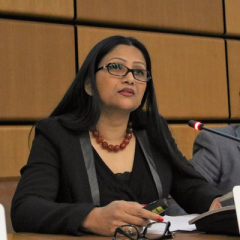
Dr Monica Beg, MD, MPH is Former Chief and Global Coordinator, HIV/AIDS Section, United Nations Headquarters, Vienna, Austria.