

















When the Joke's on Democracy: Bangladesh's War on Satire
Here's the test: Can our leaders take a joke? Can they handle criticism without reaching for handcuffs? Can they distinguish between dissent and disinformation? Because if they can't, we haven't replaced one authoritarian regime with democracy. We've just swapped the faces. And that's not funny at all.

Let me tell you about the crime that's apparently worse than corruption, murder, and state-sponsored violence in Bangladesh: making people laugh at politicians.
Earki, Bangladesh's largest political satire platform, was recently sued alongside other content creators by a prominent Jamaat-e-Islami leader. The charge? Defamation and spreading disinformation. Translation: making jokes that hit too close to home.
If this sounds familiar, it should. We've been here before. Different government, same script.
The Line We Keep Crossing
Growing up, I devoured Dilbert and Calvin and Hobbes. Those strips didn't just make me laugh, they held up a mirror. Through Scott Adams' cubicle dystopia and Bill Watterson's six-year-old philosopher, I saw my own hypocrisies reflected back at me. That's what good satire does. It makes you uncomfortable with yourself before it makes you uncomfortable with power.
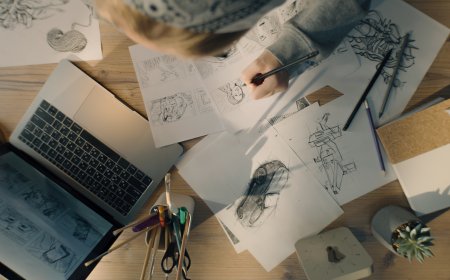
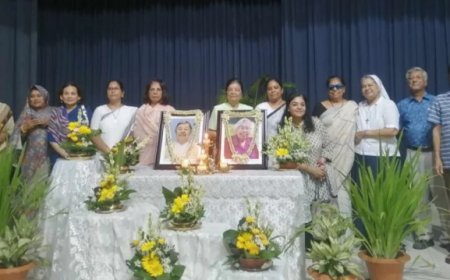
Bangladesh has its own legends in this arena. Ronobi and Shishir Bhattacharya didn't just draw cartoons, they drew blood from the powerful. Ronobi created Tokai in 1977, eight years after first conceptualizing a character that would represent Bangladesh's invisible street children. Not to mock them, but to force society to see what it preferred to ignore. "I didn't want to make fun of their situation," Ronobi said. "They were already the subject of neglect and banter of society."
Shishir Bhattacharya's timing was impeccable: returning from India just as revolution was brewing against Ershad, when newspapers were hungry for cartoons that said what reporters couldn't write. His village upbringing gave him access to a Bangladesh that Dhaka's elite preferred to forget.
These weren't just artists. They were the country's conscience, sketched in ink.
The Pattern We Refuse to See
Abu Shadik Kayem, Ducsu's Vice President, filed cases against 18 individuals and over 15 Facebook pages, including Earki. The accusation? Creating a "hostile online environment" with "obscene and defamatory content."
In a recent press briefing, Nagorik Coalition called it what it is: "Ill-considered, intolerant and immature." They're being generous. This is calculated suppression dressed up as protecting dignity.
The Cyber Protection Ordinance -- the legal weapon being wielded here -- was supposed to protect people. Instead, it's become the same tool of repression we thought we'd buried with the previous regime. Civil society warned this would happen. We said the vague provisions and broad interpretive powers would reproduce the exact patterns of abuse we'd just escaped.
Nobody listened. Or worse, they listened and didn't care.
We toppled one authoritarian government only to hand the playbook to the next set of power-hungry politicians.
What We're Really Losing
Let's be clear about what's at stake. This isn't about protecting Earki or any individual satirist. This is about whether Bangladesh will have any space left for dissent that doesn't require a lawyer present.
Ronobi spent his early career using a pseudonym because he was a government official who couldn't sign political posters with his real name. That was the 1960s. Here we are, sixty years later, and satirists still can't work without looking over their shoulders.
Shishir Bhattacharya once said that in Bangladesh, an artist is "no different than the average clerk; he has no luxuries in his life and has to worry about his bread and butter like every other commoner." Now add to that: worrying about whether the bread and butter comes with a side of arrest warrant.
The irony is suffocating. We just had a mass uprising led by students demanding freedom and justice. Those same students are now filing cases against the very platforms that amplified their voices during the movement.
The Global Playbook of Silencing Satire
This pattern isn't unique to Bangladesh. Authoritarian regimes everywhere understand that satirists are more dangerous than traditional journalists.
Charlie Hebdo's cartoonists were murdered not because they reported facts, but because they made people laugh at sacred cows. Turkey has jailed more cartoonists than almost any other country. Russia's satirists flee or fall from windows.
Even democracies struggle with this. When Jimmy Kimmel's show was briefly threatened in the US, it sparked immediate backlash because Americans understood what was at stake. The test of any free society isn't how it treats praise. It's how it handles mockery.
Bangladesh is failing that test spectacularly.
The interim government led by Muhammad Yunus came to power on promises of freedom, transparency, and human rights. Yet here we are, watching journalists get arrested for cartoons while the government stays conspicuously silent. Where's the clear position on protecting free expression? Where's the commitment to dialogue over detention?
What Tolerance Actually Means
Here's the uncomfortable truth: freedom of speech isn't about protecting speech you agree with. That's easy. It's about protecting speech that makes you furious, that questions your legitimacy, that mocks your most deeply held beliefs.
If you only defend expression that praises you, you don't believe in free speech. You believe in propaganda.
Satire exists precisely to make the powerful uncomfortable. That's not a bug: it's the entire point. Political cartoons aren't meant to be fair or balanced. They're meant to exaggerate, to provoke, to force us to see the absurdity in our politics and ourselves.
Abu Shadik Kayem and others filing these cases want to criminalize discomfort. They want a world where criticism comes with consequences and mockery comes with handcuffs. That's not democracy. That's fragile ego wrapped in authoritarian impulse.
The Question We Must Answer
Bangladesh is at a crossroads. We can choose to be a country where satire thrives, where cartoonists push boundaries, where memes hold power accountable. Or we can be a country where fear governs creativity, where lawyers replace laughter, where the powerful never have to face their own absurdity.
The cases against Earki and others must be withdrawn. Not as a favor. As a fundamental requirement of any society that claims to value freedom.
Every time we let a case like this proceed, we're saying that power deserves protection more than truth deserves a platform. We're saying that politicians' feelings matter more than citizens' rights. We're saying that we learned nothing from the uprising that just freed us from tyranny.
Ronobi needed eight years to create Tokai. Shishir waited years for his work to find its moment. These things take time, patience, and most importantly, space to exist without fear.
So here's the test: Can our leaders take a joke? Can they handle criticism without reaching for handcuffs? Can they distinguish between dissent and disinformation?
Because if they can't, we haven't replaced one authoritarian regime with democracy. We've just swapped the faces while keeping the same suffocating system intact.
And that's not funny at all.
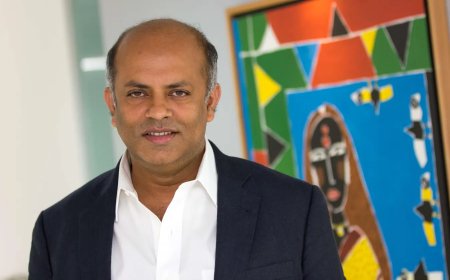
Faruq Hasan is a development worker and a political analyst.
What's Your Reaction?